
Bahariya's Hot Springs and the Mountain the British Left Behind
There's a particular kind of silence in Bahariya Oasis at dusk, when the day-trippers have mostly moved on toward the White Desert and the only sound left is water bubbling up from somewhere deep underground. Locals have been soaking in that water for centuries. It arrives at the surface already warm — sometimes close to body temperature, sometimes hot enough to make you ease in slowly — carrying minerals up from an aquifer that has nothing to do with the Nile and everything to do with a different, older Egypt: the one that exists below the sand rather than along the river.
That's the Bahariya most visitors never plan for. They come for the White Desert's chalk formations, and fair enough — those are reason enough on their own. But Bahariya itself, the oasis they pass through on the way, holds two things that rarely make it onto a first-timer's itinerary: a scatter of natural hot springs that locals still treat as medicine as much as leisure, and a stripped, wind-scoured hill the British army once turned into a lookout post, now known simply as Gebel el-Ingleez — the English Mountain.
Water That Comes Up Already Warm
Bahariya sits over a section of the Nubian Sandstone Aquifer System, one of the largest underground freshwater reserves on the planet, stretching beneath Egypt, Libya, Sudan, and Chad. In most of the Western Desert's oases, that water simply irrigates palm groves. In Bahariya, in a handful of spots, it surfaces already hot, carrying dissolved minerals that locals have long credited with easing joint pain and skin complaints.
Bir El Mattar is the spring most visitors end up at, mainly because it doubles as something practical: a working irrigation channel that happens to be warm enough to bathe in, framed by palms that cast long shade by late afternoon. It's not built up or signposted like a spa — there's no entrance fee, no changing rooms, nothing branded. You just find the spot where locals go after work, and you get in.
Bir El Ghaba sits deeper into the desert, cooler and less mineral-heavy, often paired on itineraries with a stop to watch the sun go down over open sand. Bir El Ramla runs notably hotter, close to a genuine thermal soak, and is usually reserved for later in the day when the air has cooled enough that climbing into hot water actually sounds appealing rather than unbearable.
None of these are polished tourist infrastructure, and that's precisely the point. They're functioning local springs that happen to also be extraordinary places for a traveler to sit still for twenty minutes. If you're mapping out which spring fits your schedule and interests before arriving, our complete Bahariya Oasis guide breaks down timing and logistics for each one in more depth.
A Hill the Desert War Left Behind
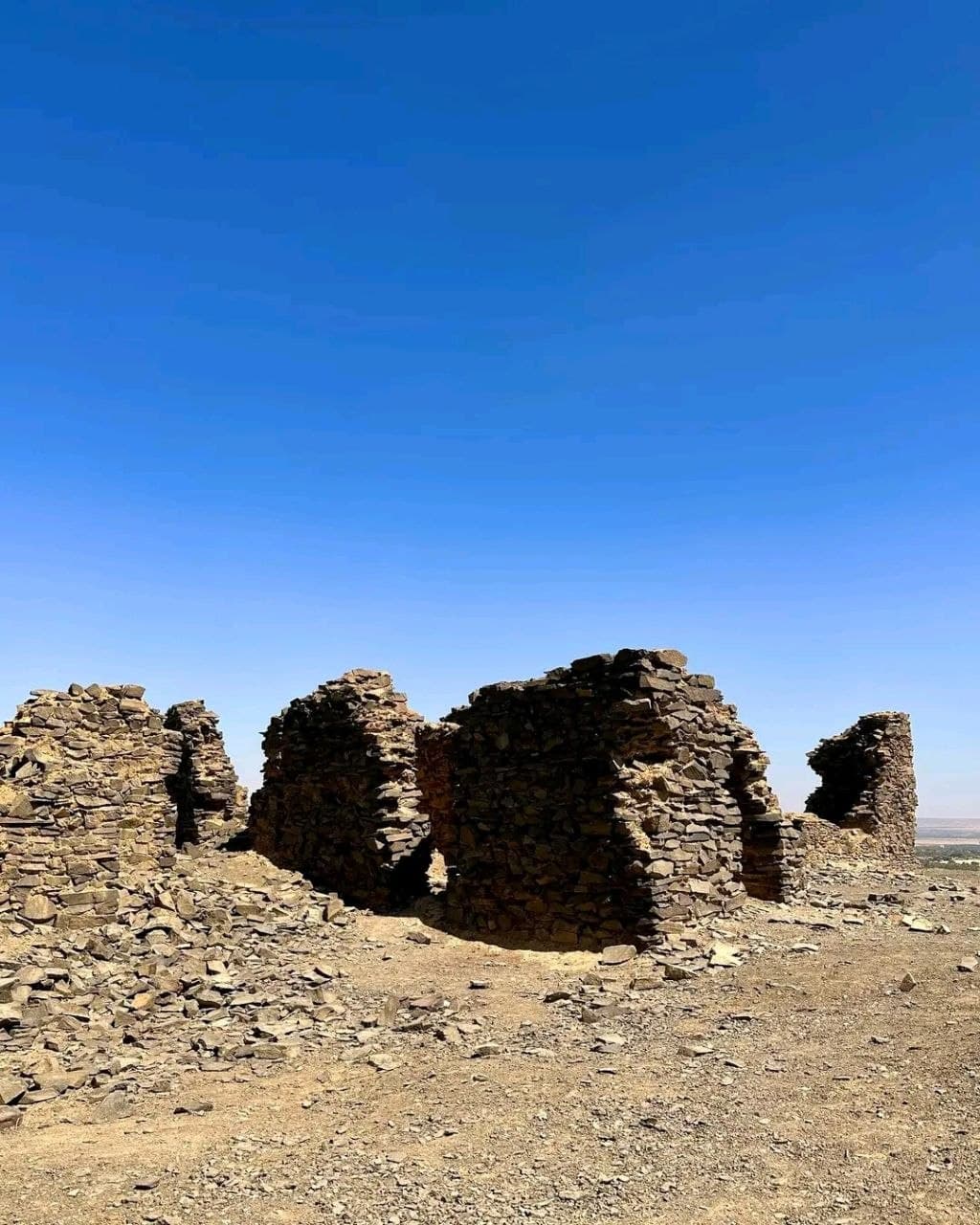
Rising out of the flat oasis floor a short drive from Bawiti, Gebel el-Ingleez doesn't look like much from a distance — just another dark, eroded hill among dozens scattered across Bahariya's basin. What makes it different sits on top: the remains of a small British observation post, built during the Second World War to keep watch over a desert corridor that Axis forces could, in theory, have used to outflank Allied positions further north.
The British never fought a battle here. What they built was quieter than that — a lookout, some basic fortifications, a place to watch an empty horizon for movement that, as far as most accounts suggest, never came. What's left today is modest: low stone walls, the footprint of a small structure, scattered debris that has sat largely undisturbed for eight decades because there's been little reason for anyone to touch it.
What makes the climb worth doing isn't really the ruin itself — it's the reason the British chose this hill in the first place. From the top, you get an uninterrupted view across the entire oasis floor: Bawiti's rooftops, the darker patches of palm groves, the pale open desert beyond, and on a clear evening, enough visibility to understand exactly what a wartime lookout would have been watching for. It's one of the better sunset points in Bahariya precisely because almost nobody treats it as one — most travelers are already at a hot spring or settling into camp by the time the light starts to turn.
The climb itself is short and unglamorous rather than technical — loose rock, no marked trail, nothing that requires gear, but worth decent shoes and a headlamp if you're timing it for sunset and walking back down after dark.
A Different Kind of Oasis Day
Most people treat Bahariya as a transit point — somewhere you sleep before or after the White Desert, maybe stop for lunch, keep moving. Spending an actual day inside the oasis itself, rather than just passing through it, turns out to be its own distinct kind of trip. Morning at one of the hot springs, a slower walk through Bawiti's old quarter and its black-and-white mudbrick houses built from local basalt, then the climb up Gebel el-Ingleez timed for the hour before sunset — it's a day built around the oasis's own rhythm rather than the White Desert's.
That pairing of thermal springs and desert history is also what tends to surprise first-time visitors most. Bahariya isn't just a staging ground for the dunes further out; it has its own layered story, starting with volcanic basalt outcrops, moving through Roman-era wells and tombs, and ending, more recently, with a hilltop the British quietly occupied and then left. Travelers who want to see how all of that ties into a fuller White Desert itinerary often find it easiest to build the oasis day directly into a two-day Bahariya and White Desert itinerary, which gives the springs and the mountain proper time rather than squeezing them into a lunch stop.
Getting the Timing Right
Hot springs and a hilltop with zero shade both have strong opinions about when you should visit them, and those opinions point in slightly different directions. The springs are genuinely most enjoyable from late autumn through early spring, when soaking in warm mineral water after a cool desert evening feels restorative rather than redundant — in peak summer, when daytime temperatures in Bahariya regularly push past 40°C, the appeal of climbing into more hot water drops sharply, though Bir El Ghaba's milder temperature still works as a pleasant evening stop even then.
Gebel el-Ingleez, by contrast, is worth climbing almost any time of year, as long as you avoid the midday sun — the lack of shade on the ascent makes a summer afternoon climb genuinely unpleasant, while an early morning or pre-sunset climb works comfortably in any season. If you're building a full day around both, the natural order is springs in the morning or midday when it's cooler out, then the mountain in the two hours before sunset when the light and the view are both at their best.
Why This Pairing Works
What ties the hot springs and the English Mountain together isn't an obvious theme — one is about water rising from deep underground, the other about a war that mostly didn't happen here. But both are things Bahariya has quietly kept to itself while the spotlight went to the White Desert's dramatic chalk formations a bit further down the road. Soaking in water that locals have trusted for generations, then standing on a hill where soldiers once watched an empty desert for a threat that never materialized — together, they make the oasis itself the destination for a day, rather than just the place you stop to refuel before the "real" trip begins.
It's a reminder that in a region as layered as Egypt's Western Desert, the most memorable stop isn't always the one with the most famous name attached to it. Sometimes it's a warm spring with no sign, and a hill nobody else bothered to climb.
FAQ
What are Bahariya's hot springs and are they safe to swim in?
Bahariya has several natural hot springs fed by the Nubian Sandstone Aquifer — the most visited are Bir El Mattar, Bir El Ghaba, and Bir El Ramla. They are safe to soak in and locals have used them for generations. None have formal facilities — bring a towel, modest swimwear, and a change of clothes.
What is Gebel el-Ingleez (the English Mountain) in Bahariya?
Gebel el-Ingleez — Arabic for 'the English Mountain' — is a hill near Bawiti in Bahariya Oasis where the British army built a small observation post during the Second World War. The remains include low stone walls and scattered debris. The summit offers one of the best panoramic views across the oasis, making it an excellent sunset spot.
What is the best time of year to visit Bahariya Oasis?
October through April is the most comfortable window. The hot springs are most enjoyable in cooler months (November–March) when soaking feels genuinely restorative. Gebel el-Ingleez can be climbed year-round but avoid the midday sun. Summer temperatures regularly exceed 40°C — still doable but demanding.