
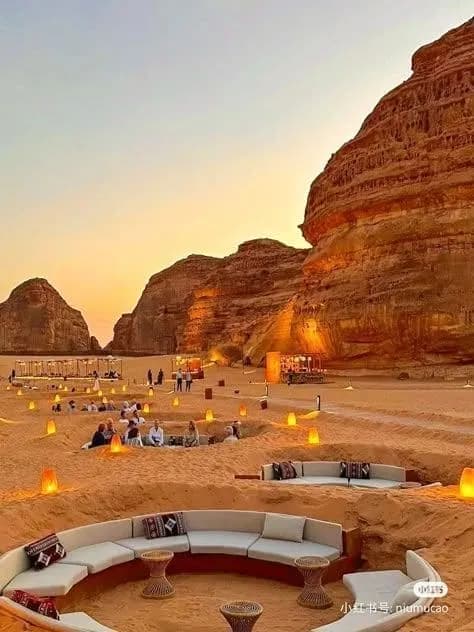
Why More Egyptian Companies Are Trading Conference Rooms for the Desert
There's a specific kind of fatigue that sets in during a corporate retreat held in a hotel ballroom. Fluorescent lighting, a projector that someone has to fix twice before lunch, team-building exercises that feel transparently like team-building exercises, and a room full of people who, by 4 p.m., are mentally checked out and just waiting for the agenda to end. Everyone's been to one. Most people don't remember much from it afterward — and that, really, is the core problem with the format.
Companies are increasingly looking for an alternative, and a growing number of them are finding it somewhere nobody would have suggested a decade ago: the open desert, a few hours outside Cairo.
What Actually Changes When You Move Outdoors
It's tempting to assume the appeal is purely scenic — swap beige conference walls for dramatic rock formations, take a nicer group photo. That's part of it, but not the real reason this works. The actual shift is behavioral. Put a group of colleagues in an unfamiliar physical environment, strip away the usual office hierarchy cues (who has the corner office, who always sits at the head of the table), and people interact differently almost immediately. Setting up a tent together, sharing a meal cooked over an open fire, navigating a short trek as a group — these aren't contrived icebreaker exercises designed by an HR consultant. They're just things that happen naturally when a group of people spends a day somewhere genuinely different from their everyday routine, and they build the kind of familiarity that an afternoon of trust-fall exercises in a hotel conference room never quite manages.
There's also a practical dimension companies are catching onto: a desert retreat removes nearly every convenient distraction. No one's slipping out to check email between sessions because there's a comfortable lobby to retreat to. No one's half-present because the hotel gym and spa are one floor down. The group is simply there, together, for the duration — which tends to produce more genuine engagement than any amount of carefully worded agenda language.
What a Desert Corporate Day Can Actually Include
The structure is more flexible than most companies initially assume. A single day works for groups that just want a change of pace from the usual offsite — a 4x4 convoy out to a dramatic desert location, a few hours of structured activities (sandboarding, a short trek, a group challenge built around setting up camp together), lunch cooked Bedouin-style, and a return to the city by evening.
Multi-day versions go further, and this is where the format really distinguishes itself from a conventional retreat. An overnight stay under the stars, away from every screen most employees are glued to for ten hours a day, tends to produce the kind of informal conversation — the genuinely useful kind, not the scripted kind — that drives real cross-departmental relationships. Finance talks to product. The team that's only ever interacted over email finally has a face-to-face conversation that has nothing to do with a deadline. None of that gets engineered into a schedule; it just happens when people are sitting around a fire with nowhere else to be.
For groups specifically weighing whether to keep things intimate or go bigger, our comparison of private versus group desert tours is worth reading before locking in a format — the right choice for a 12-person leadership team looks very different from the right choice for an 80-person company-wide offsite, and the logistics genuinely diverge at scale.
The Logistics Companies Underestimate
The single biggest mistake companies make when planning a first desert retreat is treating it like any other offsite and handling logistics internally. Desert terrain isn't forgiving of amateur planning — vehicle capacity, water supply for a large group, timing around temperature (midday heat changes everything for outdoor activities), and camp setup for dozens of people are all genuinely specialized problems, not things an office manager can improvise with a rental car and some enthusiasm.
The vehicles matter more than companies expect, too. A fleet of 4x4s capable of handling actual desert terrain, with drivers who know the specific routes, isn't a minor detail — it's the backbone of whether the day runs smoothly or turns into a logistical headache in front of forty employees. Anyone organizing this for the first time should look closely at what a proper 4x4 desert safari in Egypt actually requires before assuming any tour vehicle will do — the gap between an adequate setup and a genuinely good one shows up fast once you're dealing with group size.
Why This Resonates Particularly in Egypt
Egypt has a specific advantage here that companies in a lot of other countries don't: proximity. You don't need to fly a team somewhere remote to get a genuine desert experience — several extraordinary desert environments sit within a few hours of Cairo, Alexandria, and other major business centers. That accessibility is what makes a desert retreat realistic as a recurring option rather than a once-a-decade special occasion. A company can genuinely consider this format quarterly, not just for the annual flagship event, because the overhead of actually getting there is manageable.
There's also something quietly fitting about Bedouin hospitality traditions specifically meeting corporate team-building. The entire framework of desert hospitality — shared meals, storytelling around a fire, a slower pace that forces conversation rather than filling silence with phone screens — maps almost perfectly onto what companies are actually trying to achieve when they say they want a team to bond. It's not a coincidence that it works. It's a tradition built, over centuries, around exactly the kind of connection corporate retreats are trying to manufacture with icebreaker games.
Picking the Right Desert for the Right Team
Not every desert destination suits every kind of corporate group, and this is where a lot of first-time planning goes sideways. A leadership team of twelve looking for a reflective, low-distraction strategy session benefits from somewhere quieter and more remote, where there's genuinely nothing to do but talk and think. A larger, energy-driven team-building day for eighty employees needs a location with more room to spread out activities, easier vehicle access, and enough logistical slack that moving that many people around doesn't eat the whole day.
Distance from Cairo matters more than most planners initially factor in, too. A destination that's a comfortable two-hour drive keeps a single-day retreat realistic without burning half the day in transit; something farther out almost always needs to become an overnight trip to be worth the drive, which changes the entire budget and planning conversation. Matching the destination to the actual goal of the day — bonding, reflection, pure fun, or some blend of all three — is worth sorting out before anyone starts calling vendors.
Making the Case to Leadership
For HR teams or managers trying to justify this budget line to leadership, the pitch doesn't need to lean on novelty alone. Genuine engagement during the retreat (rather than the usual half-checked-out attendance), cross-team relationships that persist after everyone's back at their desks, and a shared experience that actually gets referenced in casual conversation months later — all of these show up in exit interviews and engagement surveys as real, measurable outcomes, not just a nice photo for the company newsletter.
The conference room will always be there for the quarterly planning session. For the retreat that's actually supposed to change how a team works together, the desert is making a convincing case to replace it.
FAQ
What does a corporate desert retreat in Egypt typically look like?
A single-day format typically includes a 4x4 convoy from Cairo to a desert location, structured activities such as sandboarding or a group trekking challenge, a Bedouin-style lunch cooked on-site, and a return to the city by evening. Multi-day versions add overnight camping under the stars, evening campfire sessions, and deeper team activities spread across a full day in the desert.
What is the best time of year for a corporate desert retreat in Egypt?
October through April is the practical window. Summer temperatures in Egypt's desert regularly exceed 40°C, making outdoor activities after 10am genuinely unsafe. The peak booking season is November through February — companies planning retreats during this window should book at least two months in advance, as good guides and sites fill up quickly when corporate and individual travel demand overlaps.
How large a group can a desert corporate retreat accommodate?
Desert retreats scale from small leadership teams of 8–15 people up to company-wide events of 100 or more, but the logistics change significantly at scale. Larger groups need more vehicles, more support staff, and locations with enough open space that activities don't feel crowded. The format and destination should be chosen based on group size from the start — what works smoothly for 15 people becomes a coordination challenge for 80 without proper planning.