
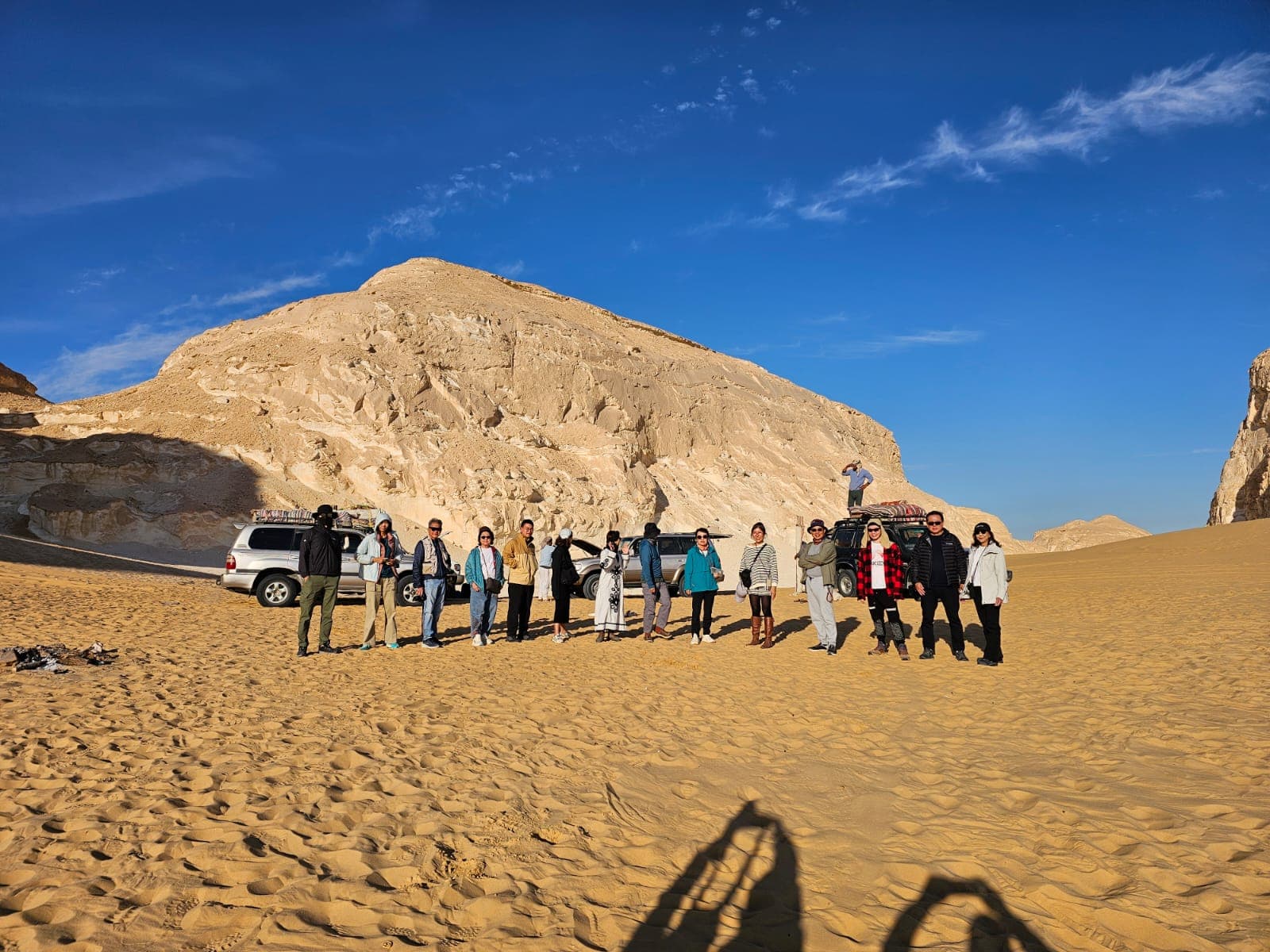
Desert Safety Guide: Essential Tips for Egypt Desert Safaris
The desert is one of the most beautiful and rewarding environments on Earth, but it demands respect. Egypt's Western Desert is remote, with extreme temperatures, no mobile coverage, and no infrastructure. This safety guide covers everything you need to know to stay safe and enjoy your desert safari to the fullest.
Sun Protection
- Wear sunscreen (SPF 50+) — Apply generously and reapply every 2 hours. The desert sun is intense, especially on reflective white chalk surfaces.
- Cover your skin — Long sleeves, long trousers, and a wide-brimmed hat are essential. Light-coloured, loose-fitting clothing is best.
- Protect your eyes — UV-rated sunglasses are a must. The white chalk of the White Desert can be blinding.
- Limit midday exposure — The hottest hours are 11 AM to 3 PM. Rest in shade during these hours when possible.
Hydration
Dehydration is the biggest risk in the desert. The dry air causes you to lose moisture faster than you realize — even when you don't feel thirsty.
- Drink at least 3–4 litres of water per day in cooler months, more in summer.
- Don't wait until you feel thirsty — drink regularly throughout the day.
- We provide unlimited water on all tours, but bring a personal reusable bottle.
Signs of dehydration include headache, dizziness, dark urine, fatigue, and confusion. If you experience any of these symptoms, drink water immediately and rest in shade. Alert your guide.
Navigation and Getting Lost
The Western Desert has no roads, signposts, or landmarks beyond Bahariya Oasis. It is essential to travel with an experienced Bedouin guide who knows the terrain. Our guides navigate by GPS, landmarks, and generations of desert knowledge. Never wander away from your group or campsite without informing your guide.
Wildlife
The Western Desert is home to some wildlife that requires awareness:
- Scorpions — shake out shoes and clothing before putting them on. Check sleeping areas before lying down.
- Snakes — rare in visited areas but always watch where you step, especially near rocks.
- Desert foxes — harmless but may investigate camp at night. Keep food stored securely.
Night Safety
Desert nights are dark — truly dark. There is no ambient light once the sun sets.
- Always keep a headlamp or flashlight accessible.
- Stay close to camp after dark — it is easy to lose orientation in complete darkness.
- Temperatures drop rapidly after sunset. Put on warm layers before you start feeling cold.
Medical Considerations
The nearest hospital is in Bahariya Oasis, several hours from most desert camping locations.
- Bring all personal medications you need — there are no pharmacies in the desert.
- Inform your guide of any medical conditions, allergies, or dietary requirements before departure.
- We carry a comprehensive first aid kit on every tour.
Vehicle Safety
All Bedouin Trails vehicles are well-maintained Toyota Land Cruisers equipped for desert conditions. Our drivers are experienced off-road navigators. We carry spare tyres, recovery equipment, extra fuel, and satellite communication equipment on every tour.
Why You Should Never Enter the Desert Alone
Every year, people get lost or stranded in Egypt's Western Desert. Without GPS, local knowledge, and proper equipment, the desert is extremely dangerous. Always travel with an experienced Bedouin guide. Our guides have grown up in the desert and know every dune, rock, and safe route. This is not an area for solo exploration.
Related Guides
- What to Pack for a White Desert Trip
- Best Time to Visit the White Desert
- How to Get to the White Desert
- Desert Trekking in Egypt
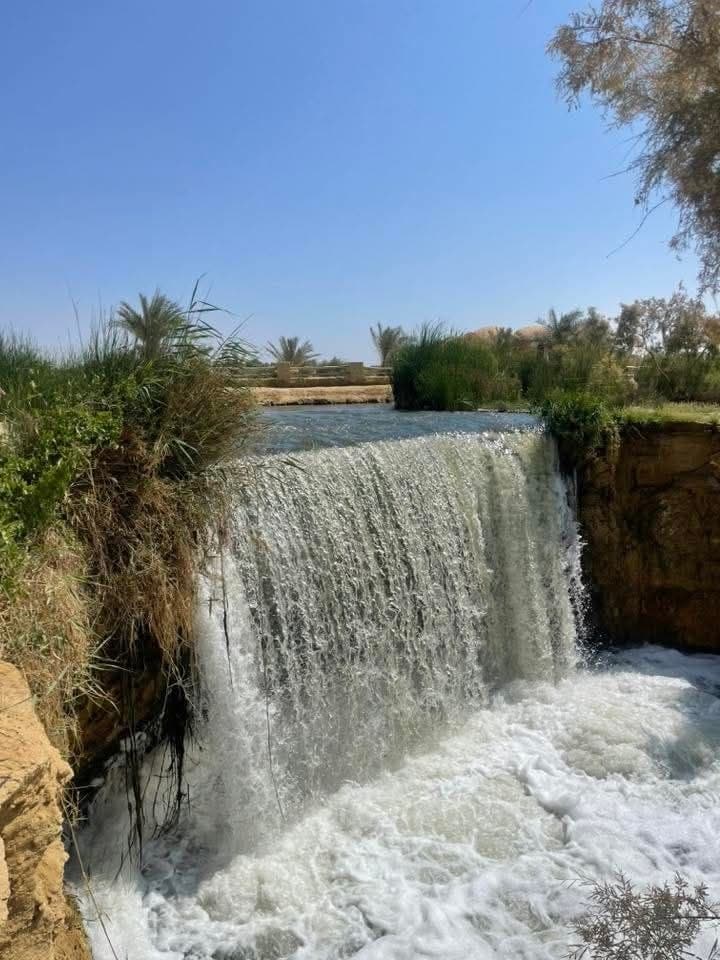
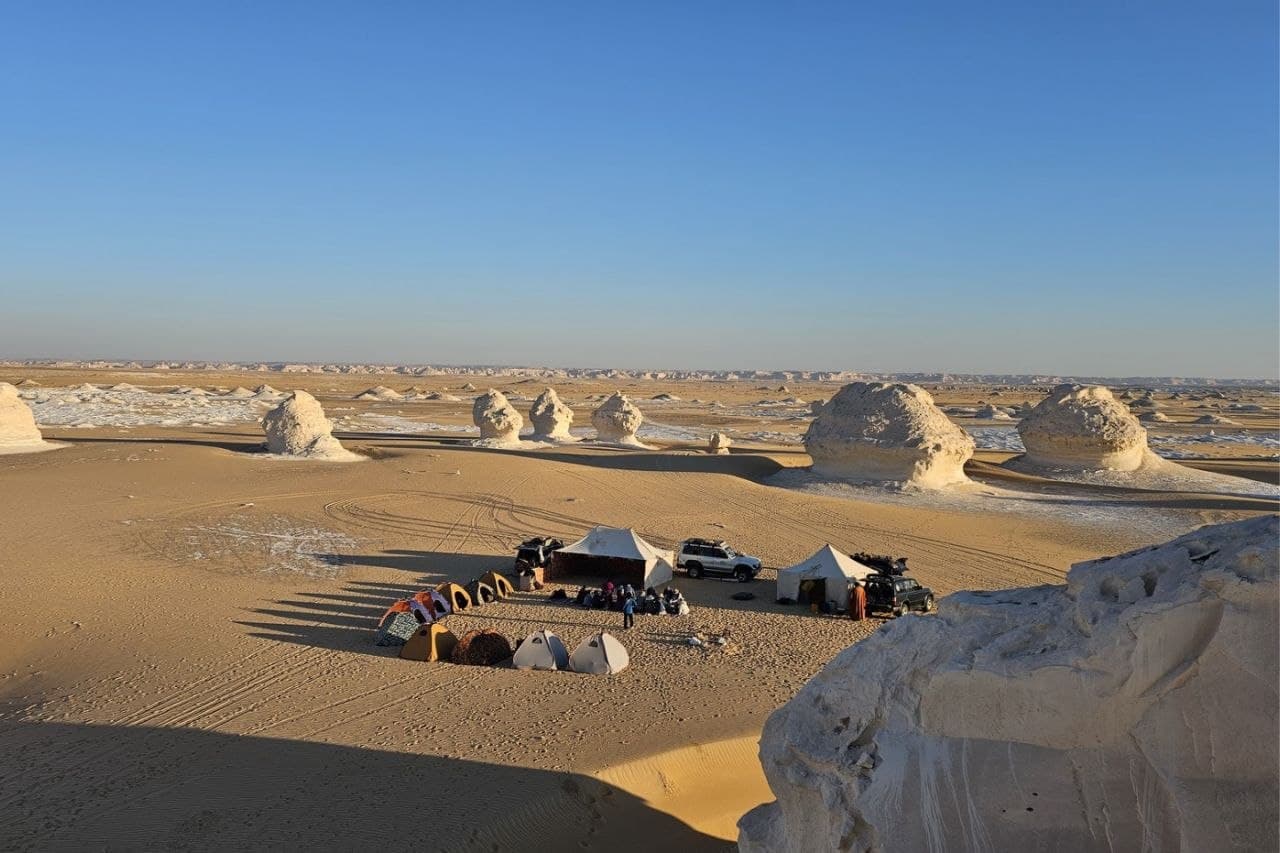
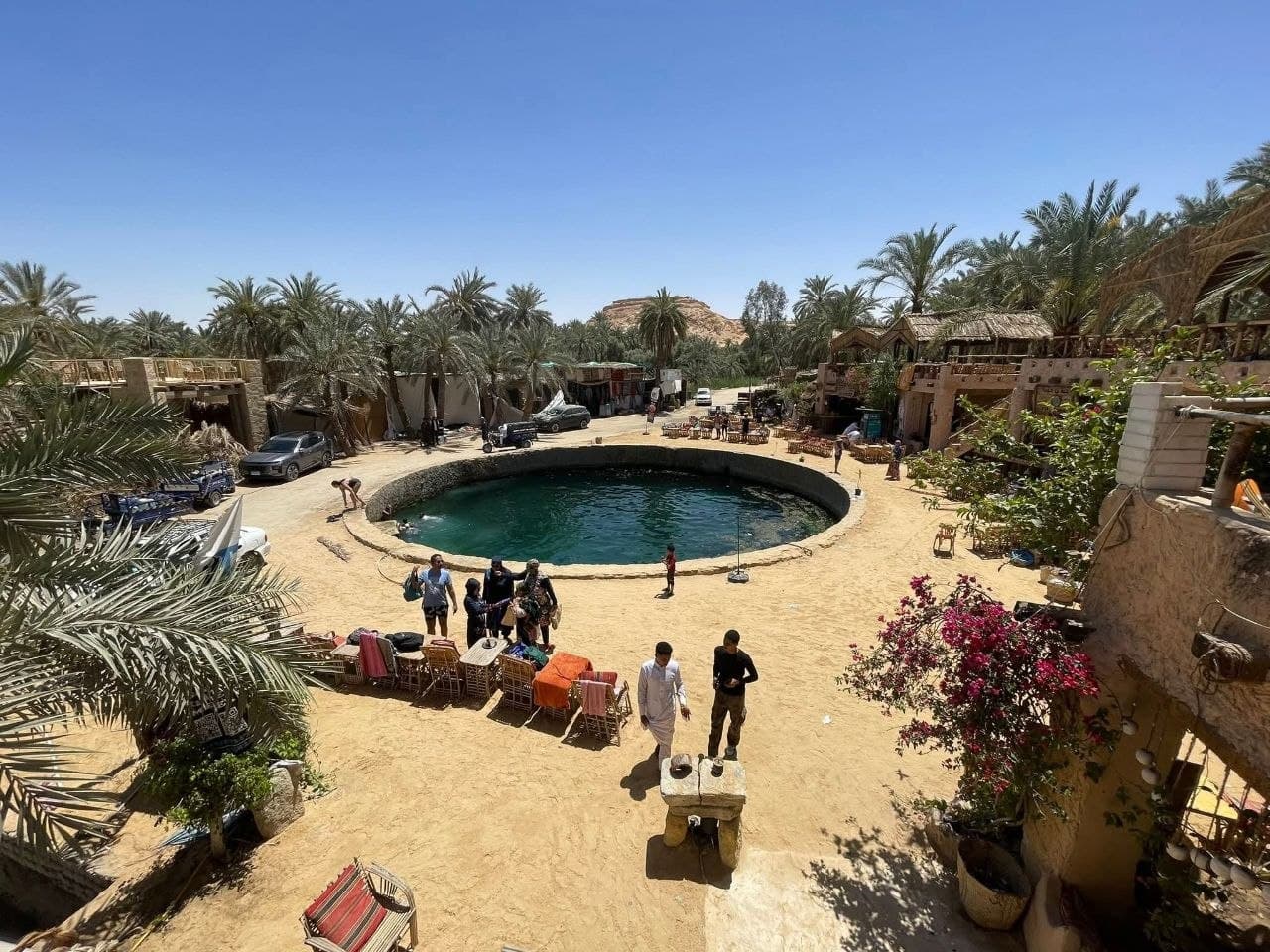
Your safety is our top priority. All Bedouin Trails tours include comprehensive safety equipment and experienced guides.
Browse Desert Tours