
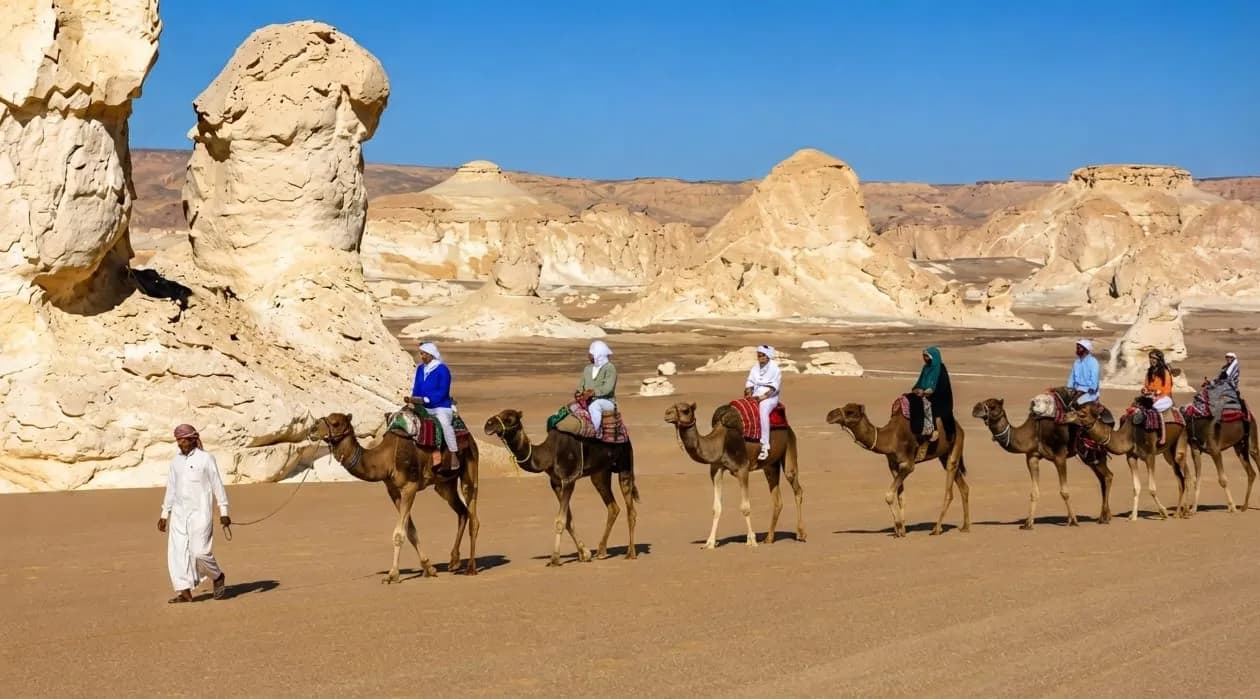
Camel Trek Egypt — White Desert Camel Trekking in the Western Desert
A camel trek Egypt's Western Desert is the most authentic way to experience the Sahara. Travelling at the pace of a camel — the same way Bedouin tribes have crossed these deserts for thousands of years — you discover landscapes that no vehicle can reach and experience a silence that modern life has forgotten.
Why a Camel Trek in the Western Desert?
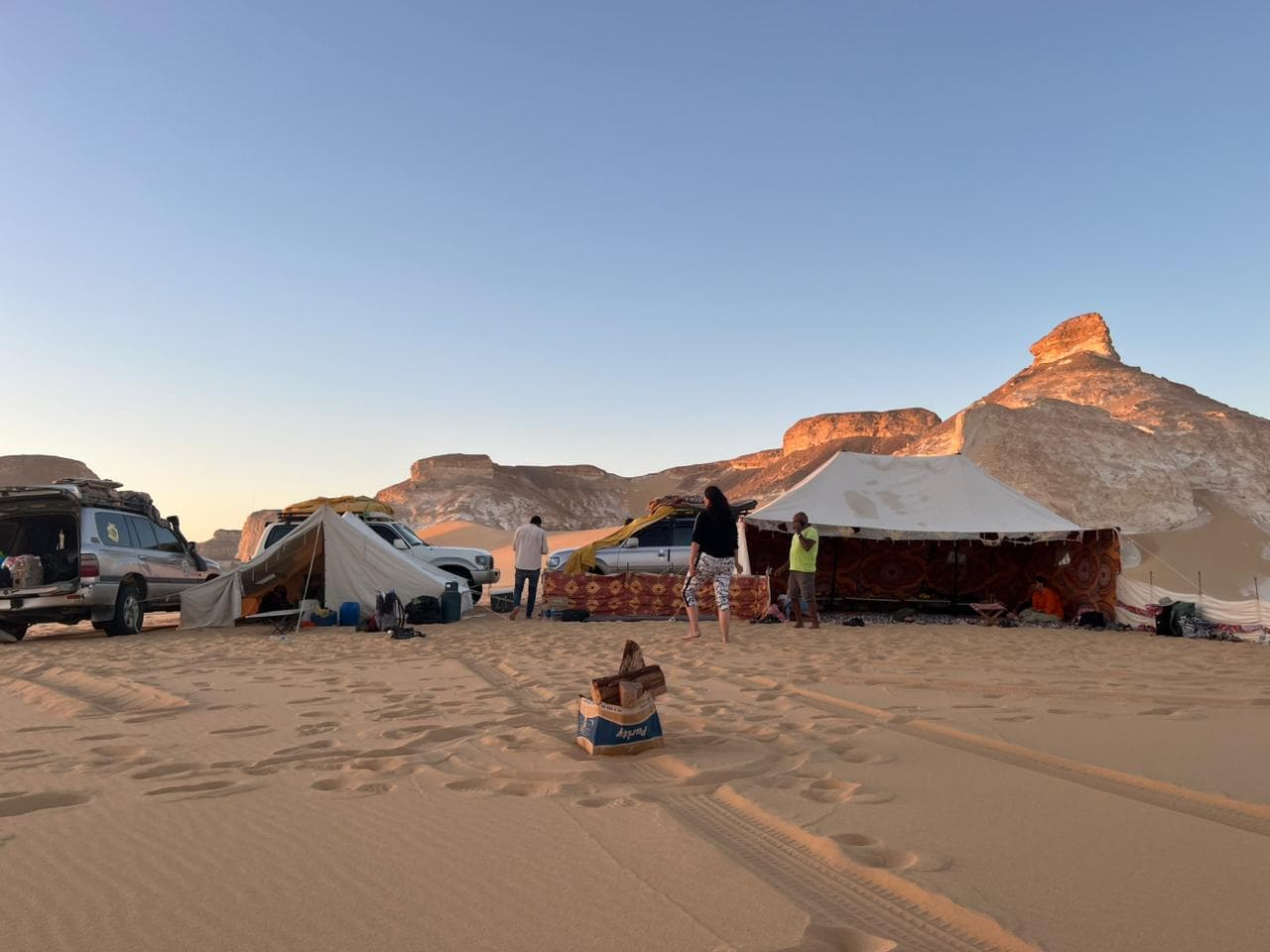
Most Egypt camel experiences are short rides around the Giza Pyramids. A multi-day desert trek with Bedouin Trails is something entirely different. You travel deep into the desert with experienced Bedouin guides, camp under the stars, eat traditional food cooked over open fire, and navigate through some of the most stunning terrain in the Sahara — including the White Desert, Black Desert, and sand dune fields.
On a camel trek, the journey is the destination. There is no rushing, no schedule pressure — just the rhythm of the camel's walk, the shifting light across the sand, and the sound of wind.
Camel Trek Options
3-Day Camel Trek (Beginner-Friendly)
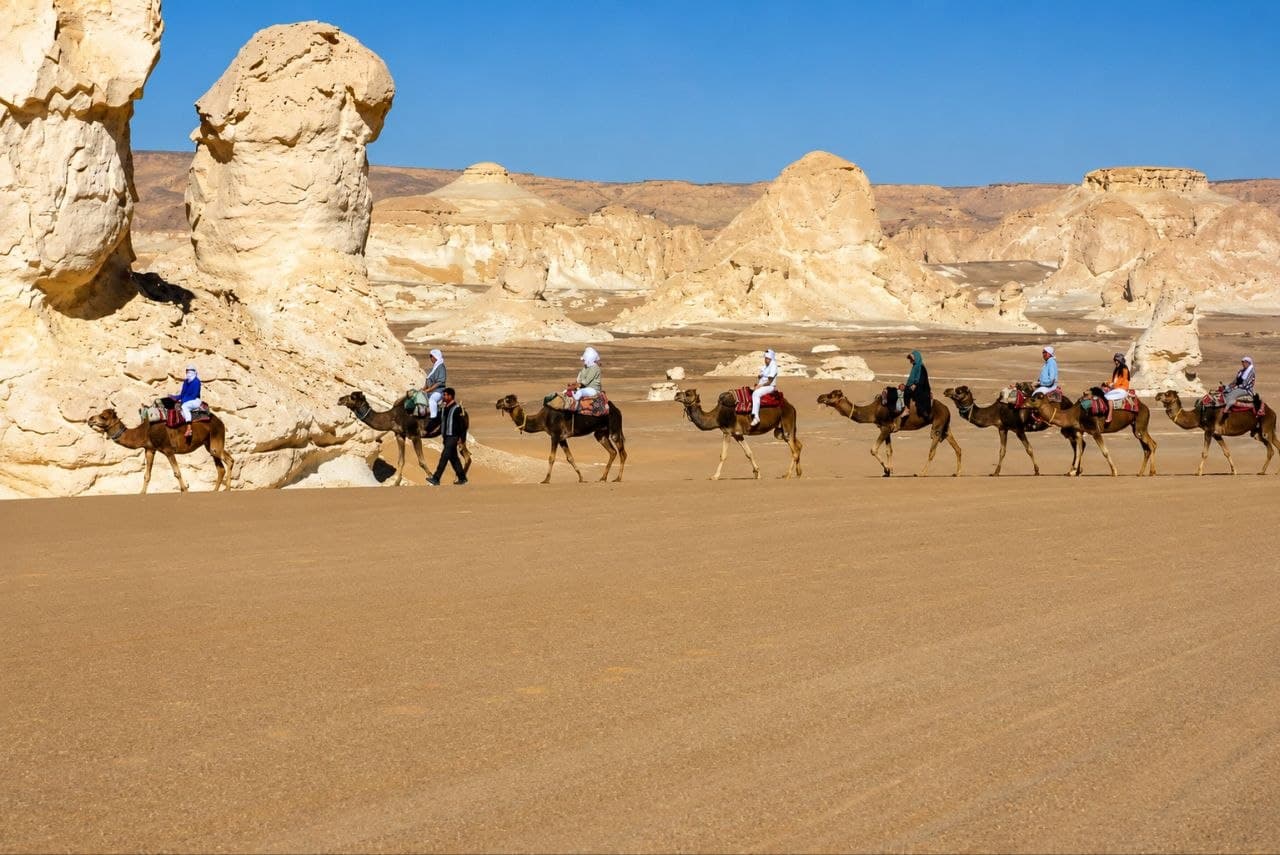
Perfect for first-time riders. Transfer by jeep from Bahariya Oasis through the Black Desert and Crystal Mountain to the White Desert. Camel riding begins from Agabat Valley, where the open terrain allows for hours of riding. Two nights of desert camping under the stars with traditional Bedouin meals. The minimum duration is 3 days to cover camel transport costs from the oasis to the White Desert. No previous riding experience needed — our camels are gentle and well-trained.
3-Day Camel Trek (Moderate)
A deeper exploration: transfer by jeep to visit the Black Desert and Crystal Mountain, then begin camel riding from Agabat Valley through the heart of the White Desert. Three days of adventure with two nights of desert camping, traditional Bedouin meals, and stargazing. Camel riding covers the open White Desert terrain where camels can trek for hours.
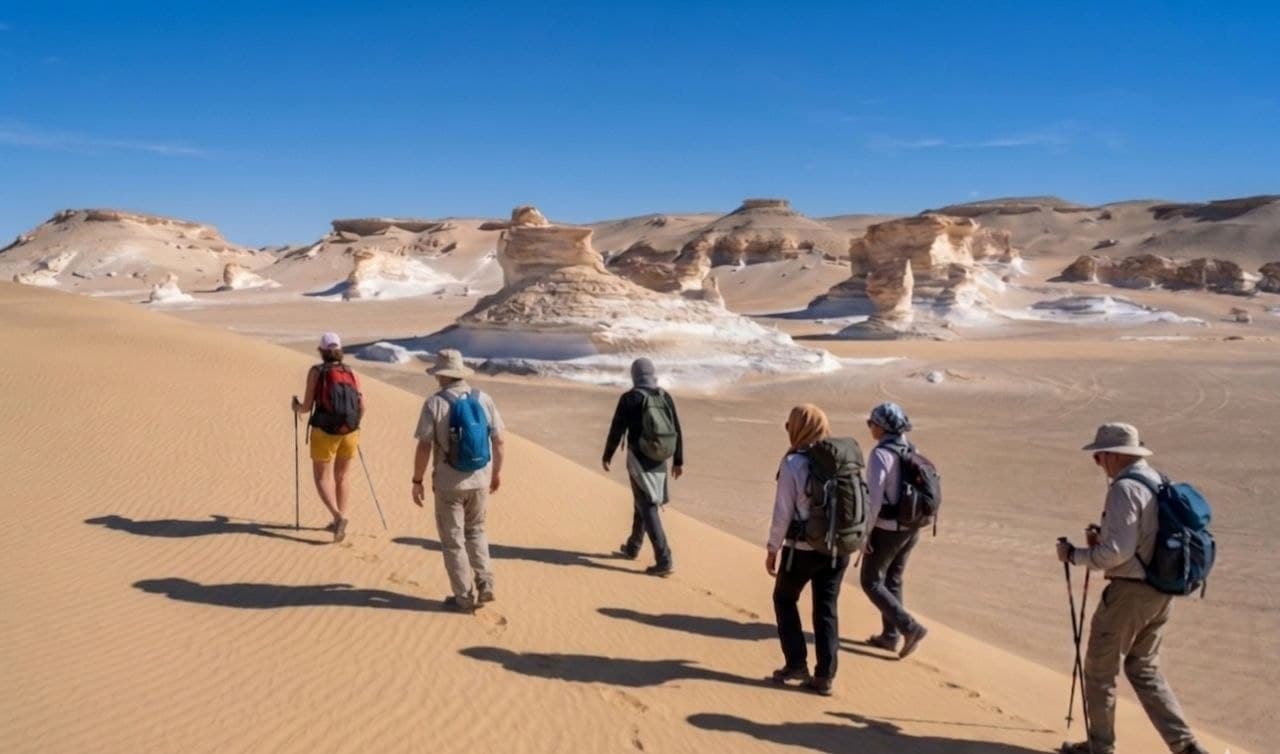
5-Day Sahara Hiking & Camel Trek (Advanced)
An immersive multi-day desert trek combining camel riding with desert hiking through varied terrain. Includes exploring valleys, Roman springs, sand dunes, and remote desert areas rarely visited by tourists. Suitable for fit travellers with some riding or hiking experience.
What to Expect on Your Camel Trek
- The camels — our dromedary camels are well-cared-for, experienced desert travellers. You'll be matched with a camel suited to your size and experience
- Riding comfort — traditional saddles with blankets. Riding takes some getting used to, but most people find their rhythm within the first hour
- Daily distance — typically 15–25 km per day at a walking pace, with regular stops
- Meals — fresh bread baked in desert sand, grilled meats, rice, vegetables, tea, and Egyptian coffee
- Camping — sleeping bags on sand mats under open sky, or with simple shelters in windy weather
- Guides — experienced Bedouin guides who grew up in the desert and know every dune and rock formation
What to Pack for a Desert Camel Trek
- Long, loose-fitting clothing for sun protection
- Sturdy closed-toe shoes or boots
- Sun hat, sunglasses, and high-SPF sunscreen
- Warm layers for cold desert nights (October–March)
- Headscarf or buff for wind and sand
- Personal water bottle (we provide bulk water)
- Camera — the desert light is extraordinary
Best Season for Camel Trekking in Egypt
The ideal season for camel trekking is October through April. November and March offer the best balance of warm days and comfortable nights. Summer months are extremely hot and not suitable for extended camel treks.
Frequently Asked Questions
Do I need camel riding experience?
No experience is needed for our 2-day and 3-day treks. Our guides teach you the basics before departure, and the camels are calm and well-trained. The 5-day trek is better suited for those with some riding or hiking experience.
How do we carry our gear?
Support camels carry all camping equipment, food, and water. You only need a small daypack for personal items during the ride.
Is the camel trek combined with 4x4 transport?
Yes. We drive from Cairo to Bahariya Oasis by 4x4 (approximately 4 hours). The camel trek portion begins from Bahariya or the Black Desert, depending on the itinerary.
Explore related guides: White Desert Hiking Expedition, White Desert Egypt, Multi-Day Desert Trek, Desert Trekking Guide, White Desert Safari.
Ready to trek the Sahara the way it was meant to be explored?
Browse Camel Trek Tours