Stargazing in Egypt Desert: Earth's Most Dramatic Night Skies (2026)
There is simply nowhere on the planet better suited for stargazing in Egypt desert experiences than the White Desert in Egypt. The combination of zero light pollution, ultra-dry stable air, and absolute silence makes the Western Desert Egypt one of the finest dark sky regions on Earth, and the easiest place globally to witness the full arch of the Milky Way with the naked eye.
This is the complete operator's guide to stargazing in Egypt desert: where to go, when to visit, what you will see, essential gear, and how to organize the right White Desert safari with an overnight White Desert camping stay to maximize your night sky journey. Written by Bedouin Trails, the specialist operator running Egypt desert tour and Egypt safari tours across Western Desert Egypt every season.
Why Egypt's Desert Is the Ultimate Stargazing Destination
Three critical factors determine the quality of any night sky view: light pollution, atmospheric haze, and humidity. The Western Desert Egypt scores near perfection across all three.
- Zero Light Pollution: The closest settlement to the White Desert, Bahariya Oasis, is a two-hour 4x4 drive away; the nearest major city is over 380 km distant. On dedicated stargazing in Egypt desert nights, sky brightness rates as Bortle Class 1 — the absolute darkest achievable on Earth.
- Minimal Atmospheric Haze: The Western Desert Egypt is among the hyper-arid regions of the world. Dust particles and water vapor, the primary culprits behind starlight scattering, are virtually non-existent.
- Extremely Low Humidity: Nights in the White Desert from October through April register between 10% and 25% relative humidity, rendering the atmosphere crystal-clear for incoming starlight.
In practice, during any White Desert camping night, you will witness more stars than you have ever seen before, distinguish individual stellar colors, and observe the Milky Way casting visible shadows on a moonless night. It is remarkably common for travelers to shed tears during their first stargazing in Egypt desert session.
Bedouin Trails Tip: Always align your stargazing in Egypt desert night with the lunar cycle. Full moon nights are visually enchanting but wash out deep sky objects, revealing only the moon and the brightest stars. New moon windows deliver the full brilliance of the Milky Way and meteor trails. While standard safari operations overlook this detail, we schedule our premier stargazing expeditions strictly around new moon phases.
What You Will See on an Egypt Desert Stargazing Night
On a typical clear White Desert camping night between October and April, naked-eye stargazing in Egypt desert treats you to:
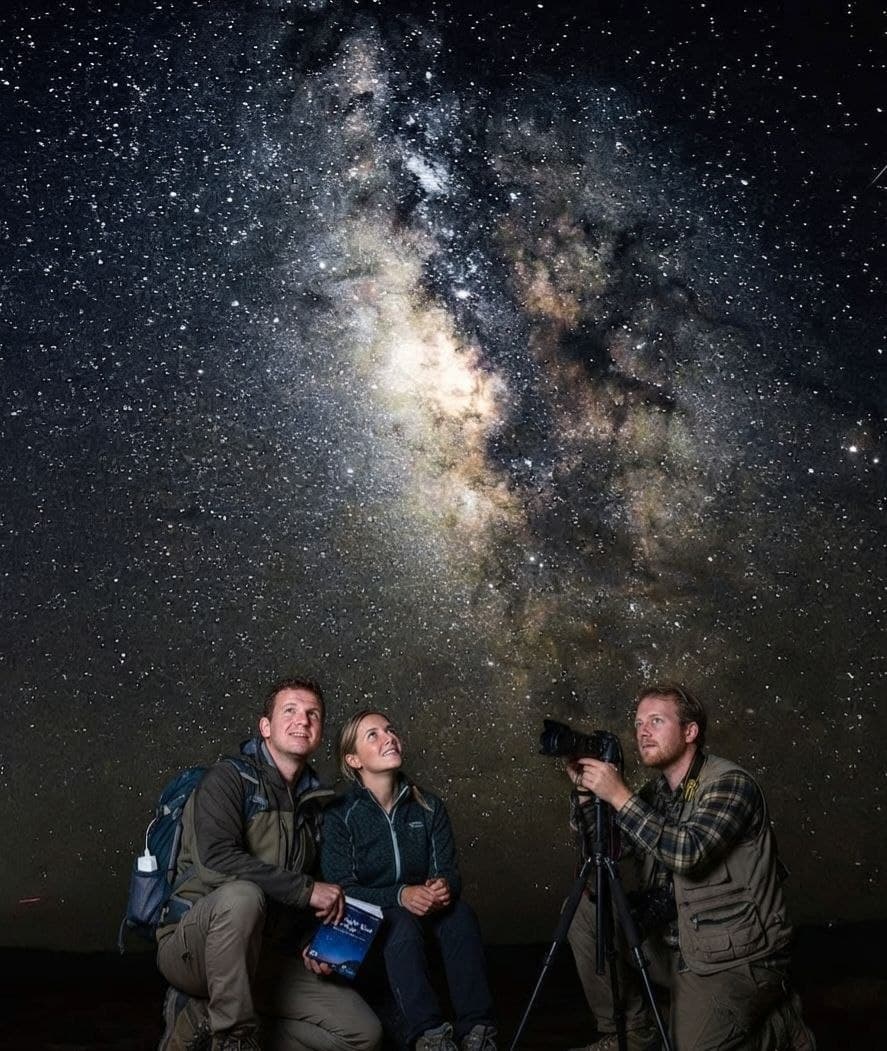
- The Full Milky Way Arch: Rising boldly from one horizon and spanning straight across to the other, appearing not as a faint haze but as a dense, luminous river of starlight.
- Vivid Stellar Colors: Antares glows ruby red, Sirius shines blue-white, and Betelgeuse beams amber-orange. Observing genuine stellar hues demands exceptionally dark skies, which the Western Desert Egypt delivers effortlessly.
- Shooting Stars & Meteors: 10 to 20 visible meteors per hour on standard nights, multiplying significantly during major meteor showers (Perseids in August, Geminids in December, Quadrantids in January).
- The International Space Station (ISS): Easily tracked with the naked eye as it glides overhead on predictable orbital passes.
- Visible Deep-Sky Objects: The Andromeda Galaxy (M31) and several globular clusters are readily visible to the unaided eye from the White Desert floor.
- Zodiacal Light: A subtle pyramid of dust-scattered light along the ecliptic plane, observable exclusively in pristine dark-sky sanctuaries like the Western Desert Egypt.
Top Stargazing Locations in Egypt Desert
1. White Desert National Park (Best Overall)
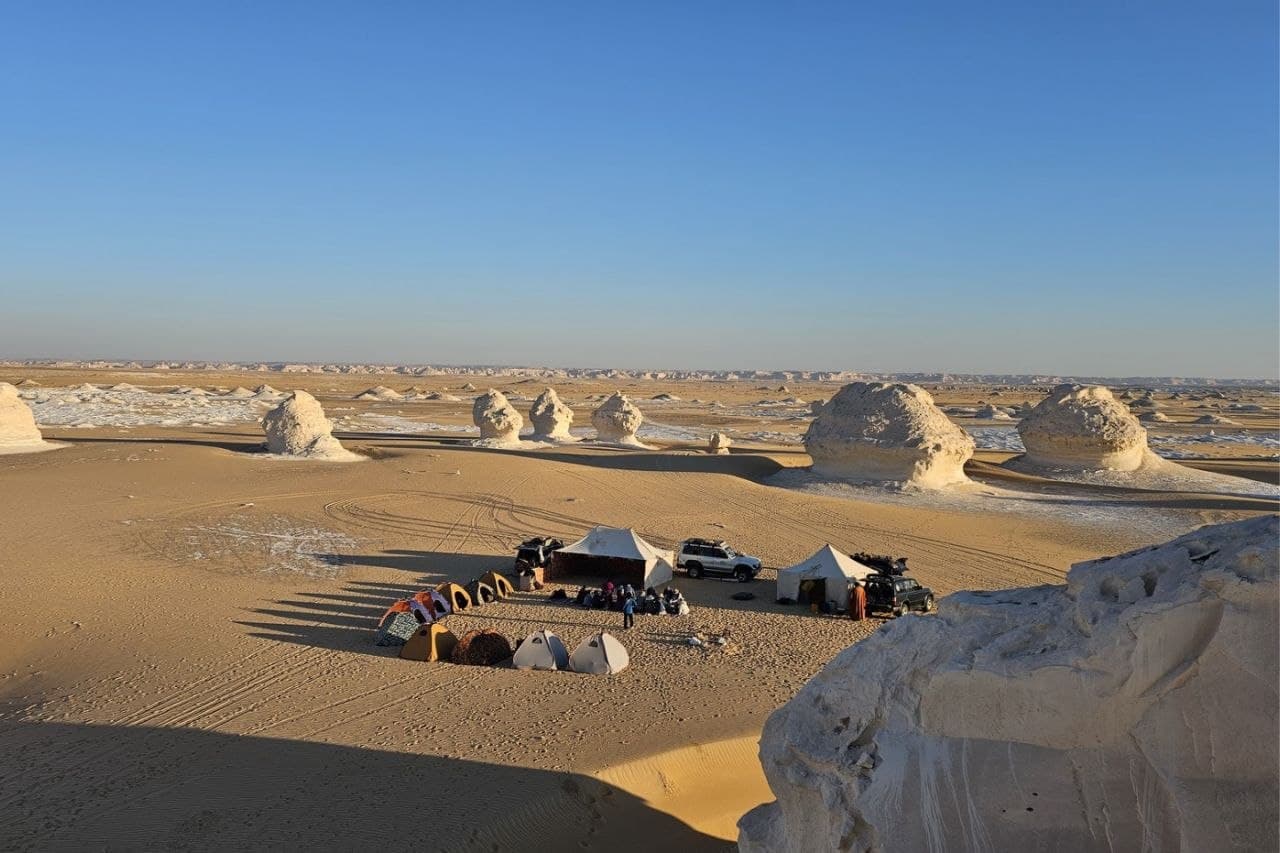
The undisputed flagship venue for stargazing in Egypt desert. The juxtaposition of surreal chalk rock sculptures against an ink-black canopy makes an overnight White Desert safari the most rewarding astronomical experience in Egypt. While many operators camp here, only a select few curate campsites tailored specifically for unobstructed celestial views.
2. Black Desert & White Desert Combined
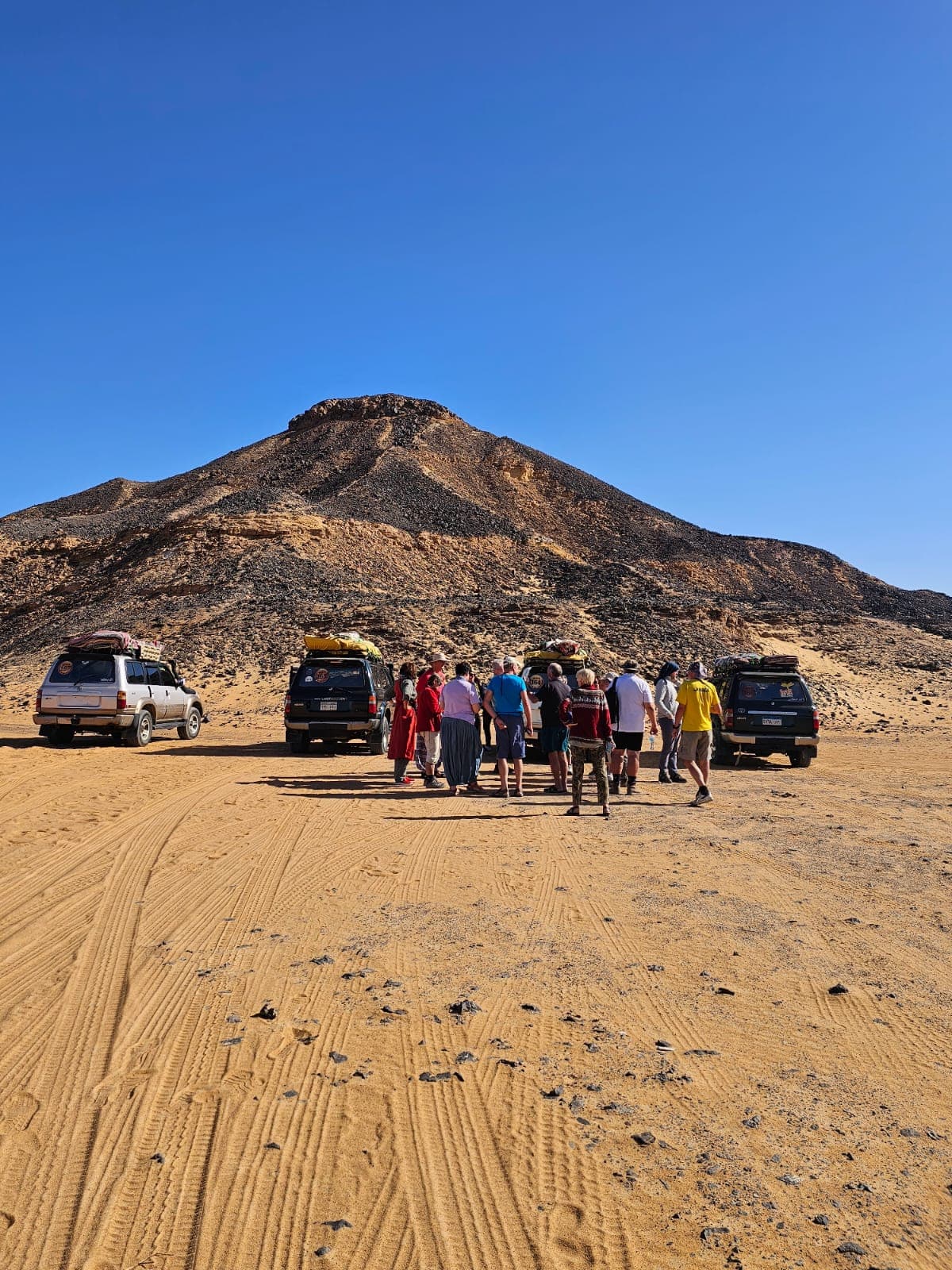
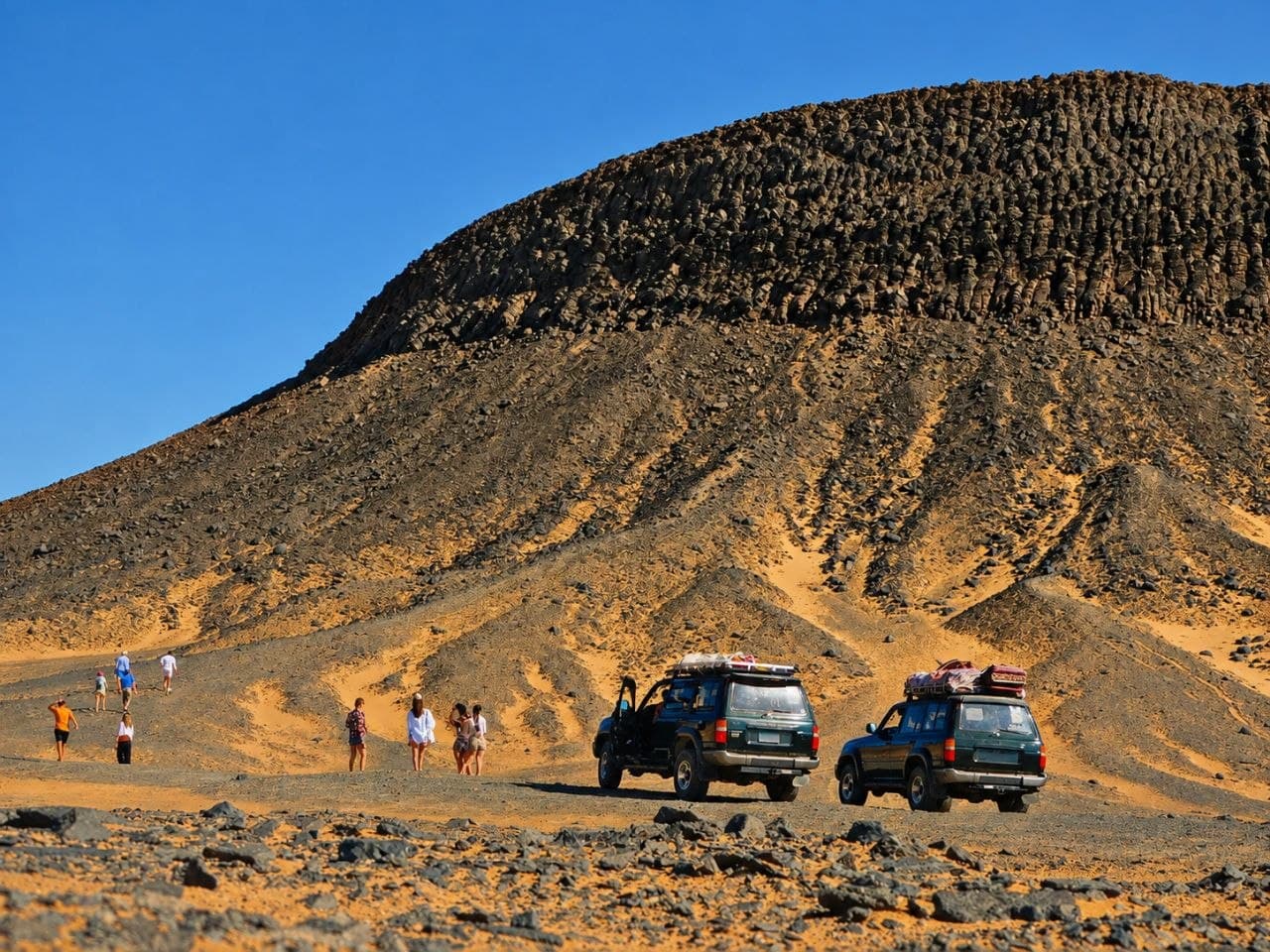
On extended Egypt safari tours across Western Desert Egypt, stargazing from both Black Desert and White Desert campsites delivers striking visual contrast: dramatic volcanic hills silhouetted against constellations one night, followed by gleaming chalk monoliths beneath the Milky Way the next.
3. The Great Sand Sea near Siwa
Offering comparable sky darkness paired with towering sand dunes rather than chalk formations, this represents the premier stargazing in Egypt desert alternative for travelers basing their journey out of Siwa Oasis rather than Cairo.
4. Outskirts of Bahariya Oasis
A viable stargazing option when staying at an eco-lodge several kilometers outside town. While not matching the profound inkiness of deep White Desert camping grounds, it serves well for short Egypt desert tour itineraries without extensive desert penetration.
Best Time of Year for Stargazing in Egypt Desert
The optimal window aligns with the prime Egypt desert tour season: October through April. However, specific astronomical nuances apply:
- November – February: Longest darkness windows, lowest humidity, and peak overall conditions for stargazing in Egypt desert. These are our top recommended months for astronomy-dedicated expeditions.
- October & March: Pleasant shoulder months offering slightly shorter nights alongside pristine atmospheric clarity and fewer visitors.
- April: Warmer temperatures with occasional light haze. Early April remains outstanding for stargazing in Egypt desert, though conditions taper toward late April.
- May – September: Summer heat precludes multi-night White Desert camping for most safari operations, compounded by increased atmospheric dust.
Peak Meteor Showers in Prime Season:
- Geminids: December 13–14 (The most prolific annual shower, yielding 120+ meteors/hour on a dark White Desert camping night).
- Quadrantids: January 3–4 (Sharp, intense peak producing 40–80 meteors/hour).
- Lyrids: April 22 (Modest shower yielding ~15 meteors/hour).
How a Stargazing-Focused White Desert Safari Works
A dedicated stargazing in Egypt desert expedition with Bedouin Trails is engineered around the night rather than the day. A signature 2-night White Desert safari unfolds as follows:
- Day 1: Cairo – Bahariya – Black Desert – arrival in the White Desert by late afternoon. Sunset photography followed by dinner at approximately 7:00 PM. Stargazing in Egypt desert begins around 8:00 PM: constellation tours, mythological lore, and tripod setups. First prime viewing window: 8:00 PM to midnight.
- Night 1: Sleeping under open skies; naturally waking between 2:00 AM and 4:00 AM when the core Milky Way achieves optimal visibility. Many travelers cherish an hour of silent observation.
- Day 2: Gentle sunrise, slow morning, and daytime geological exploration. A second night of stargazing in Egypt desert allows deeper observation; by night two, your eyes are fully dark-adapted, revealing subtle nebulae and fainter stars.
- Day 3: Scenic morning departure back to Cairo.
This pacing is intentional: single-night desert excursions do not provide sufficient physiological time for complete dark adaptation. A 2-night White Desert camping itinerary represents our firm minimum recommendation for serious stargazing in Egypt desert.
Gear for Stargazing in Egypt Desert
For Naked-Eye Stargazing:
- Red-Light Headlamp or Flashlight: Essential for reading star charts and navigating without compromising your natural night vision.
- Warm Layered Clothing: Desert temperatures plunge to 3–10°C during peak stargazing season.
- Offline Star Map Mobile App: Pre-downloaded for offline constellation and satellite identification.
- Reclining Camp Chair or Sleeping Mat: Prevents neck strain during extended skywatching sessions.
For Astrophotography:
- Manual Mode Camera: Full-frame DSLR or mirrorless body offering superior dynamic range and low-noise high-ISO performance.
- Fast Wide-Angle Lens: 14–24mm f/2.8 or equivalent prime lens.
- Heavy-Duty Tripod: Indispensable for long-exposure stability against desert breezes.
- Remote Shutter Release or 2s Timer: Eliminates camera shake upon shutter actuation.
- Extra Batteries: Frigid White Desert camping nights deplete lithium batteries rapidly.
- Red Torch: For illuminating gear without degrading personal or group night vision.
For Binocular & Telescope Viewing:
- 10x50 Binoculars: The single most versatile astronomy tool, revealing deep nebulae, star clusters, and Jupiter's Galilean moons.
- Compact Travel Telescope: Optional; coordinate logistics with Bedouin Trails in advance (most guests find binoculars more than adequate).
Astrophotography in the White Desert
The Western Desert Egypt is celebrated as a world-class astrophotography haven. Standard camera settings for White Desert camping astrophotography include:
- Wide-Angle Milky Way Shots: 14–24mm, f/2.8, ISO 3200, 20–25s exposure.
- Star Trails: 24mm, f/4, ISO 400, stacking 30+ exposures of 4 minutes each.
- Foreground + Sky Composites: Chalk monolith silhouette paired with galactic core via dual-exposure post-processing blending.
- Tracked Deep-Sky Photography: Requires a motorized star tracker. While optional, the Bortle 1 conditions reward tracked long exposures immensely.
For daylight landscape photography guidance in the chalk desert, consult our comprehensive Egypt Desert Photography Guide.
Complementary Desert Tour Activities
Stargazing in Egypt desert pairs best with daytime adventures that preserve your energy for late-night skywatching:
- Stargazing + Bahariya Oasis Tour: Combine relaxed cultural sightseeing by day with cosmic exploration by night. See our Bahariya Oasis Tour Guide.
- Stargazing + Egypt Meditation Retreat: The silence of pristine night skies harmonizes seamlessly with mindfulness practices. Explore our Egypt Meditation Program & Desert Silence Retreat.
- Stargazing + Camel Trekking Egypt: Unhurried traditional travel by day, deep celestial observation by night. See our Camel Trekking Egypt guide.
- Stargazing + Multi-Day Desert Trekking: For active travelers seeking a Sahara hiking adventure intertwined with world-class astronomy.
FAQ
Is stargazing in Egypt desert truly superior to other world-famous dark sky destinations?
Yes. The rare combination of Bortle Class 1 darkness, negligible humidity, and stable dry weather places the White Desert on par with or ahead of the Atacama Desert (Chile) and NamibRand (Namibia), while offering significantly easier travel access from Europe.
Do I need a telescope for desert stargazing?
No. The most awe-inspiring stargazing in Egypt desert sights — including the Milky Way arch, shooting stars, zodiacal light, and nearby galaxies — are fully visible to the naked eye. A quality pair of 10x50 binoculars provides ideal magnification when desired.
Will I clearly see the Milky Way?
Yes, unmistakably. Between October and April on moonless nights, the Milky Way forms the dominant, luminous visual centerpiece across the entire sky during any White Desert camping trip.
Does it get very cold at night in the desert?
Yes. Peak stargazing season (November to February) brings nighttime temperatures between 3°C and 10°C. Pack warm thermal layers, fleece outerwear, and warm beanies. Our White Desert safari expeditions supply high-grade sleeping bags and warm blankets.
How does a dedicated stargazing safari differ from a standard desert tour?
Standard safari operations treat the night sky as a casual backdrop. A dedicated stargazing safari is custom-planned around moon phases, cloud forecasts, and campsite geography to guarantee unobstructed panoramic horizon views.
Can I practice astrophotography on a standard desert tour?
Yes. Every overnight White Desert safari with Bedouin Trails provides exceptional astrophotography opportunities. On dedicated astrophotography tours, we optimize campsite positioning and itinerary pacing specifically for night shooters.