Desert Trekking in Egypt and Sahara Hiking Tours: The Multi-Day Expedition Guide (2026)
If you are looking for desert trekking in Egypt, a serious Sahara hiking tour, or an authentic multi-day desert expedition, this is the definitive operator guide. Written by Bedouin Trails—the private operator organizing multi-day desert expeditions across Egypt's Western Desert every season—this article covers everything you need to know: route selection, physical fitness, gear, expedition costs, safety protocols, and how to choose between a short 3-day Sahara walking tour and an extended multi-week traverse.
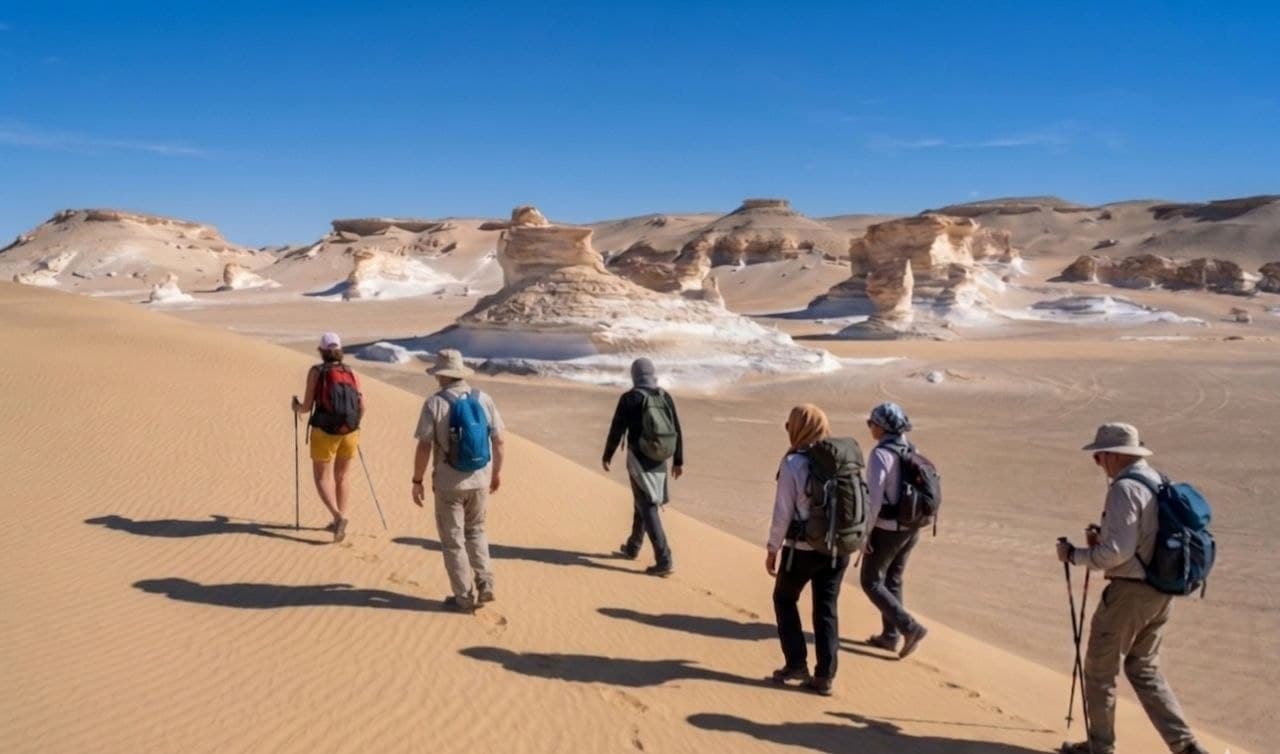
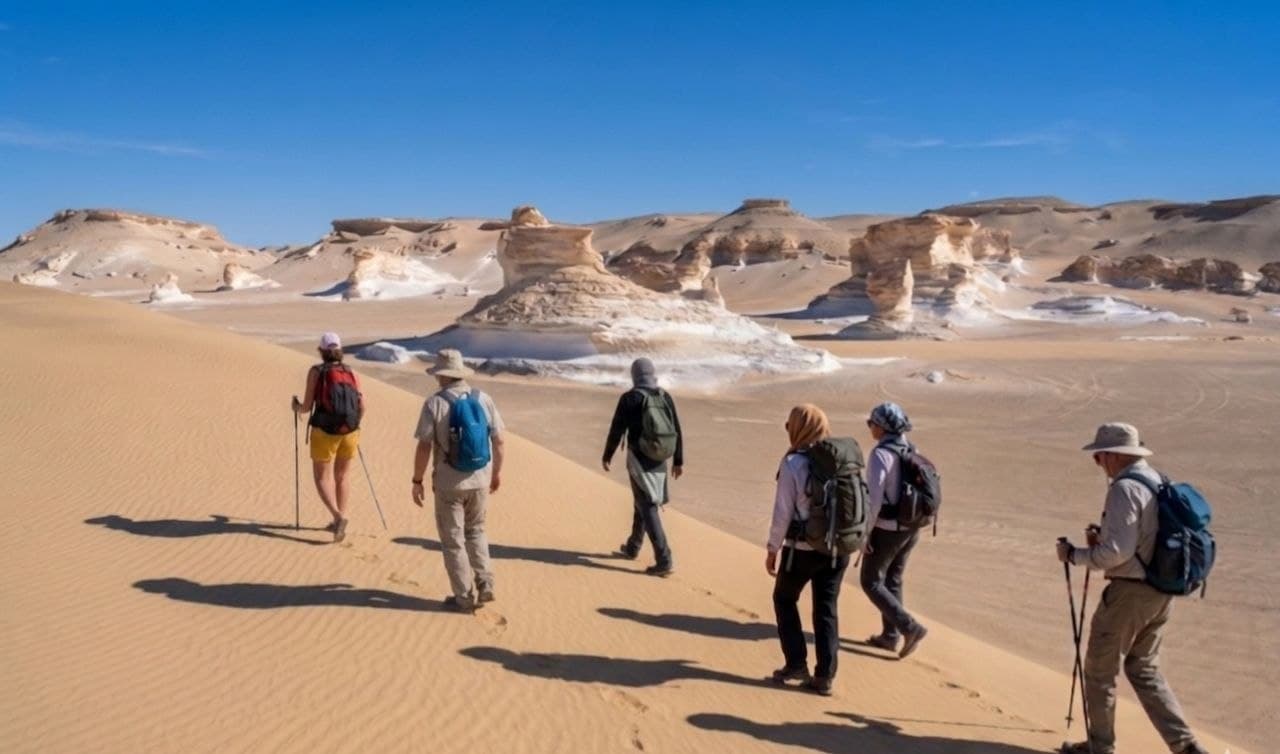
Desert trekking in Egypt is fundamentally different from a conventional desert safari. Instead of riding inside a 4x4 vehicle, you walk 12 to 20 kilometers per day across some of the most extraordinary geological landscapes in Africa, accompanied by a dedicated local Bedouin support crew managing camels or support vehicles for your water, food, and mobile camp setup. A genuine multi-day desert trek provides a depth of connection that no motorized tour can ever match.
What is Desert Trekking in Egypt?
Desert trekking is multi-day hiking across Egypt's Western Desert with comprehensive Bedouin logistical support. Your guide and support team handle water replenishment, wilderness navigation, fresh meals, and camp setups; you walk, photograph, rest, and absorb the desert at a natural human pace.
Virtually all serious desert trekking in Egypt and Sahara hiking tours take place across two primary regions:
- The White Desert & Western Desert of Egypt: The premier desert trekking region in the country. It offers stable walking terrain, gentle gradients, surreal chalk rock sculptures, and pristine night skies for wild camping. The classic 7-day White Desert traverse is the flagship route through this area.
- The Sinai Mountains: Alpine-style mountain hiking characterized by steeper ascents, rocky terrain, and cooler nights. A distinct mountain experience separate from the sand and chalk landscapes of the Western Desert.
A typical multi-day desert expedition covers 12–20 km daily, split into a 4–5 hour morning walk and a 2–3 hour late afternoon session, separated by a long shaded midday rest. Daily distances are fully customizable: a Sahara hiking tour can be tailored from a relaxed 3-day introductory trek to an extensive 14-day deep desert expedition.
Bedouin Trails Tip: If you are planning your first desert trek in Egypt, choose an expedition of at least 3 days rather than a single day walk. The human body acclimates to desert walking by day two, and the true meditative magic of a Sahara trek settles in on day three. A single-day stroll is pleasant, but it misses what makes true desert trekking unforgettable.
Why a Multi-Day Desert Trek Outperforms a Standard Desert Tour
Standard desert tours traverse landscapes at 60 km/h inside a vehicle; you see a lot of ground, but absorb very little. A multi-day desert trek moves at 4 km/h on your own two feet, revealing an entirely different desert:
- The Silence: Walking is silent—no engine hum, no radio chatter, only your breath and footprints on the sand.
- Landscape Depth: A 4x4 tour covers 100 km of desert per day; a multi-day trek explores 18 km in extraordinary depth, forging a profound relationship with the terrain.
- Physical Acclimation: By the third day of a Sahara hiking tour, your body synchronizes with the desert's natural rhythm.
- Camp Arrival: Every evening, you walk into a camp you earned with your own effort, creating a deep sense of satisfaction.
- Wildlife Encounters: Walkers frequently spot desert fennec foxes, jerboas, and migratory birds that motorized vehicles frighten away.
Where to Hike: The Best Desert Trekking Routes in Egypt
1. The White Desert (Most Popular Sahara Hiking Tour)
Egypt's flagship multi-day trekking route. The White Desert offers smooth walking ground, gentle slopes, and the most photogenic chalk formations found anywhere on the planet.
2. The Black Desert & Crystal Mountain Sector
Less common as a standalone walk, but exceptional when integrated into a longer Sahara expedition. The volcanic basalt terrain offers a rugged underfoot challenge that contrasts beautifully with the soft chalk of the White Desert.
3. White Desert + Camel Support Expedition
A traditional hybrid multi-day trek where pack camels carry the heavy camp gear, water, and food while you walk unburdened with a lightweight daypack. This is the authentic Bedouin way of desert travel.
4. Custom Western Desert Expeditions
For experienced long-distance hikers, we design bespoke multi-day traverses connecting remote oases: Bahariya to Farafra, or Farafra to Dakhla—point-to-point wilderness treks offered by no other operator.
Typical 5-Day White Desert Hiking Itinerary
- Day 1: Cairo – Desert Trailhead – Afternoon Warm-Up Hike Private drive from Cairo to the desert trailhead (approx. 5 hours including a lunch stop in Bahariya Oasis). Enjoy an afternoon hike of approx. 5 km to the first wilderness camp. Settle in for sunset and stargazing.
- Day 2: First Full Multi-Day Trekking Day Cover approx. 15 km through monumental chalk formations, divided into morning and afternoon stages with a shaded lunch break. Arrive at Camp 2 in late afternoon for photography and rest.
- Day 3: Deep Sahara Trekking Day Hike approx. 18 km through remote wilderness sectors untouched by motorized tour groups. Long midday rest followed by a scenic sunset trek.
- Day 4: Relaxed Expedition Day A shorter trek of approx. 12 km to the final campsite, allowing ample time for landscape exploration, photography, and quiet relaxation.
- Day 5: Morning Trek to Meeting Point – Return to Cairo Short morning walk to rendezvous with the support vehicle, followed by the private return drive to Cairo.
Fitness Requirements for Desert Trekking in Egypt
Most adults with reasonable general fitness can successfully complete a multi-day desert trek. You do not need to be an elite athlete. Key requirements include:
- Walking 5–7 hours per day with breaks, split across morning and afternoon sessions.
- Carrying a daypack weighing 4–6 kg (water, sun protection, camera, and an extra layer).
- Adapting to desert temperature swings (crisp mornings, warm afternoons, cool evenings).
- Walking steadily on soft sand and uneven limestone ground.
If you can comfortably walk 10 km on rolling hills at home, you are fully prepared for a 5-day White Desert trek. If you haven't hiked recently, begin endurance training with weekend walks 4–6 weeks prior to your expedition.
Packing List for a Multi-Day Desert Trek
Footwear (Critical for any Sahara Hiking Tour)
- Lightweight Hiking Boots: Breathable boots with ankle support—the gold standard for desert trekking.
- Trail Running Shoes: Excellent for experienced hikers on smooth sand terrain.
- Camp Sandals: Comfortable footwear for relaxing around camp in the evening.
- Merino Wool Socks: 2 pairs per day; vastly superior to cotton in wicking moisture and preventing blisters.
Clothing
- Loose Trekking Trousers: 2 pairs of lightweight pants for complete sun and wind protection.
- Technical Long-Sleeve Shirts: 2 quick-drying, breathable UPF shirts.
- Sun Hat or Bedouin Shemagh: Crucial headwear for heat and UV defense.
- Warm Mid-Layer: A fleece jacket or lightweight down jacket for cool desert nights.
- Thermal Base Layers: Lightweight thermal underwear for sleeping during winter months.
Other Essentials
- Hydration System: A 2-liter hydration reservoir (CamelBak) or sturdy bottles in your daypack.
- Trekking Poles: Optional, but immensely helpful for balance on loose sand.
- Sun Protection: SPF 50+ sunscreen, UV-blocking sunglasses, and protective lip balm.
- Blister & First Aid Kit: Moleskin, blister plasters, athletic tape, and personal medications.
- Headlamp: LED headlamp with spare batteries, plus extra batteries for cameras.
What Bedouin Trails Provides on Every Multi-Day Trek
- Season-appropriate sleeping bags, warm blankets, and thick sleeping mattresses.
- All daily meals freshly prepared by our Bedouin camp cook.
- Unlimited purified drinking water replenished daily.
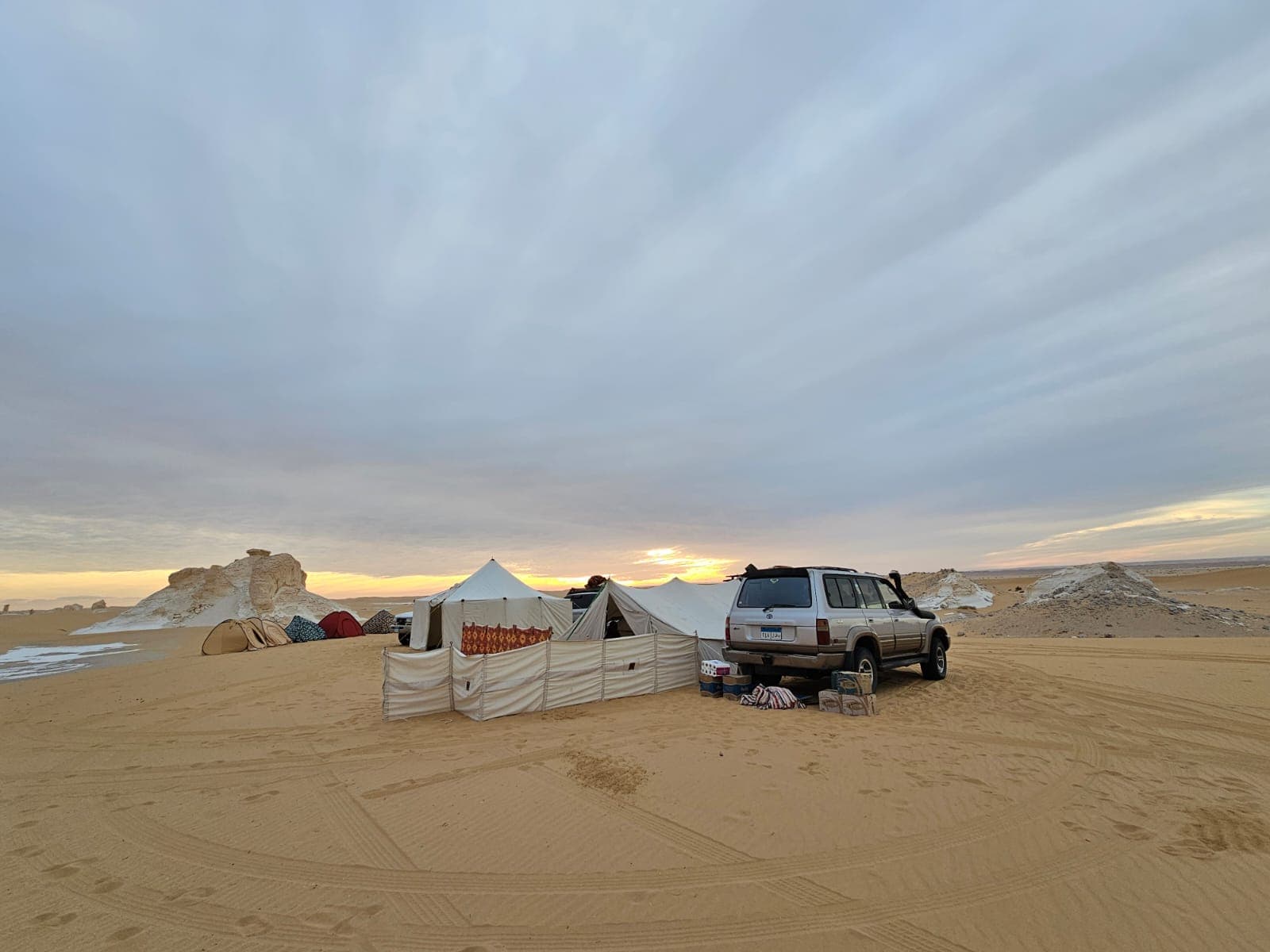
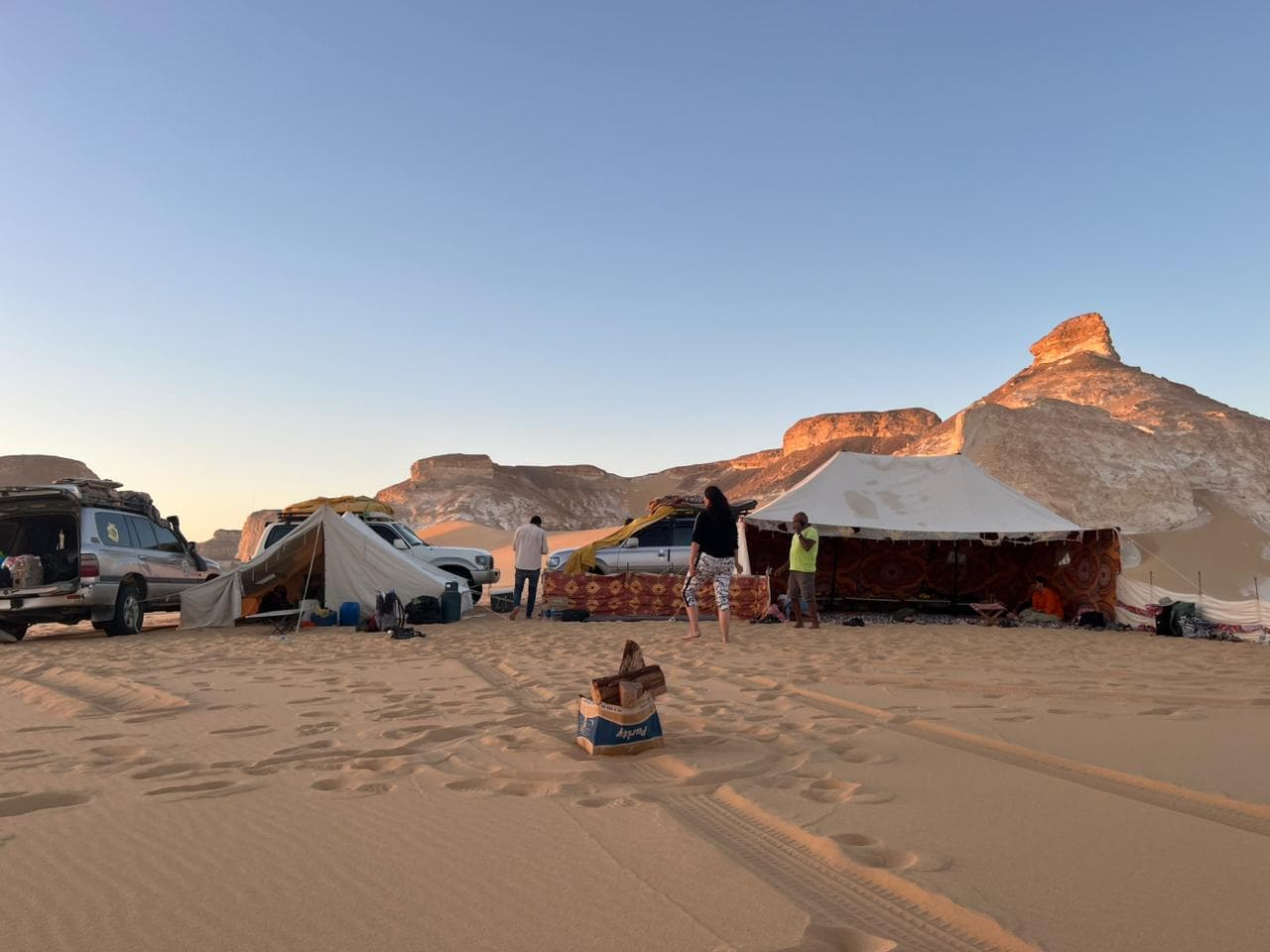
- Complete camp kitchen, dining carpets, and shaded rest shelters.
- 4x4 support vehicles or pack camels transporting heavy gear between camps.
- Satellite communication devices for emergency safety.
Safety on Desert Treks in Egypt
Multi-day expeditions across Egypt's Western Desert are remarkably safe under professional Bedouin supervision. Primary environmental risks are mitigated through rigorous protocols:
- Abundant Hydration: Trekkers carry 2 liters while walking and replenish from support vehicles 2–3 times daily, aiming for a total intake of 4 liters per person per day.
- Cool-Hour Hiking: Treks avoid the intense midday sun; morning walks conclude by 11:00 AM and afternoon sessions begin after 3:00 PM.
- Master Bedouin Guides: Our native guides navigate the Western Desert with intimate generational expertise.
- Support Vehicles in Close Range: Support vehicles remain within 1–2 hours or less of the walking party at all times.
- Satellite Communications: Every expedition is equipped with satellite emergency communication tools.
Solo, unguided desert trekking in Egypt is hazardous and strictly discouraged.
Multi-Day Desert Trek Pricing
Private desert trekking and Sahara hiking tour rates with Bedouin Trails (subject to seasonal schedule; check expedition pages for current quotes):
- 3-Day Multi-Day Desert Trek: $350–$550 per person.
- 5-Day Sahara Hiking Tour: $550–$900 per person.
- 7-Day White Desert Trek: $750–$1,300 per person.
- 10–14 Day Custom Sahara Traverse: $1,200–$2,500 per person.
All prices include full logistical support: 4x4 private transport from Cairo, native Bedouin guides, full-board freshly cooked meals, drinking water, camping equipment, support vehicles/camels, satellite emergency coverage, and national park entrance fees.
Best Time for Desert Trekking in Egypt
From October through April for any multi-day desert expedition. The prime window is November through February, featuring comfortable daytime temperatures of 18°C–24°C, crisp clear nights, and stable dry weather.
Avoid May through September: Intense summer heat makes multi-day desert hiking hazardous and uncomfortable.
FAQ
What level of fitness is required for desert trekking in Egypt?
Standard walking fitness. If you can comfortably walk 10 km on hilly terrain at home, you can easily complete a multi-day Sahara hiking tour. Distances can be adjusted for different fitness levels.
Is a Sahara hiking tour dangerous?
Not with professional Bedouin Trails support. We run dozens of successful treks each season without incident. The desert demands respect, but an expertly managed expedition is no more dangerous than standard mountain hiking.
What if I cannot continue walking mid-trek?
Our 4x4 support vehicles accompany the trek throughout the entire route. If you ever need to rest or ride a section, the vehicle is readily available.
Can I bring my own trekking gear?
Yes. Bring your own daypack, trekking footwear, and clothing. Bedouin Trails provides all sleeping bags, mattresses, and tents upon request.
Are there bathroom facilities on a multi-day desert trek?
At each wilderness camp, we set up private designated toilet areas equipped with portable camp toilets and hygiene supplies. There are no permanent structures in the open desert.
How does desert trekking differ from a camel safari?
Desert trekking is completed entirely on foot, whereas a camel safari involves riding atop a camel. Both are authentic multi-day wilderness experiences, and they can be combined into a single hybrid expedition.