
Siwa Oasis: Egypt's Hidden Secret Between Salt Lakes and the Throne of Amun
Ask ten people to name an Egyptian landmark and you'll get the pyramids nine times out of ten. Ask them about Siwa and most will give you a blank look. Which is strange, honestly, because Siwa is the one place in Egypt where a conqueror once walked 800 kilometers across open desert just to ask it a question.
That conqueror was Alexander the Great. The question — according to ancient historians — was whether he was truly the son of a god. He got his answer from the Oracle of Amun, inside a temple that still stands, half-ruined, on a rock outcrop in the middle of this oasis. It's a strange thing to stand in front of: a building that once held enough authority to validate the ambitions of a man who went on to conquer most of the known world, now visited mostly by travelers who stumbled onto it while researching "things to do near Siwa" rather than people chasing a 2,300-year-old prophecy.
That contradiction — immense historical weight, almost no modern fame — is basically the whole personality of Siwa.
A Different Kind of Egypt
Most of what people picture when they think "Egypt" comes from the Nile Valley: pharaonic temples, hieroglyphs, a very particular visual language. Siwa barely looks like that at all. It sits close to the Libyan border, isolated enough by desert that it developed its own culture almost independently for most of its history. The people here are Amazigh (Berber), not Arab-Egyptian in the way most of the country is, and they speak Siwi, a language more closely related to tongues spoken in Morocco and Algeria than to Arabic. Mud-brick architecture, distinct textiles, distinct jewelry, a whole culinary tradition built around dates and olives rather than the dishes travelers associate with Cairo or Luxor — Siwa isn't a regional variation on Egypt. It's close to being its own small world that happens to sit inside Egypt's borders.
That isolation is also exactly what kept it intact. Siwa wasn't easily reachable by road until relatively recently in its long history, which means its traditions weren't flattened by centuries of trade routes and conquest the way the Nile Valley's were. Visiting now feels less like touring a historical site and more like being let into a place that spent most of its existence quietly uninterested in the rest of the world.
What You're Actually Looking At
The Temple of the Oracle (Aghurmi) sits at the top of a rocky hill in the oasis, and even in its partially ruined state, you can tell it was built to be imposing from a distance — visible to anyone approaching across miles of open desert. The view from the top, across the palm groves and salt lakes stretching toward the horizon, is arguably worth the climb on its own, prophecy or no prophecy.
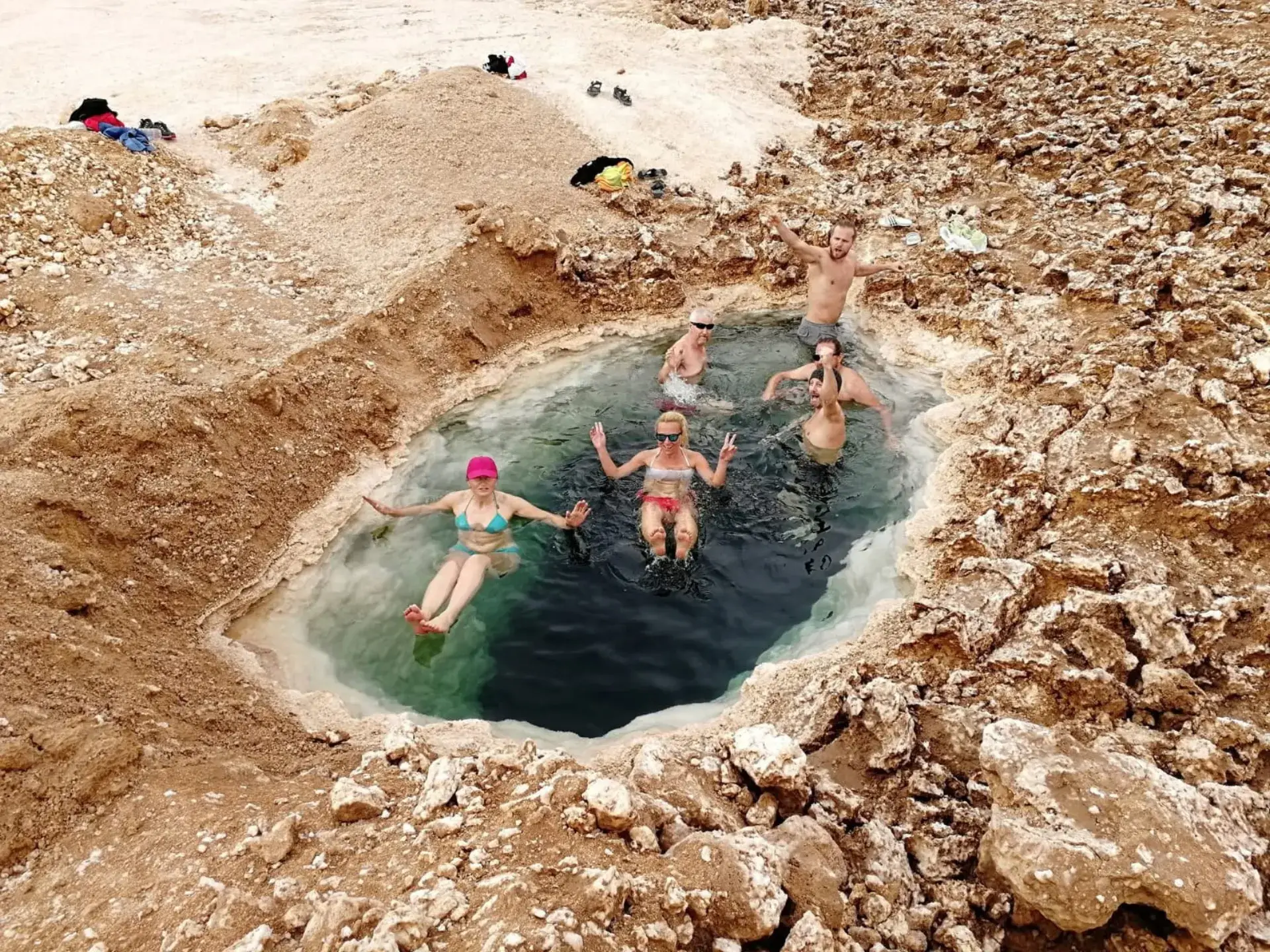
Cleopatra's Bath is a natural spring pool that's been in continuous use for thousands of years — a cool, clear pool fed from underground, ringed by palm trees, where local legend says the queen herself once bathed. Whether or not that's historically verifiable is almost beside the point; it's a genuinely good swimming spot in the middle of a desert oasis, which is reason enough to visit.
The salt lakes are what make Siwa feel genuinely strange in the best way. Mineral-rich water pools into shallow lakes where the salinity is high enough that you float without effort, Dead Sea-style, surrounded by nothing but desert and date palms. Some lakes are so saturated that salt crystallizes along the shoreline in formations that look almost artificial.
The Great Sand Sea is Siwa's other identity — one of the largest sand seas on Earth, with dunes that rise and roll for hundreds of kilometers toward the Libyan border. It's the kind of landscape that makes "vast" feel like an understatement rather than a cliche.
Shali Fortress, the old mud-brick town center, was largely abandoned after a rare multi-day rainstorm in 1926 partially dissolved its walls — mud-brick and heavy rain don't mix well. What's left is a slowly eroding, almost sculptural ruin rising out of the modern town, striking especially at sunset when the remaining walls turn a deep orange-brown.
Why Siwa Rewards Slowness
Siwa isn't a place you rush. There's no equivalent of "hit the top five sites before lunch." The oasis runs on its own pace — shops close for long stretches in the afternoon, the best way to see the palm groves is on foot or by donkey cart rather than a packed 4x4 schedule, and the real highlight of most visits isn't a single landmark but the accumulated experience of being somewhere this disconnected from the rhythm most travelers live by.
That's also why it rewards staying more than a single night. A rushed day trip gets you the Oracle Temple and maybe Cleopatra's Bath. A few days gets you time in the Great Sand Sea at sunset, a proper swim in the salt lakes without watching the clock, a meal that isn't timed around a departure, and enough slack in the schedule to just sit somewhere and watch the light change over the palms — which, for a lot of travelers who make the trip, ends up being the thing they remember most clearly afterward. The 3-Day Siwa Oasis Program is built around exactly that pace — enough time to stop treating the oasis like a checklist.
The Food Is Its Own Reason to Visit
Siwa's two defining crops — dates and olives — aren't just agricultural footnotes, they're practically a cultural identity. The oasis produces some of the most prized dates in Egypt, grown in palm groves that have been cultivated for generations, and the local olive oil is pressed from trees that, in some cases, are genuinely old enough to have shaded travelers a century ago. Meals here lean heavily on both: dates worked into everything from breakfast to dessert, olive oil drizzled generously over bread and stews, dishes built around local grains and vegetables rather than the Nile Valley staples most visitors to Egypt associate with the country's food. Siwan cuisine is reason enough on its own for food-curious travelers to make the trip — it doesn't taste like "Egyptian food" in the way most people picture it, because it genuinely isn't, in the same way the rest of the culture here runs on its own track.
When to Visit
Siwa is a desert oasis, which means summer temperatures climb high enough to make daytime sightseeing genuinely uncomfortable. The more forgiving window runs roughly October through April, when daytime heat is manageable and the salt lakes and springs feel refreshing rather than merely tolerable. Winter nights can get surprisingly cold given how far inland and exposed the oasis is, so pack layers even if the daytime forecast looks mild. Spring, particularly March and April, tends to offer an especially good balance — warm enough for comfortable swimming, cool enough for a full day out in the Great Sand Sea without the trip turning into an endurance test.
Getting There Is Part of the Point
Siwa is remote by design — roughly eight hours by road from Cairo through genuinely empty desert, or a shorter route from the Mediterranean coast near Marsa Matruh. That distance is exactly what's kept it from turning into another stop on a standard group-tour circuit. It also means Siwa works best as a dedicated trip rather than a rushed add-on squeezed between other destinations; the drive itself, watching the landscape shift from coastal scrub to deep desert to the first palm groves on the horizon, is part of what makes the arrival feel earned. Travelers who want extra time for that distance to pay off tend to go with the 4-Day Siwa Oasis Desert & Culture Tour, which adds a full day in the Great Sand Sea beyond the main landmarks.
An Oasis Worth Knowing About
Siwa won't show up on a highlight reel of "must-see Egypt" the way the pyramids will, and that's precisely its appeal. It's a place with its own language, its own architecture, its own food, its own 2,300-year-old claim to historical fame — sitting quietly in the far west of the country, mostly untouched by the version of Egypt most visitors already know.
FAQ
How do you get to Siwa Oasis?
Siwa is roughly 8 hours by road from Cairo through the Western Desert, or a shorter route from Marsa Matruh on the Mediterranean coast. The journey itself is part of the experience.
Can you swim in Siwa's salt lakes?
Yes — and you'll float effortlessly, Dead Sea-style. The salinity is high enough that you bob on the surface without trying. It's one of the most memorable experiences in the oasis.
What is the best time to visit Siwa?
October through April, with spring (March-April) offering the best balance — warm enough for swimming, cool enough for a full day in the Great Sand Sea.