The Egyptian Oasis Circle: 4 Western Desert Oases in One Trip
For travelers seeking the deepest possible experience in Egypt's Western Desert, there is one comprehensive itinerary that encompasses everything: the Oasis Circle. An expansive 7-to-10-day loop or one-way expedition connecting all four major oases of the Western Desert—Bahariya, Farafra, Dakhla, and Kharga—along with the Black Desert, the White Desert, and Crystal Mountain, culminating either back in Cairo or on the Nile in Luxor.
Most standard Egypt trips only touch upon one or two of these locations. The Oasis Circle visits them all within a single, cohesive overland expedition, and the depth of discovery is immense. You will come away with an authentic understanding of how Egypt's deep western hinterland truly functions: why these oases were historically vital, how their communities differ, and how the sweeping landscape evolves as you travel south.
This is the ultimate planning guide for that journey: routes, travel distances, sample itineraries, highlights for each oasis, and how to experience it all with seamless comfort.
What is the Oasis Circle?
The Oasis Circle is the definitive route across the Western Desert that connects Egypt's four primary southern oases—Bahariya, Farafra, Dakhla, and Kharga—alongside the protected reserves of the Black and White Deserts situated between Bahariya and Farafra. It can be undertaken in several formats:
- Cairo Round-Trip Loop: Cairo – Bahariya – White Desert – Farafra – Dakhla – Kharga – Cairo. Total: 7–10 days, ~2,000 km of driving.
- One-Way Traverse: Cairo – Bahariya – White Desert – Farafra – Dakhla – Kharga – Luxor. Total: 6–8 days, ~1,400 km of driving. This is universally regarded as the most rewarding option, as it avoids backtracking and allows you to continue exploring Upper Egypt directly from Luxor (Karnak, Valley of the Kings, etc.).
- Partial Circuits: For travelers with less time, popular partial itineraries include Cairo – White Desert – Dakhla – Cairo (5–6 days) or Luxor – Kharga – Dakhla – Cairo (5–7 days).
Bedouin Trails Tip: If your schedule permits, choose the one-way Cairo-to-Luxor traverse. It is the most complete and satisfying desert itinerary in Egypt, and concluding on the Nile allows you to step directly into ancient Pharaonic wonders without losing a full day returning north.
Suggested 8-Day Oasis Circle Itinerary (Cairo to Luxor)
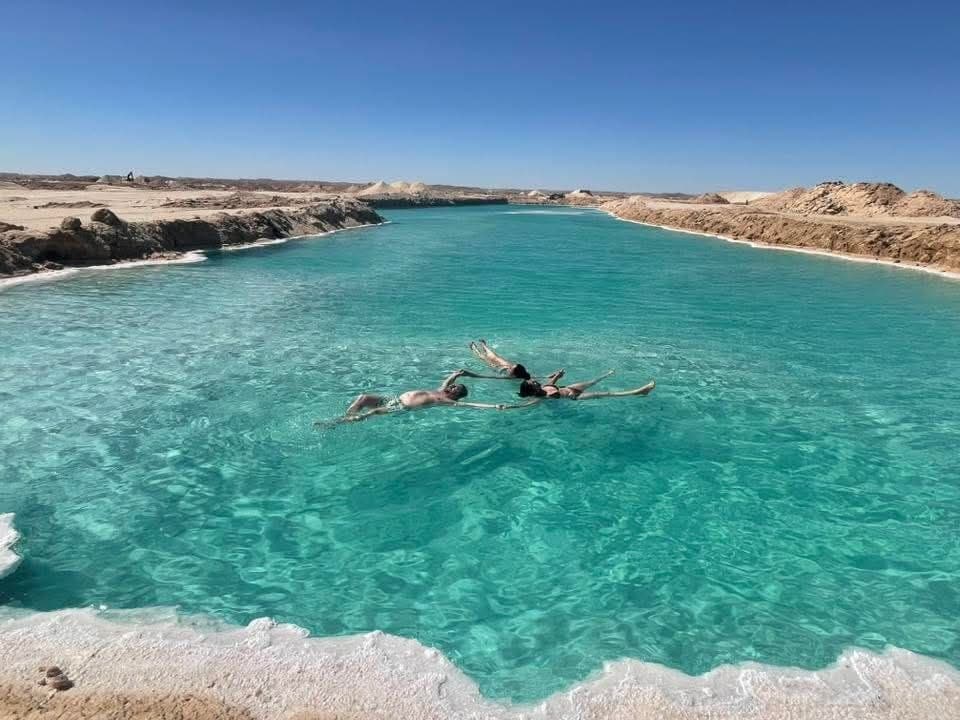
- Day 1: Cairo to Bahariya Oasis: Morning departure from Cairo; 4-hour drive to Bahariya. Lunch in the oasis. Afternoon exploration of the Golden Mummies Museum, a peaceful walk through date palm groves, and a soak in natural hot springs. Overnight in a Bahariya desert lodge.
- Day 2: Bahariya to Black Desert and White Desert: Morning drive to the Black Desert (1 hour), hike an extinct volcanic cone, pause at Crystal Mountain, and reach the White Desert by mid-afternoon. Set up camp among pristine chalk monoliths, capture the sunset, and enjoy an authentic Bedouin campfire dinner under the stars.
- Day 3: White Desert (Full Day Exploration): Sunrise photography and a full day exploring remote regions such as Agabat and deep chalk formations inaccessible to standard day-trippers. Second night under the desert sky (spending two nights in the White Desert transforms the experience entirely).
- Day 4: White Desert to Farafra and Dakhla: Morning drive southward with a short stop in Farafra (a tranquil oasis town; visit the Badr Art Museum and enjoy lunch). Continue to Dakhla (5 hours total driving). Arrive late afternoon; overnight in a traditional Dakhla lodge.
- Day 5: Dakhla Oasis (Full Day): Morning guided walking tour through the medieval mud-brick citadel of Al-Qasr. Afternoon visits to Deir el-Hagar Roman Temple, the painted tombs of Muzawaka, and natural hot spring groves. Overnight in Dakhla.
- Day 6: Dakhla to Kharga Oasis: Scenic morning drive (3 hours). Afternoon visits to the Persian-era Hibis Temple and the early Christian Bagawat Necropolis. Overnight in Kharga.
- Day 7: Kharga to Luxor: Morning exploration of the Roman fortress of Qasr El-Ghueita and surrounding ancient outposts. Afternoon drive across the desert plateau to Luxor (4 hours). Arrive in Luxor by evening.
- Day 8: Continuing Your Egyptian Journey: Explore Luxor's legendary monuments (Karnak, Luxor Temple, Valley of the Kings, Hatshepsut Temple) or take a flight back to Cairo, concluding the desert expedition.
What to See in Each Oasis
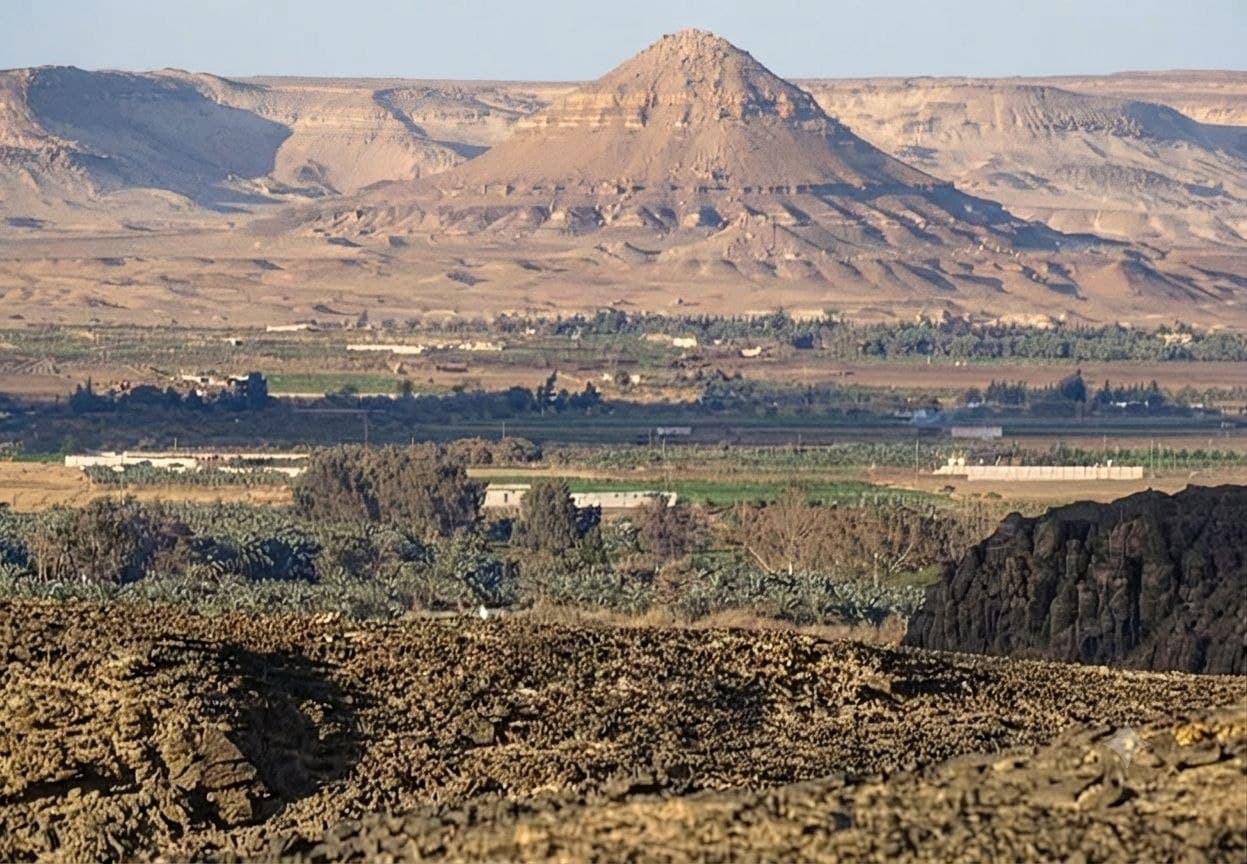
- Bahariya: Natural hot mineral springs, the Museum of the Golden Mummies, ancient Tombs of the Nobles, lush palm groves, and the strategic gateway to the Black and White Deserts.
- Farafra: The most serene and untouched oasis. Its defining cultural highlight is the Badr Museum, dedicated to local artist Badr Abdel Moghny, constructed entirely by hand from mud-brick and natural stone. Most travelers explore Farafra as a transit stop.
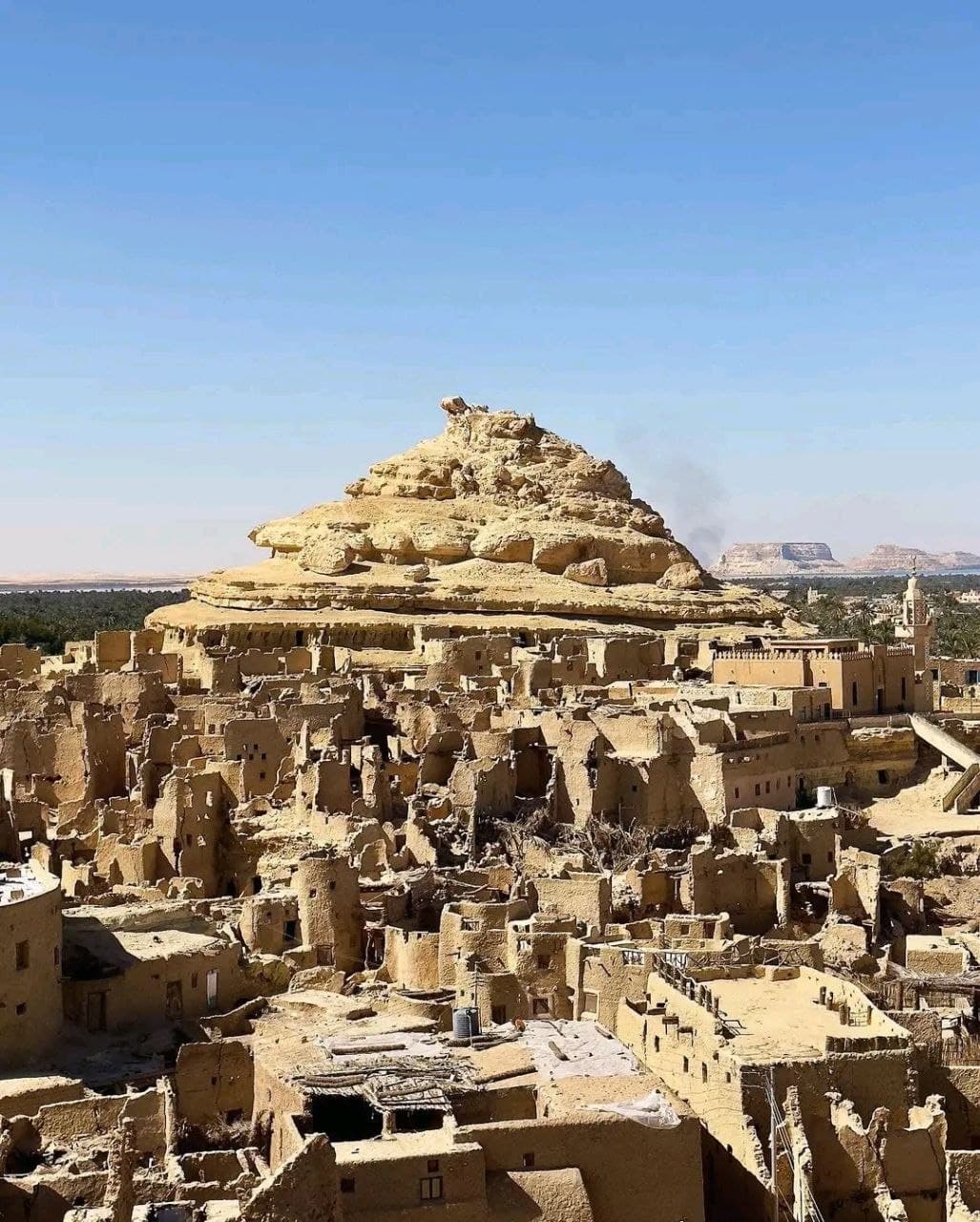
- Dakhla: The remarkably preserved medieval fortified town of Al-Qasr, the Roman Temple of Deir el-Hagar, the Muzawaka Tombs, therapeutic thermal springs, and some of the most dramatic palm groves in the Sahara.
- Kharga: The historic 6th-century BCE Persian Temple of Hibis, the Christian mud-brick necropolis of Al-Bagawat, imposing Roman desert fortresses, and the rich legacy of the ancient Darb El-Arba'in caravan route.
Distances and Drive Times
Approximate driving distances and times along well-maintained paved highways:
- Cairo – Bahariya: 360 km, 4–5 hours.
- Bahariya – Farafra (via Black and White Deserts): 180 km, 3–4 hours direct (plan for a full day including sightseeing and off-road desert camping).
- Farafra – Dakhla: 310 km, 4 hours.
- Dakhla – Kharga: 200 km, 3 hours.
- Kharga – Luxor: 250 km, 4 hours.
- Kharga – Cairo (Return Loop): 600 km, 7 hours.
Totals: The one-way traverse (Cairo to Luxor) spans approximately 1,300–1,400 km across 6–8 days. The complete circular loop (Cairo to Cairo) covers roughly 2,000 km over 8–10 days.
Where to Stay Along the Route
Accommodations vary gracefully with the character of each oasis:
- Bahariya: Comfortable mid-range eco-lodges and traditional desert hotels nestled in verdant date plantations.
- White Desert: Authentic Bedouin open-air camping beneath the desert night sky, fully equipped with tents, mattresses, and blankets.
- Farafra: Simple, charming guesthouses (typically visited as a day stop).
- Dakhla: Atmospheric desert lodges and family-run mud-brick boutique guesthouses near historic Al-Qasr.
- Kharga: Sol Y Mar Pioneers Kharga Oasis Hotel or comfortable local accommodations.
Note: Bedouin Trails curates all accommodations as part of our multi-day expeditions, tailored precisely to your comfort preferences and budget.
Best Time for the Oasis Circle
The premier season for the Oasis Circle runs from October through April, with November through February representing the peak climatic window. Daytime temperatures are delightfully mild, nights are crisp and refreshing, and long drives across vast desert stretches are effortless in air-conditioned 4x4 vehicles.
Avoid June through August: Extended overland travel during Saharan summer heat (often exceeding 40°C / 104°F) is physically grueling and unsafe. Road segments around Kharga and the southern desert can become uncomfortably harsh.
Cost and Logistics
An all-inclusive private 8-day Oasis Circle expedition from Cairo to Luxor with Bedouin Trails generally ranges from $1,200 to $2,500 USD per person (depending on group size, accommodation tier, and custom additions). This includes:
- Private, air-conditioned 4x4 overland transportation.
- Professional English-speaking desert guide and drivers.
- All hotel, lodge, and desert camp accommodations.
- All meals, bottled mineral water, and camp beverages.
- National park entry permits and archaeological site entrance tickets.
- Complete premium desert camping equipment.
Budget travelers can theoretically navigate highway sections via public regional buses, but accessing off-road national parks—including the Black Desert, White Desert, and deep dune fields—is impossible without a licensed 4x4 expedition team. Booking a seamless, fully organized private itinerary is strongly recommended.
Who is the Oasis Circle For?
- Returning Travelers to Egypt: Those who have seen the Giza Pyramids and Nile temples and desire a profound, off-the-beaten-path adventure.
- Photographers: Creatives seeking diverse natural landscapes, shifting desert light, surreal chalk sculptures, and historic architecture in one grand tour.
- History and Archaeology Enthusiasts: Explorers fascinated by layered millennia—Pharaonic, Persian, Roman, early Christian, and Islamic medieval sites.
- Slow Travelers: Discerning travelers who value a deep, continuous journey over fragmented weekend excursions.
- Couples and Small Groups: Adventurers seeking a private, unforgettable overland expedition through dramatic wilderness.
- Travel Writers and Documentarians: Professionals who need an authentic, comprehensive overview of the Egyptian Sahara in a single cohesive route.
FAQ
How many days do I need for the Oasis Circle?
8 days is the golden standard for the one-way Cairo-to-Luxor itinerary. 10 days is ideal for the complete round-trip loop back to Cairo. Less than 6 days will feel hurried and force you to skip essential historical and natural highlights.
Is it better to do the loop or the one-way traverse?
The one-way traverse from Cairo to Luxor is significantly superior. It avoids repetitive driving on the return leg, maximizes scenic variety, and drops you right at Egypt's premier ancient monuments in Luxor. Choose the Cairo loop only if international flight logistics require it.
Can I do partial sections of the Oasis Circle?
Yes. Popular partial routes include Cairo – White Desert – Bahariya – Cairo (3–4 days), Cairo – White Desert – Dakhla – Cairo (5 days), or Luxor – Kharga – Dakhla – Cairo (6–7 days). Custom routes can be tailored to any schedule.
Is the Oasis Circle safe?
Yes. The Western Desert and its oasis communities are among the safest and most hospitable regions in Egypt. Major connecting highways are paved and regularly patrolled, and the local towns are peaceful agricultural havens.
Do I need specialized equipment?
No. Bedouin Trails provides all necessary camping equipment, including clean sleeping bags, comfortable mats, warm blankets, and private tents upon request. You only need standard comfortable travel clothing, sun protection, sturdy walking shoes, and personal essentials.