Desert Hiking and Trekking in Egypt: The Complete Hiker's Guide
Most travelers experience the Egyptian desert from inside a 4x4 vehicle: looking out the window, snapping photos, stopping briefly for a short stroll, and driving on. There is nothing wrong with that—it is how most desert tourism in Egypt operates. But there is another way that is truly transformative: walking.
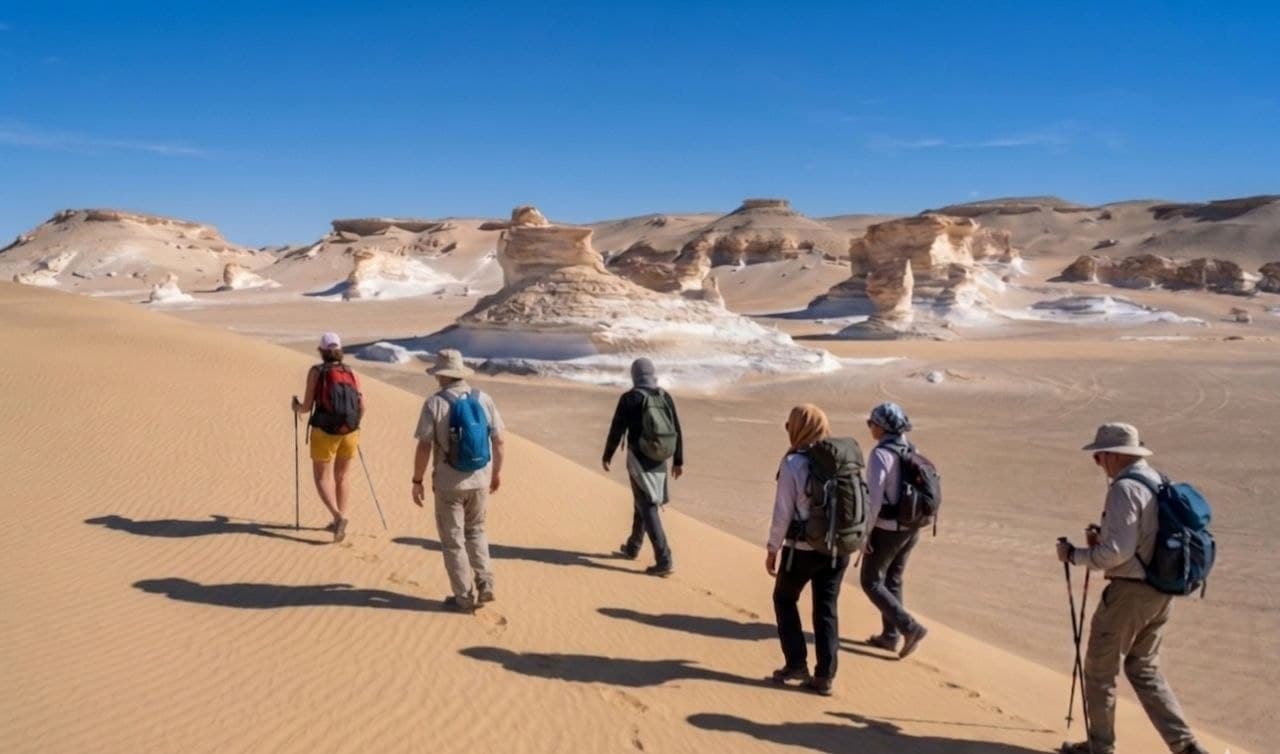
Multi-day desert hiking in Egypt means moving across the landscape at your own walking pace (3–4 km/h), covering 12–20 km per day, with a dedicated support crew handling your water, food, and heavy gear. You experience the desert in a way no vehicle allows; you hear its deep silence and notice details on a human scale: the texture of the sand, tiny desert plants nestled between rock formations, and the subtle shifts in light throughout the day.
This guide is designed for travelers seeking that authentic, slow-paced, deeply immersive desert journey. Below, we cover where to trek, how the logistics work, fitness expectations, packing essentials, and how to choose the right expedition.
What is Desert Trekking in Egypt?
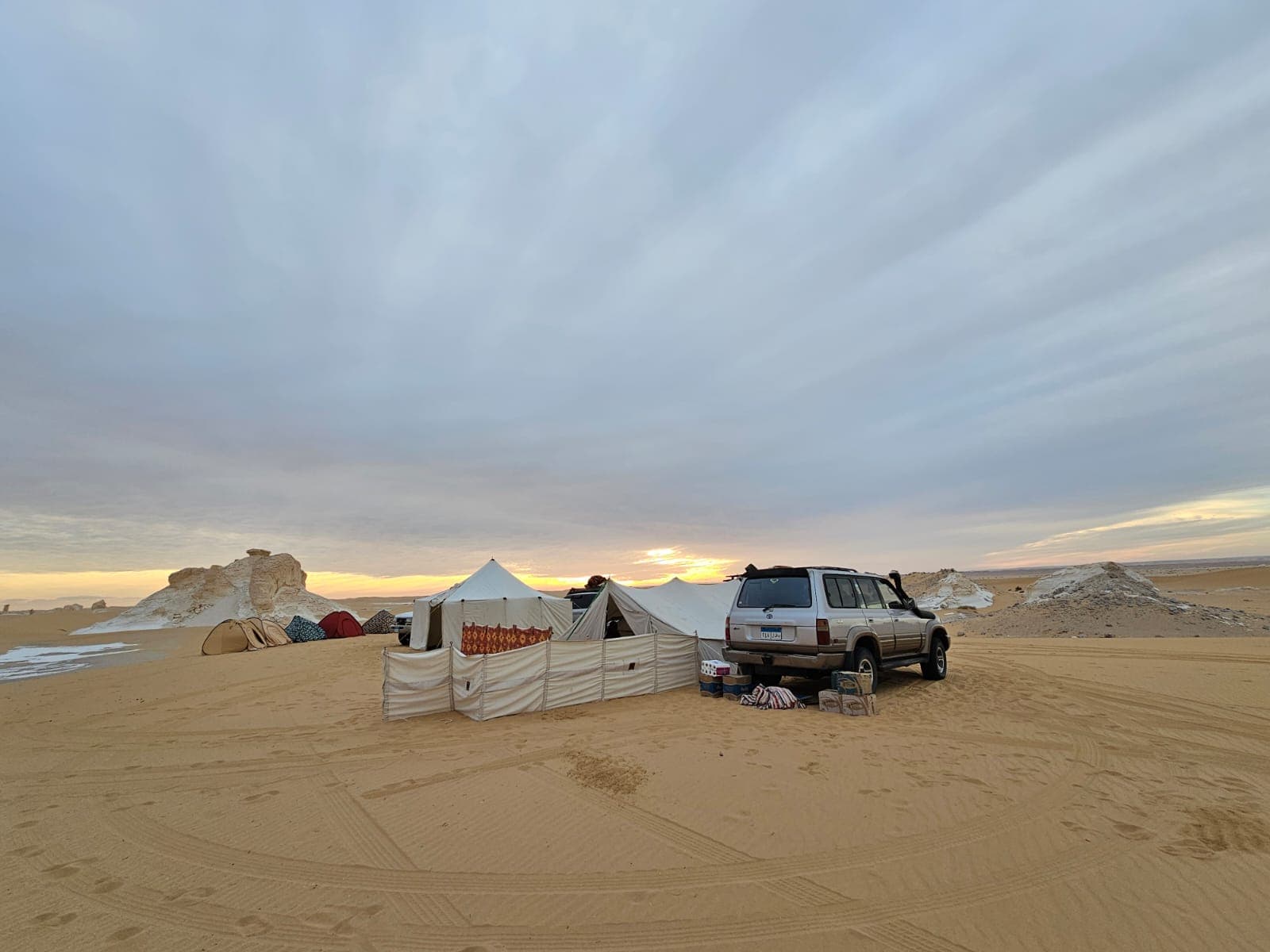
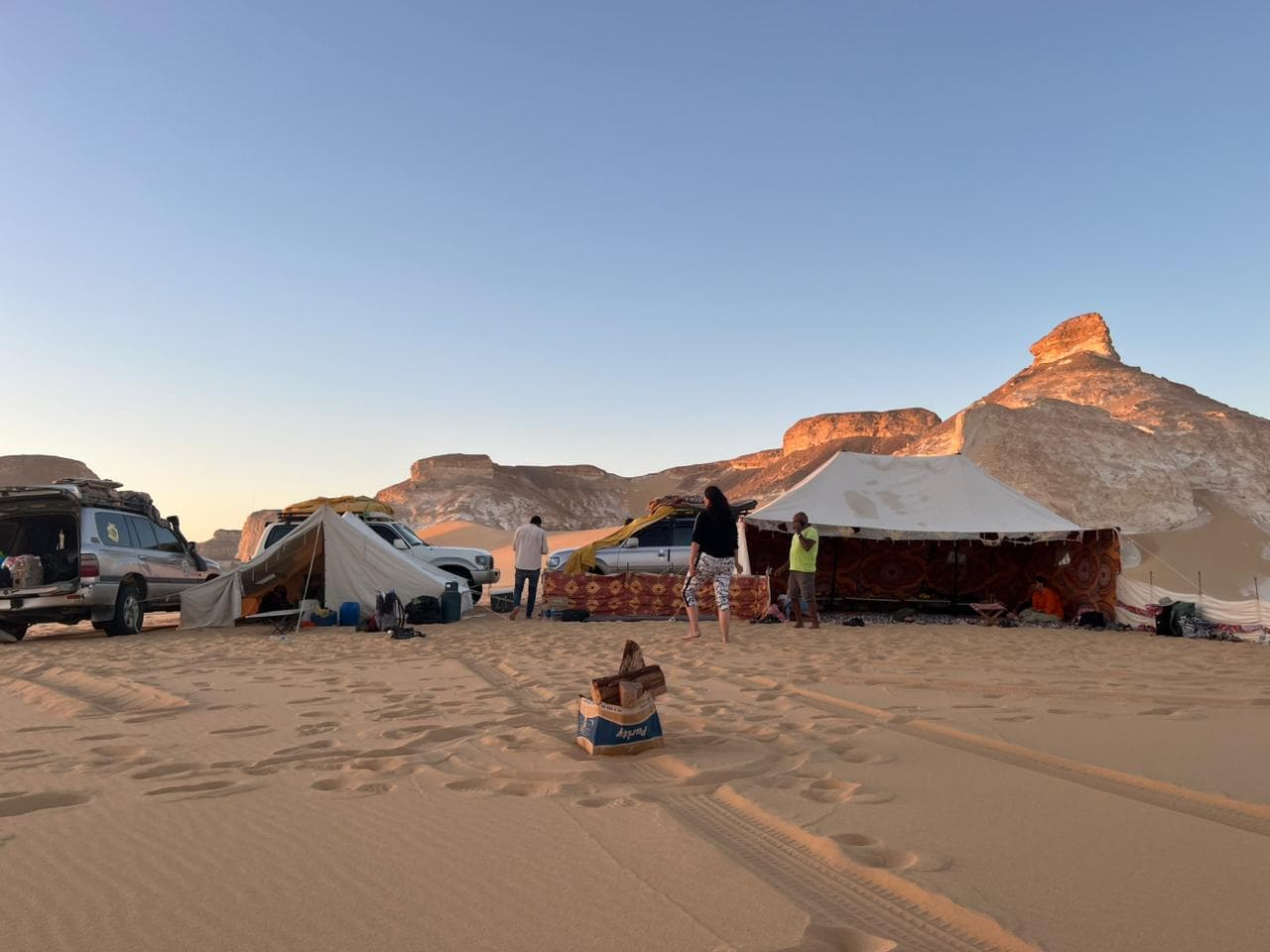
Desert trekking is multi-day hiking across Egypt's vast wilderness supported entirely by a local Bedouin team. You walk with a light daypack while our support crew—using camels or 4x4 vehicles—transports drinking water, kitchen supplies, bedding, and camp gear. At the end of each day's walk, you arrive at a welcoming campsite where dinner is being prepared and fresh Bedouin tea brews over the fire.
Expeditions range from introductory 3-day walks to comprehensive 7-day traverses. Daily distances average 12–20 km at a steady, comfortable pace, punctuated by regular shade breaks, tea stops, and a long midday rest during the warmest hours. The terrain is predominantly flat to gently rolling sand and limestone; this is not mountaineering, and anyone with standard walking fitness can comfortably participate.
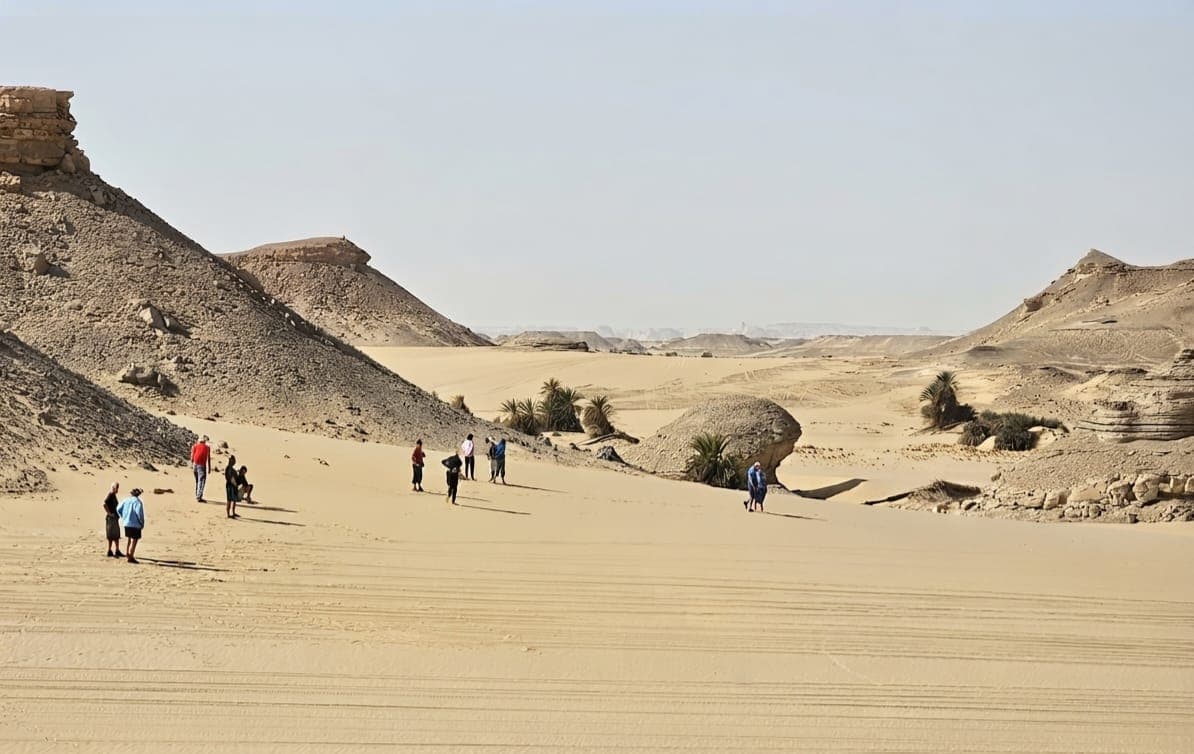
What sets desert hiking apart from a conventional jeep tour is experiential depth. You witness the same dramatic geological wonders, but at a pace that lets you truly absorb them. You discover hidden corners vehicles bypass, sleep in pristine wilderness camps, and complete your journey with a profound connection to the desert.
Bedouin Trails Tip: If you are planning a desert trek, commit to at least 3 days. A single day walk is pleasant, but the true transformative magic begins on days 2 and 3, once your body settles into the rhythm, your mind unplugs, and the vast wilderness becomes your home.
Where to Hike in Egypt
1. The White Desert (Most Popular)
Egypt's premier desert trekking route. The White Desert features stable ground, gentle gradients, world-class photography opportunities, and the most striking chalk rock formations on the continent. Trekking itineraries here typically range from 3 to 10 days.
2. The Black Desert & Crystal Mountain
Less common as a standalone multi-day walk, but spectacular when integrated into longer traverses. The volcanic terrain of the Black Desert features coarser basalt underfoot compared to the soft chalk of the White Desert, offering fantastic textural variety.
3. The Sinai Mountains
A completely different trekking experience: high-altitude alpine hiking in the upper Sinai around Saint Catherine. Expect steeper ascents, cooler mountain nights, and ancient Bedouin mountain trails. A wonderful option for hikers seeking elevation and rugged granite peaks.
4. Siwa & The Great Sand Sea
Multi-day expeditions across rolling sand dunes. Visually breathtaking, though physically demanding due to deep, shifting sands. Expeditions here are typically shorter (2–4 days) to account for the strenuous walking conditions.
What a Multi-Day Desert Trek Looks Like
A typical 5-day White Desert trekking itinerary:
- Day 1: Drive from Cairo to the desert trailhead near Bahariya/White Desert (approx. 5 hours). Enjoy a light afternoon walk (approx. 5 km) to the first wilderness camp. Settle in for sunset and stargazing.
- Day 2: First full trekking day. Cover approx. 15 km through surreal chalk formations with a scenic lunch break. Arrive at the second camp by mid-afternoon for rest and photography.
- Day 3: Deep desert trekking covering approx. 18 km through remote geological sectors untouched by vehicle safaris. Enjoy a generous midday rest and a magical sunset hike.
- Day 4: A relaxed trekking day covering approx. 12 km toward the final camp, allowing ample time for side exploration, landscape photography, or quiet reflection.
- Day 5: A short morning walk to meet the support vehicle, followed by the return drive to Cairo.
Distances remain fully flexible: walkers seeking an easier pace can take shorter daily routes, while experienced trekkers can comfortably cover 20 km.
Fitness Requirements
Standard walking fitness is entirely sufficient for most desert expeditions. You do not need to be an athlete, but you should be comfortable with:
- Daily Walking: Walking 5–7 hours per day with breaks, split between cool morning and late afternoon sessions.
- Carrying a Daypack: Carrying a 4–6 kg pack containing daily water, sun protection, a camera, and an extra clothing layer.
- Temperature Variations: Adapting to brisk mornings, warm mid-days, and crisp desert nights.
- Uneven Ground: Walking on soft sand, compacted gravel, and limestone slabs without difficulty.
If you can comfortably walk 10 km on rolling hills at home, you can easily complete a multi-day trek in the Western Desert. If you have not hiked recently, build endurance by taking weekend walks with a loaded daypack 4–6 weeks before your trip.
What to Pack for Desert Hiking
Footwear (Critical)
- Lightweight Hiking Boots: Breathable boots with ankle support—the standard recommendation for desert terrain.
- Trail Running Shoes: Lightweight trail runners are excellent for confident hikers on sand and smooth rock.
- Camp Sandals: Comfortable sandals or slip-ons to air out your feet around the campsite.
- Merino Wool Socks: 2 fresh pairs per day; merino wool regulates temperature, wicks moisture, and prevents blisters far better than cotton.
Clothing
- Loose Trekking Trousers: 2 pairs of lightweight, breathable hiking pants for complete UV protection.
- Technical Long-Sleeve Shirts: 2 quick-drying, moisture-wicking shirts with UPF sun ratings.
- Headwear: A wide-brimmed sun hat or a traditional Bedouin keffiyeh/shemagh.
- Warm Mid-Layer: A fleece jacket or lightweight down jacket for cool desert nights.
- Thermal Base Layers: Lightweight thermal underwear for sleeping comfortably during winter months.
Other Essentials
- Hydration System: A 2-liter hydration bladder (CamelBak) or reusable water bottles in your daypack.
- Trekking Poles: Highly recommended to maintain balance and reduce fatigue on soft sand dunes.
- Sun Care: SPF 50+ broad-spectrum sunscreen, UV-blocking sunglasses, and moisturizing lip balm.
- Blister & First Aid Kit: Moleskin, athletic tape, and Second Skin for immediate foot care.
- Lighting & Power: A headlamp with spare batteries, personal medications, and a camera with extra battery packs.
What Bedouin Trails Provides
- Sleeping Gear: Season-appropriate sleeping bags, warm blankets, and thick sleeping mattresses.
- Catering: All freshly prepared meals, snacks, and unlimited purified drinking water.
- Tents: Weatherproof tents provided upon request (though most guests prefer sleeping under the starry open sky).
- Camp Infrastructure: Full Bedouin kitchen setup, dining mats, and shaded rest shelters.
- Logistical Support: Dedicated 4x4 support vehicles transporting all luggage and heavy equipment between camps.
Best Time to Hike
The ideal window for desert trekking in Egypt runs from October through April. The peak months are November through February, offering comfortable daytime temperatures between 18°C and 24°C, cool crisp nights, and crystal-clear skies.
Avoid May through September: Extreme summer heat makes long-distance desert walking dangerous and uncomfortable.
Safety on Desert Treks
When conducted with professional Bedouin support, desert hiking is extraordinarily safe. Potential risks like dehydration, heat exhaustion, and navigational errors are strictly managed:
- Ample Hydration: Trekkers carry 2 liters on foot and replenish from support vehicles throughout the day, targeting 3–4 liters total daily intake.
- Smart Scheduling: Walking takes place during the cooler morning (finishing by 11:00 AM) and afternoon hours (resuming after 3:00 PM), resting in deep shade at midday.
- Expert Bedouin Guides: Our native guides navigate the Western Desert with intimate topographical mastery.
- Close Support Vehicles: Support vehicles remain within easy reach should anyone need rest, transport, or assistance.
- Satellite Communications: Expeditions carry satellite communication devices for emergency connectivity.
Solo, unguided desert trekking in Egypt is perilous and strictly inadvisable. Always travel with an equipped, experienced operator.
Who is Desert Hiking For?
- Adventure Enthusiasts: Hikers seeking an authentic wilderness expedition far beyond conventional 4x4 safaris.
- Photographers: Creatives looking for ever-changing natural light and dramatic geological compositions.
- Returning Visitors: Travelers seeking an extraordinary, off-the-beaten-path perspective of Egypt.
- Slow Travel Advocates: Wellness seekers, writers, and meditators looking for absolute digital detox and quietude.
- Small Groups & Friends: Private parties (2–8 people) seeking a meaningful shared wilderness adventure.
FAQ
What fitness level do I need for desert hiking in Egypt?
Standard walking fitness is plenty. If you can comfortably walk 10 km on hilly terrain at home, you will handle a multi-day desert trek with ease. Daily paces are adaptable to your comfort level.
Is desert trekking dangerous?
No, not with professional support. Bedouin Trails operates expeditions with expert local guides, robust hydration management, emergency satellite support, and dedicated vehicles. It is no more hazardous than standard mountain hillwalking.
What if I get tired during the walk?
Our 4x4 support vehicle is never far from the walking group. If you feel fatigued or wish to rest, you can hop into the support vehicle at scheduled meeting points.
Can I participate if I have minor knee or ankle issues?
Mild joint sensitivity can easily be managed with trekking poles and pacing adjustments. For severe orthopedic conditions, we recommend our camel trekking or 4x4 safari options instead.
Are there bathroom facilities on the trek?
In the open desert, we establish private designated camp toilet areas equipped with portable camp toilet amenities and hygiene supplies. There are no permanent structures in the protected wilderness.
How heavy is my daypack while walking?
Your daypack typically weighs only 4–6 kg (containing water, sunscreen, a camera, and a fleece layer). Our support team transports all heavy baggage, camp equipment, and food between overnight spots.