The Black Desert in Egypt: Complete Volcanic Landscape Guide (2026)
Most travelers head to Egypt's Western Desert for the extraordinary chalk sculptures of the White Desert National Park. And they are right to do so. But what many do not expect—and what stops almost every visitor in their tracks—is the surreal, dark, lunar landscape that precedes it.
This is the Black Desert: a vast volcanic field of dark cones, basalt-capped hills, and gravel plains stretching south of the Bahariya Oasis. It looks like nothing else in Egypt. It looks like almost nothing else on Earth.
If you are planning a White Desert safari, the Black Desert is not merely a scenic pitstop to endure along the way. It is a destination in its own right, and once you stand among its dark peaks, you will understand why seasoned desert travelers often say: "I had no idea this was here."
Here is the complete guide.
What Is the Black Desert?
The Black Desert spans approximately 300 square kilometers of volcanic terrain situated between Bahariya Oasis and the White Desert in Egypt's Western Desert, about 20–30 km southwest of Bahariya (and roughly 4–5 hours southwest of Cairo). Unlike the chalk and quartz landscapes that lie further south, the Black Desert was formed by ancient volcanic activity: eruptions, lava flows, and the gradual erosion of dark, iron-rich rocks over tens of millions of years.
The resulting topography is a striking expanse of conical hills capped with dark basalt and dolerite, surrounded by plains of black volcanic gravel and golden desert sand. From a distance, the cones look uniform, but as you walk among them, the rich variety becomes evident: rust-red striations, ochre bands, and glassy fragments where extreme heat once fused the surface rock.
It is not yet designated as a national park and receives far fewer standalone visits than the White Desert immediately to the south, making the experience feel raw, untouched, and unexpectedly powerful.
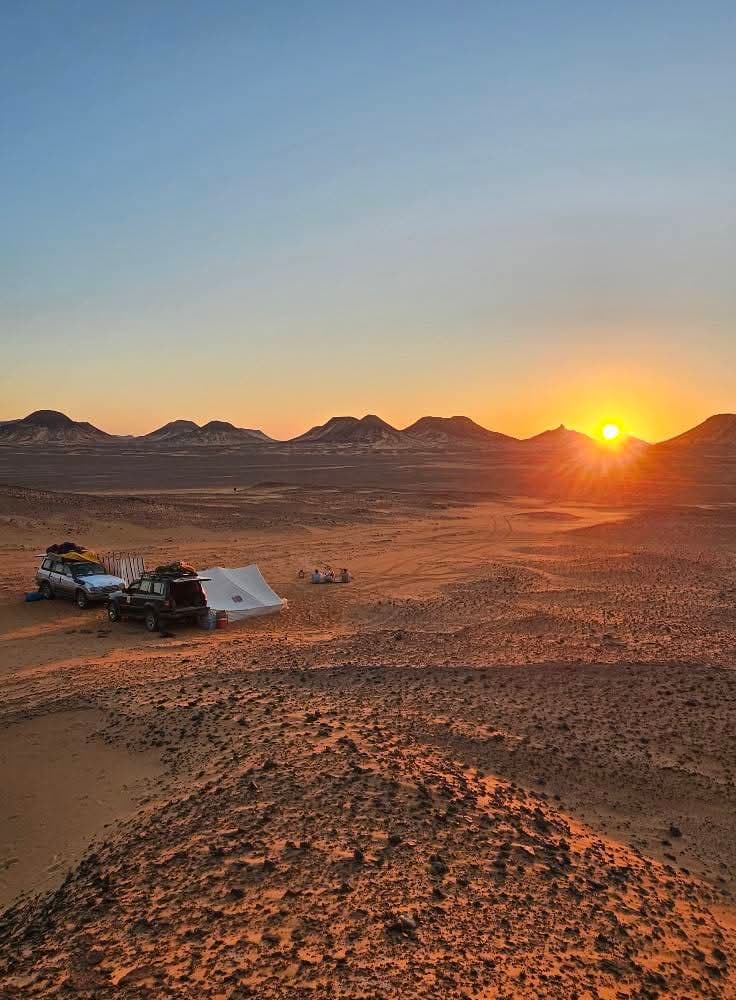
Bedouin Trails Tip: The Black Desert photographs best during the first hour after sunrise and the final hour before sunset. Midday sunlight flattens the contrast, turning the dark rocks into a featureless silhouette. Plan your visit to arrive during the golden hour, even if it means entering the White Desert slightly later.
How the Black Desert Was Formed
Around 180 million years ago, this region experienced intense volcanic activity. Magma forced its way upward through layers of surrounding sandstone and chalk, cooling and solidifying into tough, intrusive, and extrusive igneous rocks—primarily basalt, dolerite, and iron-bearing formations. Over subsequent geological epochs, softer surrounding sedimentary rock eroded away much faster than the dense volcanic caps, leaving isolated cone-shaped hills topped with volcanic crowns.
Wind, sand, and deep time did the rest. Weathering fragmented the dark basalt, scattering dark scree and gravel down the hillsides, while oxidation coated exposed surfaces in dark iron oxide patina. Geologically, the Black Desert is a textbook example of inverted topography and capped hills, where the highest points represent ancient fissures that resisted erosion.
Standing among these cones is, in essence, walking across 180 million years of geological evolution.
What to See in the Black Desert
The Volcanic Cones
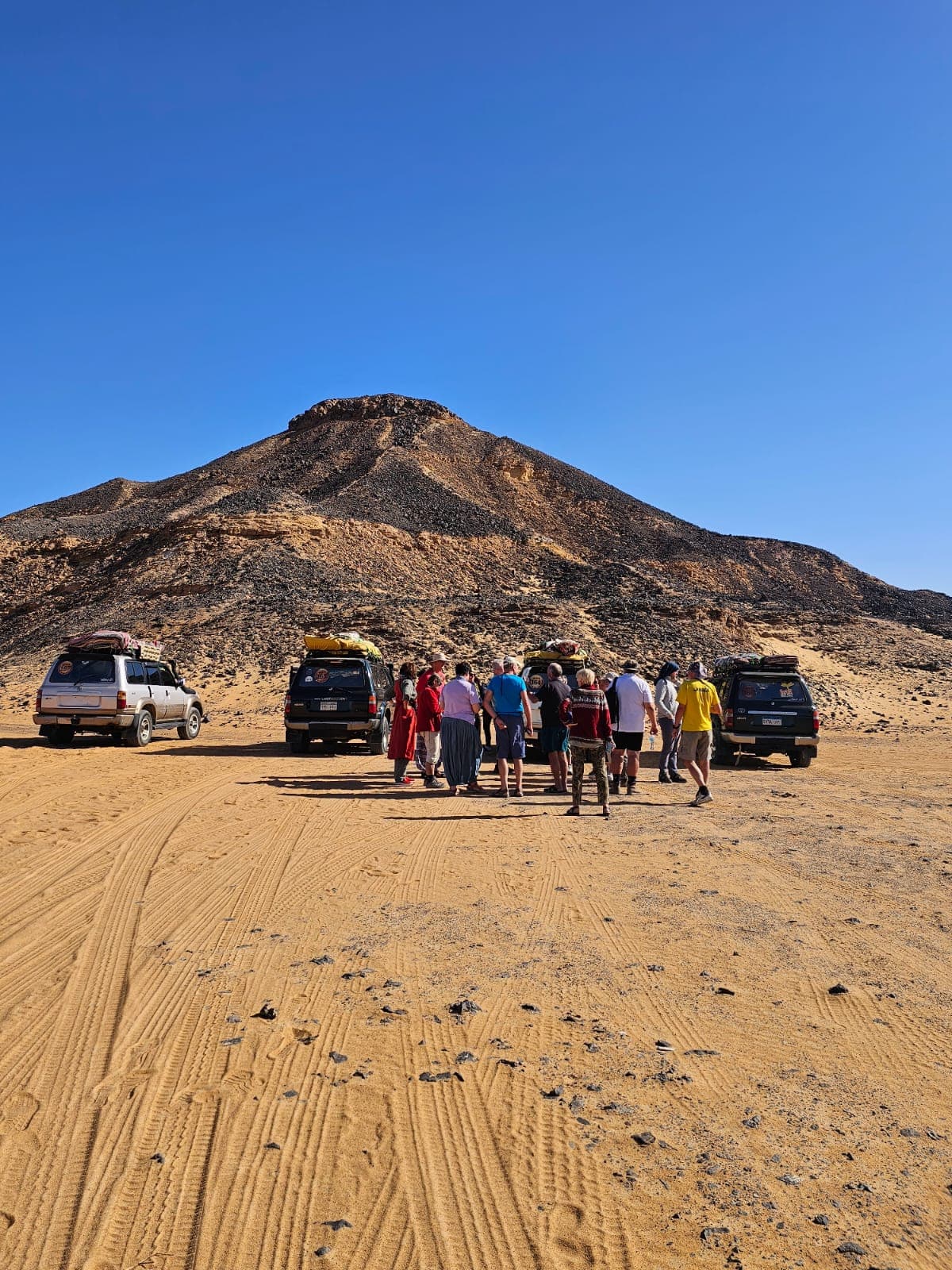
The signature feature of the landscape. Hundreds of conical hills rise from the desert floor, clustered in dramatic formations. They range from small mounds to peaks around 100 meters high. The larger cones can be climbed in 15–30 minutes and offer sweeping 360-degree panoramic views across the volcanic field—one of the most breathtaking vistas in Egypt.
Gebel El-Ingleez (English Mountain)
A prominent volcanic summit located roughly 12 km from Bahariya. It takes its name from British troops who utilized it as a strategic lookout during World War I. From the summit, you can look north toward Bahariya Oasis and south across the expansive volcanic plains. The ascent is moderately steep but easily manageable for anyone with reasonable fitness, taking about 25–35 minutes.
The Black Plains
Between the cones stretch vast flat plains blanketed in shiny volcanic gravel and weathered basalt fragments. Walking across them is a distinctive sensory experience: each step crunches audibly, and the earth feels remarkably solid compared to soft dunes. Under low-angle sunlight, these gravel plains take on deep charcoal and aubergine hues that look incredible in photographs.
Thermal Springs near the Oasis Edge
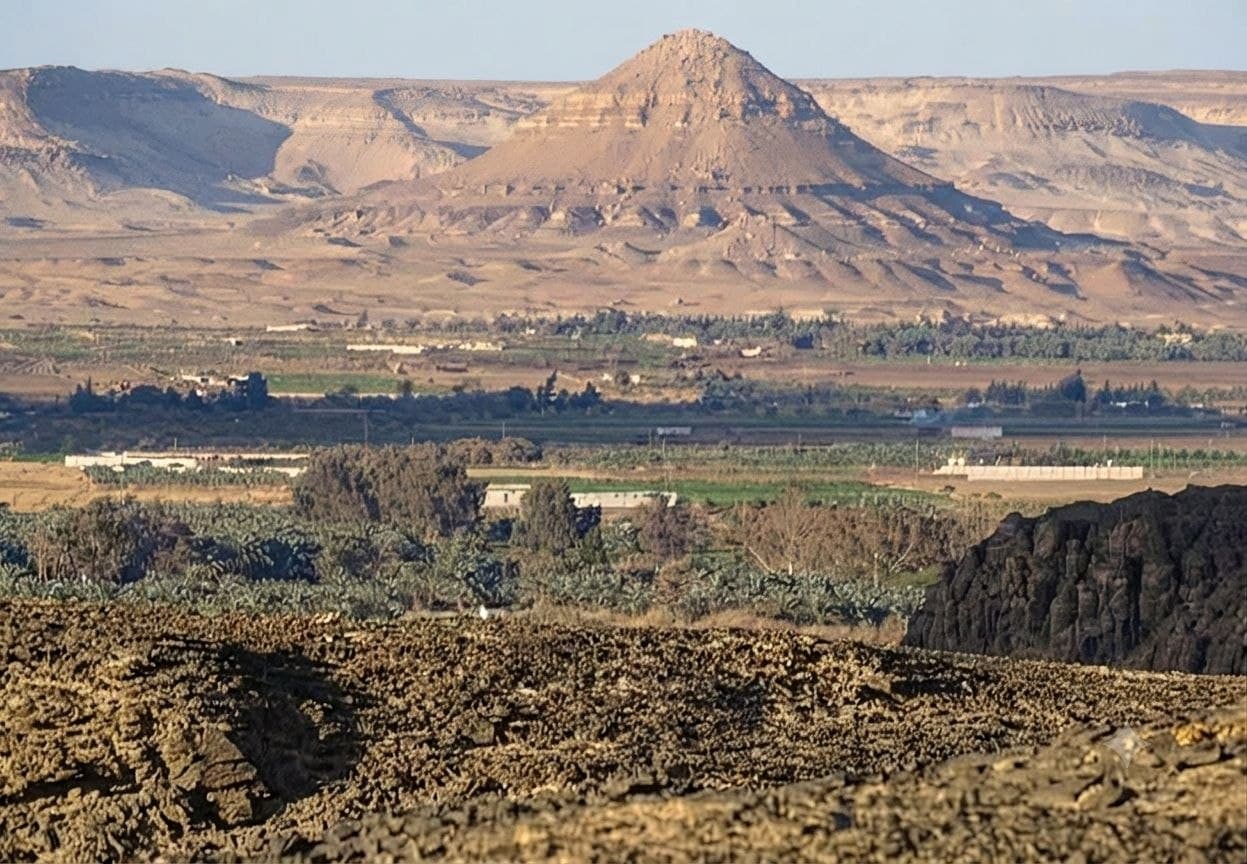
Near the transition zone between the Black Desert and Bahariya Oasis lie natural thermal springs—mineral-rich pools fed by underground aquifers that locals have used for centuries. Most guided safaris include a short stop here, allowing travelers to soak in warm 30–35°C waters framed by date palms—a rejuvenating contrast to the rugged desert terrain.
How to Get to the Black Desert
The Black Desert is located along the travel corridor connecting Bahariya Oasis to the White Desert. Unless you are conducting scientific research or embarking on an expedition, you will visit it as part of a combined Western Desert safari.
From Cairo via Bahariya Oasis
Cairo to Bahariya is approximately a 4-hour drive along the Cairo–Bahariya Desert Road. From Bahariya, the Black Desert is another 30–45 minutes south, depending on which formations you explore. Continuing south toward the White Desert takes an additional 1.5 to 2 hours.
Most operators, including Bedouin Trails, design safari itineraries so you reach Bahariya around midday, enjoy a traditional lunch, and explore the Black Desert in the late afternoon golden light before camping under the stars in the White Desert.
Independent Travel
While paved Highway 10 connects Bahariya to Farafra and skirts the edge of the Black Desert, independent travel by standard car limits you to roadside viewpoints. The most spectacular cones and deeper plains require off-road 4x4 capability. Furthermore, visiting independently misses the local Bedouin context—knowing which peaks are safest to climb, identifying geological curiosities, and navigating hidden desert tracks.
If driving independently, always refuel in Bahariya, pack twice as much water as you think you need, and stay close to marked routes. Black basalt absorbs intense solar radiation, pushing surface temperatures above 70°C in warmer months.
How Much Time to Spend in the Black Desert?
Most travelers spend 1.5 to 3 hours in the Black Desert—ample time to summit a major volcanic cone, hike across the gravel plains, and take in the view over Bedouin tea. Photographers often request longer, particularly to capture dynamic light shifts during the late afternoon.
Specialized itineraries can include an overnight camp in the Black Desert. While first-time visitors are typically encouraged to spend their first night in the White Desert for its surreal chalk formations, camping in the Black Desert offers an intensely quiet, dark-sky wilderness experience for repeat desert adventurers.
Black Desert vs. White Desert: Which Should You Visit?
You should visit both. They are completely complementary landscapes separated by less than two hours of driving, and experiencing them back-to-back is what makes an Egyptian desert safari so unforgettable.
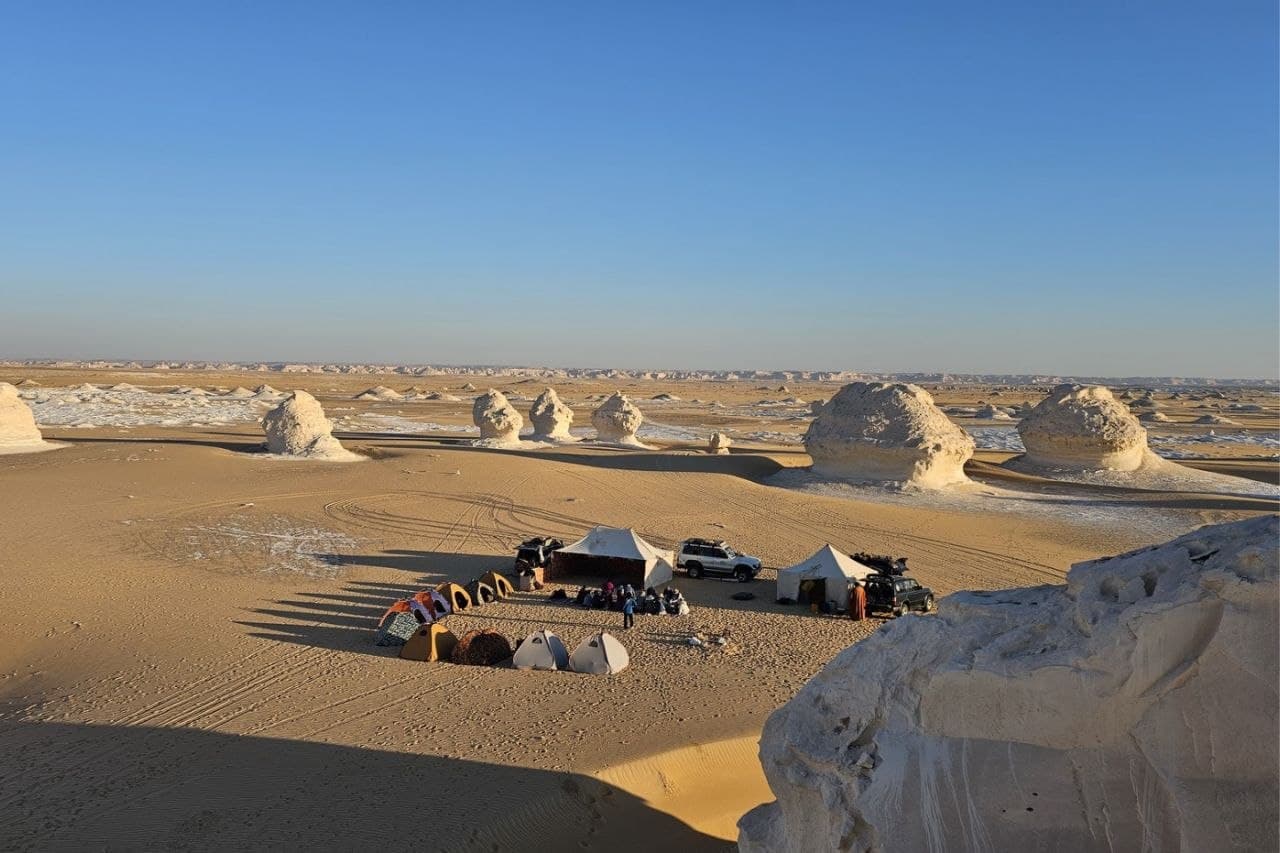
The White Desert is famed for its surreal chalk spires, wind-sculpted mushroom rocks, and pale, dreamlike vistas. The Black Desert is raw, primal, and geologically ancient—a dark volcanic world offering a powerful counterpoint to the bright chalklands.
Best Time to Visit the Black Desert
The optimal window aligns with the White Desert season: October through April. Daytime temperatures range comfortably between 18°C and 28°C, and the lower sun angle casts dramatic shadows across the volcanic cones. Avoid June through August, when intense heat makes the heat-absorbing dark rocks punishingly hot, with air temperatures frequently surpassing 45°C.
Within the prime season, late October through February is ideal: crisp morning air, extended golden hours, and pleasant desert nights.
What to Pack for the Black Desert
- Sturdy hiking shoes with good grip: The volcanic gravel is loose and basalt edges can be sharp underfoot.
- Sun hat & SPF 50+ sunscreen: Even during cooler months, dark rocks reflect infrared heat upward.
- Camera with a polarizing filter (CPL): Essential for cutting glare and enhancing color saturation on dark rock surfaces.
- Reusable water bottle: At least 1.5 liters per person for a half-day stop.
- Light cotton scarf / Shemagh: Protects against blowing dust and wind on exposed ridge summits.
- Long pants: Guard against abrasions when climbing or sitting on rough basalt outcrops.
FAQ
Is the Black Desert worth visiting?
Yes, absolutely—especially when combined with the White Desert. While smaller in scale than the White Desert National Park, its dramatic dark volcanic terrain adds exceptional visual and geological contrast. Most travelers consider it one of the biggest surprises of their Egypt journey.
Is it safe to hike in the Black Desert?
Yes. The volcanic slopes are generally stable, and climbing the primary cones is straightforward with proper footwear. Always remain mindful of loose gravel, stay hydrated, and follow your guide's lead, as dark rocks heat up quickly.
How is the Black Desert different from the rest of the Sahara?
The Black Desert is a localized volcanic province within Egypt's Western Desert (part of the greater Sahara). Unlike the vast rolling sand dunes and pale gravel sheets that characterize most of the Sahara, the Black Desert is distinguished by dark basalt cones, iron-rich dolerite scree, and dark-hued plains.
Do I need a 4x4 vehicle to visit the Black Desert?
To fully experience the best cones and off-highway viewpoints, yes. While the paved highway runs nearby, exploring the heart of the volcanic field requires an off-road 4x4 vehicle and desert driving expertise. All Bedouin Trails expeditions include dedicated 4x4 transportation.
Can I do a day trip to the Black Desert from Cairo?
While technically possible, a single-day round trip requires 8–9 hours of driving plus 2–3 hours on-site (a demanding 11–13 hour day) and misses the magic of golden hour and overnight desert camping. We strongly recommend a 2-day, 1-night itinerary that combines both the Black and White Deserts.