The Ultimate Guide to Visiting Egypt's White Desert (2026)
Imagine walking on another planet: a surreal landscape of brilliant white chalk sculptures rising from golden sands, carved by millennia of relentless wind into massive mushrooms, ice cream cones, and otherworldly chickens frozen mid-stride. The colors transform from brilliant, blinding white at noon to soft cream at dawn, smoldering amber at sunset, and ghostly silver beneath Milky Way stars so bright they cast distinct shadows.
This is Egypt's White Desert National Park — one of the most extraordinary natural environments on Earth.
Whether you are an adventure seeker, a landscape photographer, a nature lover, or simply someone yearning to disconnect from modern noise, the White Desert offers an unmatched experience. In this comprehensive guide, we cover everything you need to know: what to see, when to visit, how to get there, what to pack, and how to book a private safari worthy of this remarkable landscape.
Let's dive in.
What is the White Desert?
The White Desert National Park is a protected natural area located in the Farafra Depression within Egypt's Western Desert, approximately 500 kilometers southwest of Cairo. Designated as a national park in 2002, it spans roughly 3,010 square kilometers.
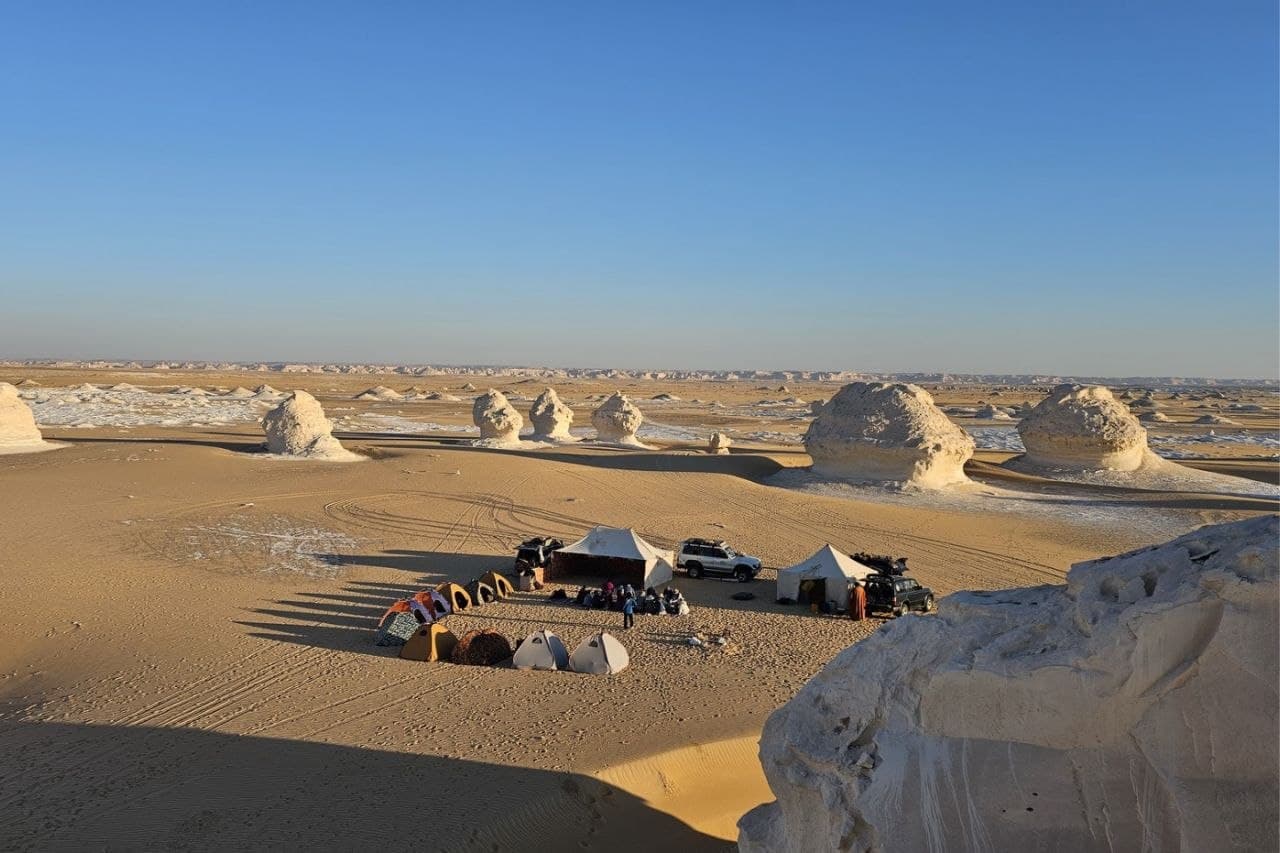
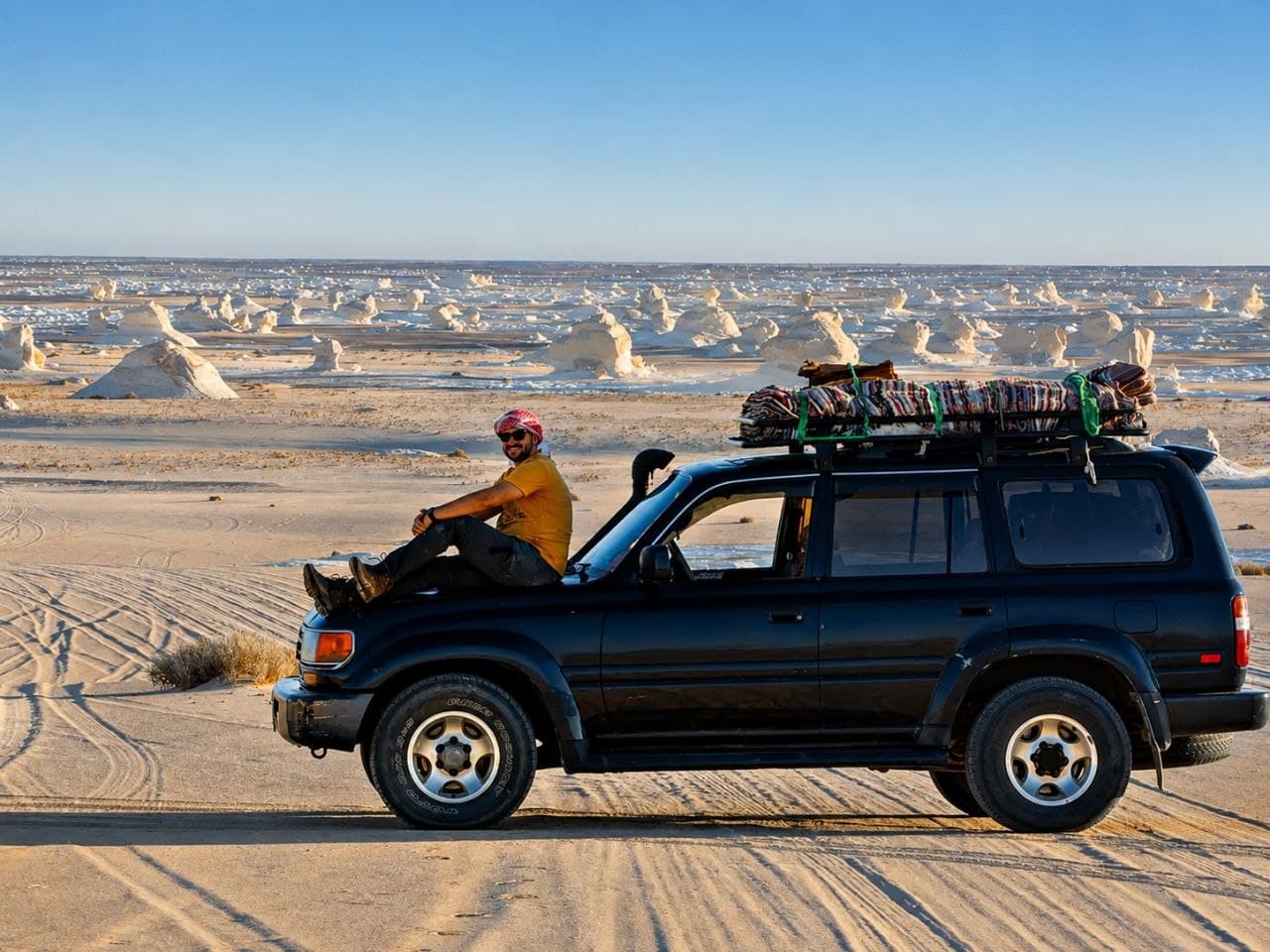
The park's defining hallmark is its extraordinary chalk rock formations. Sculpted by thousands of years of wind-blown sand erosion, they display organic, sculptural shapes that defy simple description. These formations are made of calcium carbonate (chalk), deposited when a shallow sea covered this region roughly 80 to 90 million years ago during the Late Cretaceous epoch. As sea levels receded and the desert formed, the chalk was exposed, and the wind went to work.
The result is one of Africa's — and the world's — most otherworldly and thrilling natural landscapes.
Bedouin Trails Tip: The White Desert looks radically different at various times of day. If you can only do one thing to maximize your journey, make sure to stay overnight. Sunrise and sunset ignite the chalk formations from stark white into brilliant gold and deep blood-orange, and the desert night sky is among the most breathtaking spectacles on Earth.
Top Rock Formations You Cannot Miss
The White Desert contains dozens of named rock formations (and countless unnamed ones). Here are the highlights:
- The Mushroom: The most photographed formation in the White Desert. These towering chalk pillars with wide, rounded tops closely resemble massive mushrooms sprouting from the desert floor. Ranging from knee-high to several meters tall, the largest clusters create a surreal landscape. The lower sections erode faster due to intense sand abrasion near ground level compared to the protected upper caps.
- The Chicken: Another beloved formation, featuring chalk rocks eroded into unmistakable shapes resembling sitting or walking chickens. The feather-like textures carved into the rock by blowing sand are astonishing. Local Bedouin guides have named specific sculptures over generations and will point out formations you would likely miss on your own.
- The Isolated Rocks (Monoliths): Towering, isolated chalk monoliths rising dramatically from flat sand plains. They look especially dramatic at dusk, casting sharp, elongated shadows across the desert. Standing beneath them provides a humbling sense of scale.
- The White Desert Tree: A distinctive structure resembling a desert tree or cactus, featuring a single upright trunk with branching chalk arms. It is one of the park's more fragile structures, requiring respectful distance to avoid damage.
- The Agabat Region: Situated on the edge of the White Desert, this valley features some of the most dramatic chalk hills and cliffs, many laced with iron oxide creating vivid reddish-rust streaks through brilliant white chalk. The color contrast here is extraordinary for photography.
Best Time to Visit the White Desert
Timing your visit properly is one of the most critical decisions you will make.
Ideal Season: October through April
This is the sweet spot. Daytime temperatures range comfortably between 18°C and 28°C (64°F–82°F) — warm enough to relax, yet cool enough for extended walks and outdoor exploration. Nights cool down to between 5°C and 15°C (41°F–59°F), offering ideal conditions for sleeping under the stars with quality sleeping bags and blankets (all provided on Bedouin Trails expeditions).
Skies during these months remain virtually cloudless, providing pristine conditions for stargazing. The Milky Way stretches vividly across the horizon without light pollution.
- Prime Months: November, December, January, and February are widely considered the absolute best months, offering stable weather, dramatic low-angle sunlight, and comfortable night temperatures.
Shoulder Season: May and September
Spring and late summer transition months bring warmer temperatures (30°C to 38°C / 86°F–100°F in May), though early mornings and evenings remain manageable. Dust and wind may be more frequent. While less optimal for long treks, it remains workable for shorter vehicle-based excursions.
Avoid for Physical Activities: June, July, and August
Egyptian desert summers are intensely hot. Daytime temperatures routinely exceed 45°C (113°F) and can reach 50°C (122°F) in open terrain. While the landscape remains striking and solitude seekers still visit, this is not the season for hiking, trekking, or multi-day active camping. Experienced desert guides operate with heavily modified schedules restricted strictly to early mornings and late evenings.
How to Get to the White Desert from Cairo
The White Desert cannot be practically accessed via standard public transport alone. Here are your realistic options:
- Option 1: Private Desert Safari (Recommended): The easiest, safest, and most rewarding approach. A professional operator like Bedouin Trails picks you up directly from your Cairo hotel, drives you to the White Desert in a comfortable 4x4, provides guides, camping gear, meals, and logistics, and returns you to Cairo. This is what most travelers choose for a hassle-free journey focused entirely on the experience.
- Option 2: Renting a 4x4 and Driving Independently: Technically possible but not recommended for first-time visitors. Desert driving demands advanced navigation skills (there are no paved roads in the national park, only tracks), knowledge of safe camping locations, long-distance fuel and water management, and vehicle recovery expertise in deep sand. Without these skills, self-driving can become hazardous quickly.
- Option 3: Public Bus to Bahariya Oasis + Local Arrangement: The budget traveler route. Take a bus from Cairo's Turgoman Station to Bahariya Oasis (around 4–5 hours), then arrange a short local tour. While cheaper, it sacrifices flexibility, comfort, and the depth of a comprehensive private expedition. Local guide quality in Bahariya varies widely.
Journey from Cairo: Cairo → Bahariya Oasis: 4 hours via desert highway. Bahariya → White Desert (towards Farafra): 2 hours. Total driving time: 4.5 to 5.5 hours.
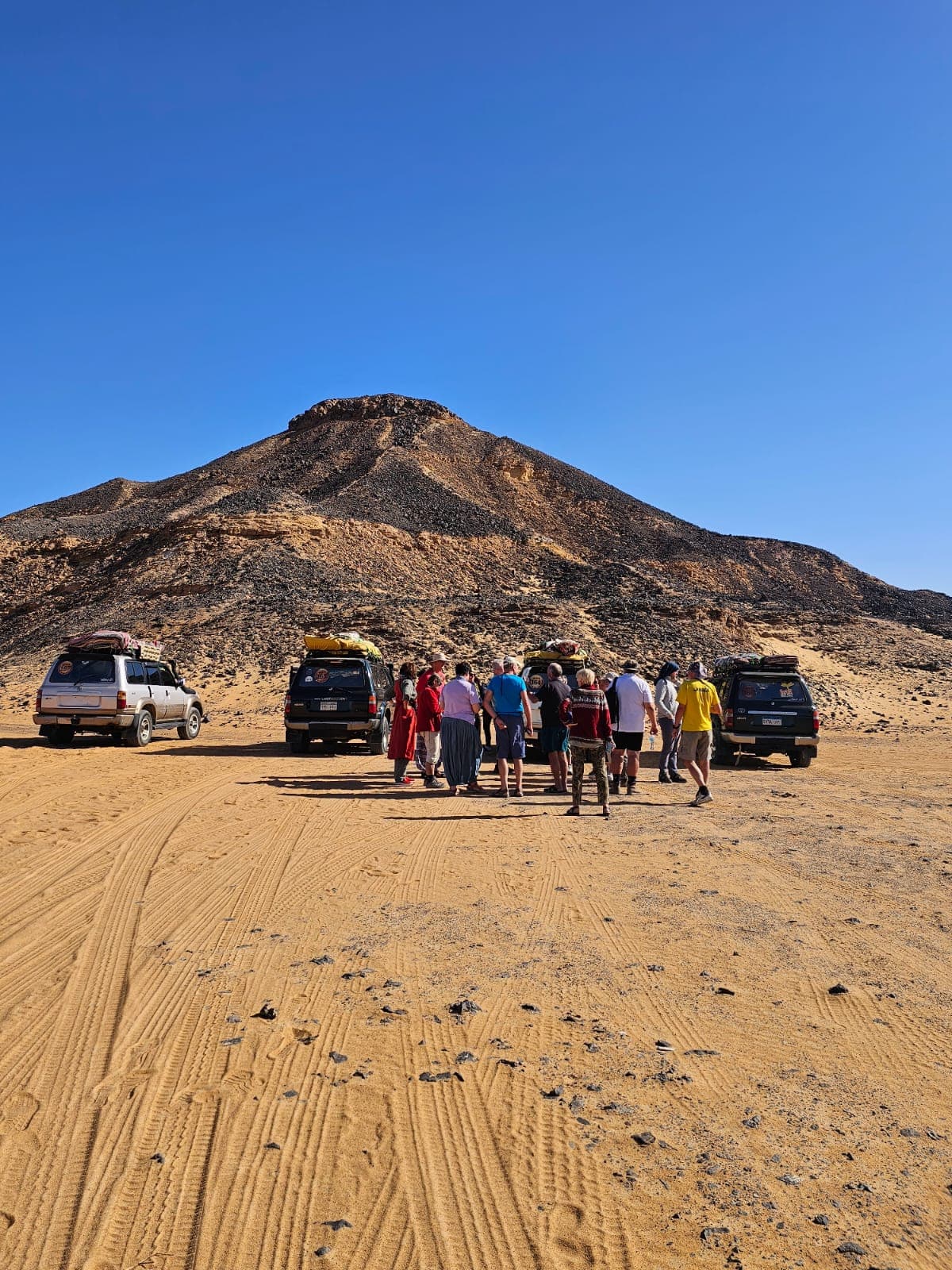
The drive itself travels through remarkable scenery: you will traverse the Black Desert (dark volcanic cones), pass Crystal Mountain (a roadside ridge encrusted with quartz crystals), and descend across sweeping sand plains before white chalk monoliths rise on the horizon.
What to See Along the Way
Do not rush past the surrounding landmarks; the overland route offers two remarkable stops:
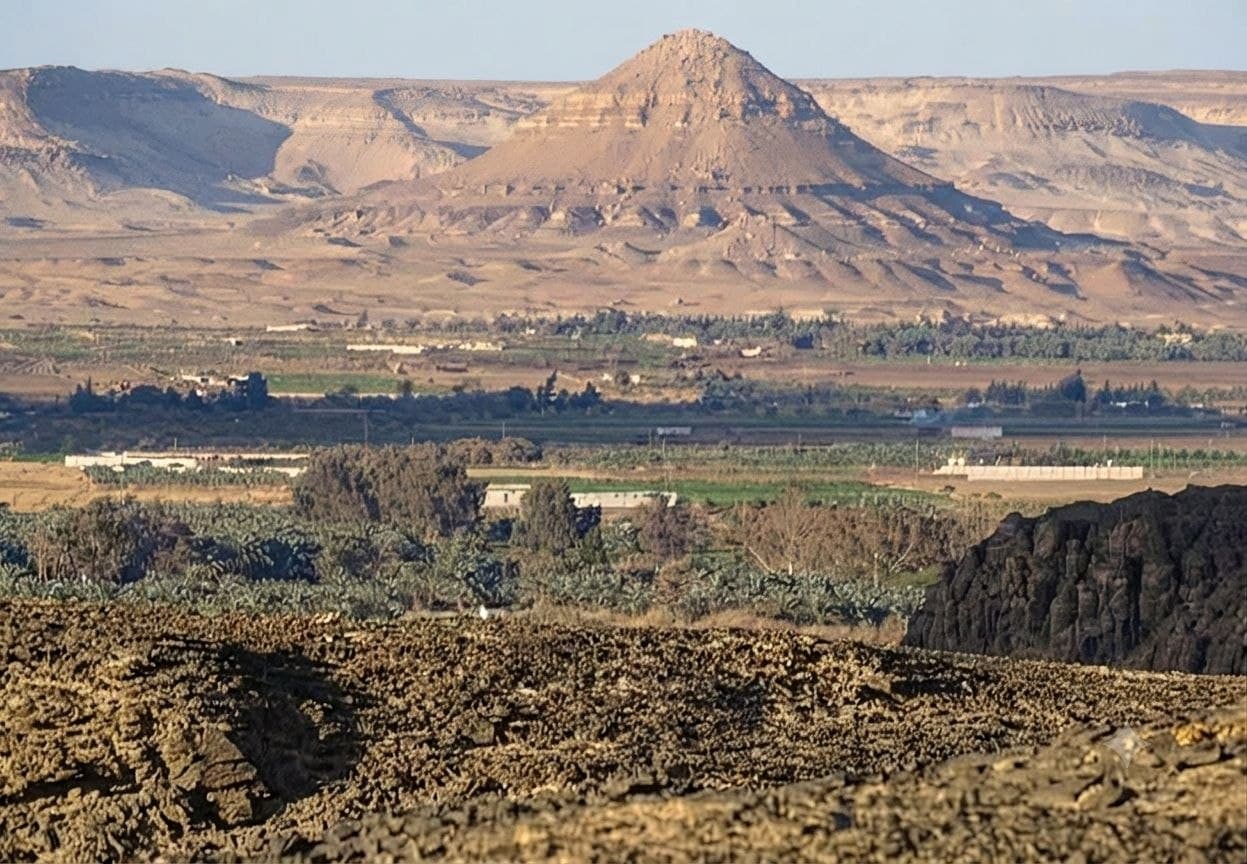
- The Black Desert: A volcanic terrain of dark basalt cones and gravel formed by ancient volcanic activity, covered in black iron and manganese oxide. The contrast with the nearby White Desert — dark eroded volcanic peaks versus luminous white chalk sculptures — is striking. The two environments are just 2 to 3 hours apart by 4x4, and most itineraries include both.
- Crystal Mountain: Located between the Black and White deserts, this small ridge composed almost entirely of crystallized quartz and calcite glitters in the desert sun. While collecting souvenir crystals is strictly prohibited to preserve the site, seeing this geological wonder up close is unforgettable.
Camping in the White Desert: What to Expect
Camping in the White Desert is neither luxury glamping nor extreme survival; it is an authentic wilderness experience that travelers frequently describe as one of the most memorable nights of their lives.
What the Camp Looks Like
Your guide selects a sheltered site tucked between chalk formations (far from crowded tourist clusters) and sets up camp. Thick floor mats, sleeping bags, and warm blankets are laid out on the desert floor facing the open sky. A campfire is lit, dinner is prepared fresh on the coals, and as darkness settles, the grand spectacle begins.
With zero light pollution and the nearest settlement hours away, the sky fills with countless stars from horizon to horizon. The Milky Way appears not as a faint mist, but as a blazing river of light arching directly overhead.
Temperatures drop quickly after sunset, sometimes by 15°C to 20°C within hours. The provided blankets are thick and warm, and most travelers find they sleep better in the quiet desert air than they have in months.
Desert Dining
Bedouin desert cuisine is flavorful and hearty. Expect fragrant spiced rice, grilled chicken or meat (tailored to your dietary preferences), fresh flatbread baked at camp, lentil soup, crisp salads, and seasonal fruits. Traditional Bedouin tea — brewed continuously over the embers — is served throughout the evening.
Vegetarian, vegan, halal, and most allergy-related dietary requirements can be accommodated with advance notice.
What to Pack for the White Desert
Proper preparation makes a significant difference in comfort. Here is our recommended packing list:
- Daywear: Loose, lightweight pants and long-sleeved breathable shirts for sun and sand protection (avoid dark colors in hot months), sturdy walking shoes or light hiking boots with ankle support (avoid open sandals on dunes), and a wide-brimmed sun hat.
- Nightwear: Warm layers such as a fleece jacket or lightweight down jacket, long thermal pants, and warm wool socks (the desert sand loses heat rapidly).
- Personal Essentials: Broad-spectrum SPF 50 sunscreen, UV-blocking sunglasses, headlamp or personal flashlight with spare batteries, refillable water bottle, personal medications and compact first-aid kit, and lip balm.
- Photography Gear: Camera with fully charged batteries and spare power banks (no power outlets in the desert), extra memory cards, sturdy tripod (essential for astrophotography), and lens-cleaning cloths to protect against dust.
- What to Leave Behind: Hard-shell bulky suitcases (use a soft duffel or backpack due to limited 4x4 cargo space), formal wear, hair dryers or styling tools, and excessive cosmetics.
How to Choose a White Desert Tour Operator
Not all desert tours are created equal. Here is what separates exceptional journeys from average ones:
- Guide Authenticity: Are the guides indigenous Bedouins with deep generational knowledge, or merely contracted drivers? Local expertise makes a massive difference in storytelling, navigation, and finding secluded campsites.
- Private vs. Shared Groups: Does the operator combine unrelated travelers into large convoys, or are tours truly private? Large groups fundamentally alter the tranquility of a desert camp.
- Campsite Selection: Where do they pitch camp? High-quality operators choose secluded, sheltered spots away from crowds, whereas budget operators often cluster in heavy-traffic zones.
- Food Quality: Is food prepared fresh at the campsite, or pre-packaged? The difference between a freshly cooked Bedouin meal under the stars and reheated canned rations is enormous.
- Flexibility: Can the itinerary adapt to your pace and photography interests? Great guides adjust seamlessly to your preferred rhythm.
At Bedouin Trails, we take pride in excelling across all five standards. Our guides are local Bedouins, every journey is private, camp locations are chosen for beauty and seclusion, food is freshly prepared, and itineraries flex around your schedule.
FAQ
Is the White Desert safe to visit?
Yes. The White Desert National Park maintains an excellent safety record, with well-established park regulations, experienced guides, and close coordination across desert routes.
Can I visit the White Desert without a guide?
It is strongly discouraged for first-time visitors. The park lacks marked roads and cell service, and traversing shifting dunes requires specialized 4x4 recovery skills and desert navigation.
Do I need a high fitness level for a White Desert tour?
For standard 4x4 vehicle safaris (2 days), normal walking fitness is plenty. For extended trekking or camel expeditions, moderate fitness is beneficial. We tailor routes to individual preferences.