Beyond the Sands: The Geological Wonders of Egypt's Black and White Desert (2026)
Most visitors to Egypt's Western Desert see only beautiful rock formations and stunning landscapes perfect for photography — but the reality runs far deeper. The White and Black Deserts are in fact open-air museums narrating Earth's dramatic history across millions of years. From the ancient prehistoric oceans that left behind massive chalk deposits, to the violent volcanic eruptions that blanketed the earth in black lava, the Western Desert holds breathtaking geological secrets. At Bedouin Trails, we do not simply take you to see the sights — we take you on a journey through time to understand how these surreal natural wonders were formed.
The Cretaceous Period: When the Western Desert Was a Deep Ocean
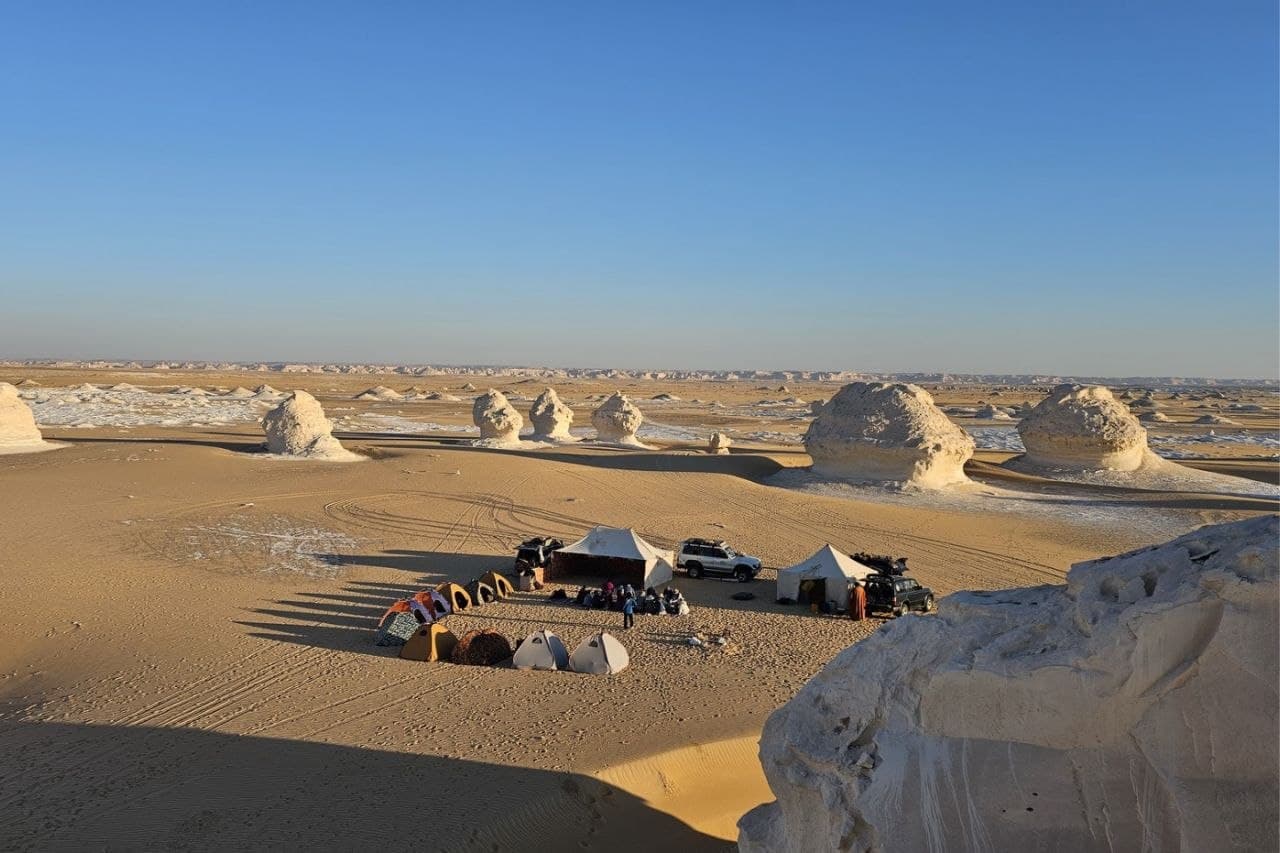
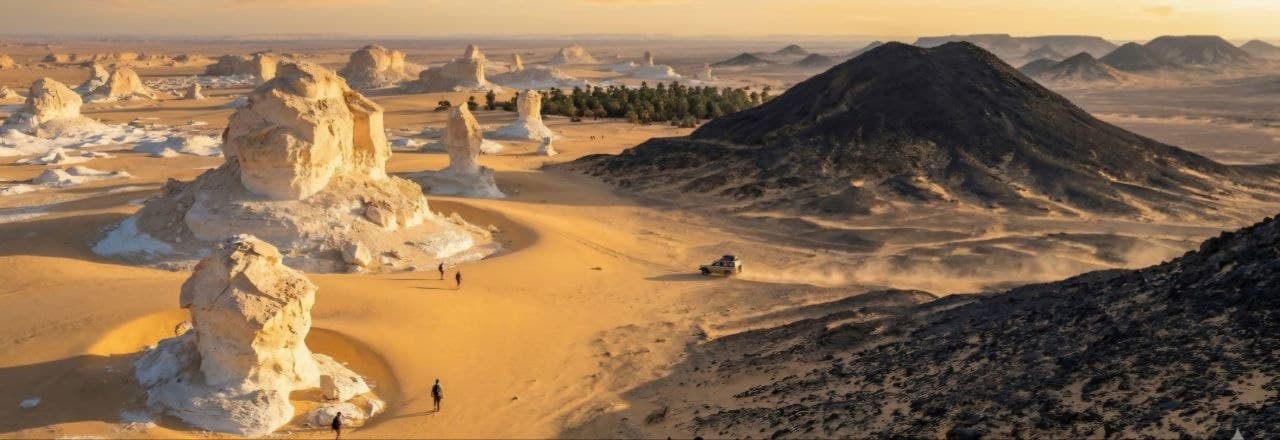
It may seem impossible to believe as you stand beneath the scorching desert sun, but millions of years ago — specifically during the Cretaceous Period — these barren landscapes were entirely submerged beneath the waters of the great Tethys Sea. The brilliant white rock formations that define the White Desert today are in fact the calcified, compressed remains of microscopic marine life and shells that accumulated on the floor of this ancient ocean. Over thousands of years, as the climate shifted and the sea receded, these organisms left behind massive layers of chalk and limestone. Since then, sand-laden winds — nature's own sandpaper — have carved these soft rocks into the iconic shapes we see today, such as the famous "Chicken and Mushroom" and "Camel" formations.
The Violent Volcanic Origins of the Black Desert
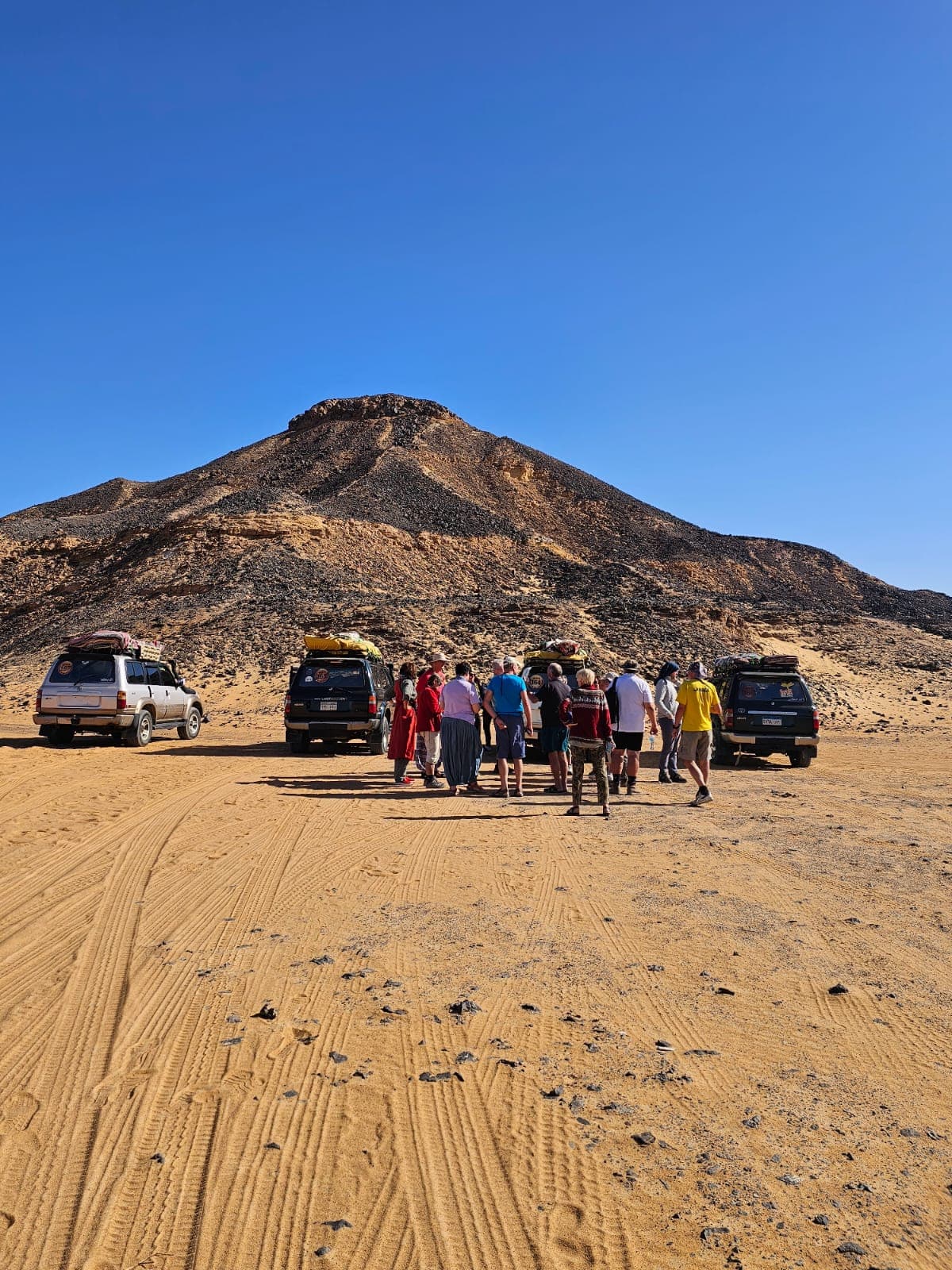
In stark geological and visual contrast to the white of the White Desert lies the Black Desert. This region is characterized by cone-shaped hills resembling small volcanoes, blanketed in a thick layer of dark dolerite and basalt rock. These dark stones are the remnants of violent volcanic activity that struck the area during the Jurassic Period. The magma that erupted from deep within the earth cooled and fractured over time, scattering to cover the peaks and slopes of sandy hills and giving them their distinctive black color. This dark, simultaneously somber and majestic landscape provides a stunning visual contrast, making you feel as though you are walking on another planet — just one hour or less by car from the brilliant white chalk formations.
Crystal Mountain: The Enchanting Geological Anomaly
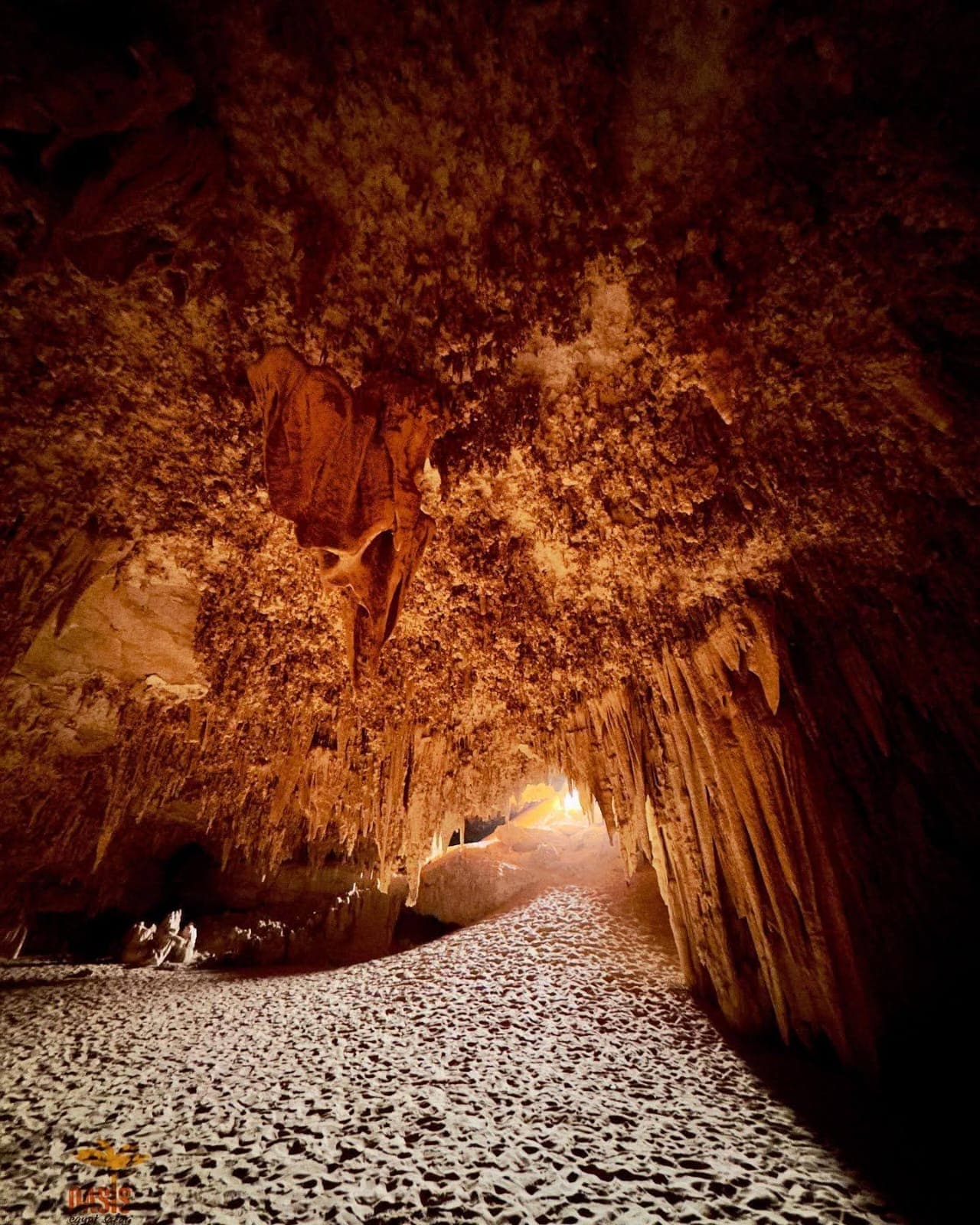
The enchanting "Crystal Mountain" sits roughly halfway between the Black and White Deserts. Despite its name, it is not a mountain in the traditional sense — rather, it is a small ridge of exposed hills composed almost entirely of glittering quartz and barite crystals. Geologists believe this formation was originally a large underground cave, filled with stalactites and stalagmites formed by hot hydrothermal groundwater. Through tectonic shifts and powerful erosive forces over time, the cave's ceiling eroded and was pushed to the surface, becoming fully exposed — now glittering under the desert sun like a rare jewel at the heart of the sands.
The Depth of Bedouin Culture and the Art of Hospitality
No desert journey is complete without immersing yourself in the local culture. The Bedouin are the indigenous people of these vast territories, possessing an innate, generational knowledge of every rock, every star, and every plant in the desert. Your journey with our guides is not merely a showcase of natural scenery — it is an opportunity to learn from true experts in the arts of desert survival and coexistence with nature's harshest conditions. You will learn how they navigate by the stars, how they read animal tracks in the fine sand, and how they use desert plants in traditional medicine.
In the evening, gathered around the campfire, the finest expressions of Bedouin hospitality come to life. The famous Bedouin tea, slowly brewed over glowing embers, will be served as your guides share their inherited stories and legends. These moments of authentic human connection are what bring our guests back again and again — they feel not like tourists, but like honored guests in a vast home whose only ceiling is the sky itself.
Why Private Tours Are the Best Option?
When planning a Western Desert safari, travelers face a key choice: joining a shared group tour or booking a private tour. At Bedouin Trails, we specialize exclusively in private tours, for several fundamental reasons that directly impact the quality of your experience:
First: Complete Privacy and Tranquility
The desert is a place of silence and reflection. On group tours, you are placed in a vehicle and campsite with strangers whose sleep schedules, interests, and preferred noise levels may differ significantly from yours. A private tour means the entire camp is dedicated solely to you and your group. You can choose to listen to the desert's absolute silence, or enjoy quiet conversations with your family and friends without any external disturbance.
Second: Flexibility of Pace and Schedule
Group tours operate on a rigid schedule — 15 minutes here, 20 minutes there. If you discover a breathtaking view and want to stay for an hour of photography, you cannot, because the group must move on. On a private tour, you control the pace. Your personal Bedouin guide is there to fulfill your wishes — you can spend extra time at Crystal Mountain, skip a site that does not interest you, or request to stop midway simply to enjoy the view of the sand dunes.
Third: Personal Attention and Quality of Service
When the team focuses on a single vehicle and a single group, the level of service rises dramatically. Your guide will share customized stories tailored to your interests — whether geological, cultural, or photographic. Meals are prepared with greater care, and any special dietary requirements are accommodated with precision. This bespoke experience transforms the trip from a simple sightseeing tour into an exclusive and deeply comfortable exploration.
Weather and the Best Times to Visit the Western Desert
Egypt's Western Desert has an extremely arid continental climate, meaning there are significant temperature differences between day and night, as well as between different seasons of the year. Understanding this climate is the key to planning a successful and comfortable safari.
- Autumn (October – November): This is considered one of the best times to visit the White and Black Deserts. Daytime temperatures are moderate, ranging from 25 to 30°C, making the exploration of rock formations and long walks thoroughly enjoyable. At night, temperatures drop to a refreshing cool (around 10 to 15°C), creating a perfect atmosphere for sitting around the campfire with warm Bedouin tea.
- Winter (December – February): Winter brings very pleasant, sunny days (around 18 to 22°C), but nights can be bitterly cold, with temperatures potentially approaching zero, especially deep in the open White Desert. This season is ideal for those who cannot tolerate heat, but requires thorough preparation with heavy winter clothing and cold-weather sleeping bags (which we provide at Bedouin Trails).
- Spring (March – May): Similar to autumn in its daytime mildness, but may see the "Khamsin" winds — warm, sand-laden winds that can reduce visibility and make open camping challenging on some days. Clear spring days, however, are magical and some rare desert plants bloom during this season.
- Summer (June – September): Daytime temperatures rise dramatically, exceeding 40°C in the shade. Summer nights are moderate and perfect for stargazing without heavy clothing.
The Complete Packing Guide: What to Bring on Your Safari?
Preparing for a desert trip is entirely different from preparing for a beach holiday or a city break. The desert is an extreme environment requiring smart equipment and clothing based on a layering system.
1. Appropriate Clothing
The golden rule is natural, breathable fabrics (cotton and linen). Choose long-sleeved shirts in light colors to reflect sunlight and protect your arms from burning. Loose, lightweight trousers are far better than jeans. In the evening, you will need a thermal base layer, a fleece jacket, and a windbreaker outer layer.
2. Footwear and Head Protection
Comfortable walking shoes or lightweight, closed-toe hiking boots to protect your feet from hot sand and sharp rocks in the Black Desert and at Crystal Mountain. A wide-brimmed hat or a traditional Bedouin keffiyeh (available in the Bahariya Oasis) for sun and sand protection, plus high-quality polarized sunglasses to protect your eyes from the intense glare of the white sands.
3. Essential Equipment and Personal Comfort
A power bank with at least 10,000 mAh capacity (there are no electrical charging points in the depths of the desert), SPF 50+ sunscreen, lip balm and moisturizer, biodegradable wet wipes, and a headlamp for moving freely around the camp at night. At Bedouin Trails, we provide all heavy camping equipment: tents, thick mattresses, high-quality sleeping bags, extra blankets, all meals, cooking equipment, and purified mineral water throughout the trip.
Our Commitment to Sustainable Tourism and "Leave No Trace" Principles
The Western Desert — especially White Desert National Park — is an extremely fragile environment. Chalk formations that took millions of years to form can be destroyed in seconds by irresponsible behavior. At Bedouin Trails, we recognize that we are stewards of this land, and therefore we apply strict principles of sustainable eco-tourism:
- Leave No Trace Policy: We ensure that everything we bring into the desert returns with us. All waste — organic and non-organic — is collected in dedicated bags and transported to proper disposal sites.
- Respect for Wildlife: We strictly prohibit feeding wild animals or leaving food scraps for them, as this alters their natural behavior and threatens their survival. We teach our guests how to observe these beautiful creatures from a safe distance without disturbance.
- Responsible Driving: Adhering to designated driving tracks is vital for protecting rare desert vegetation and preventing soil erosion. Our expert Bedouin drivers know the safe routes that avoid damaging plant root systems or fragile rock formations. By choosing us, you contribute to protecting this natural heritage for future generations.
FAQ
Is it allowed to collect crystal or chalk rocks as souvenirs?
It is strictly forbidden to take any rocks — whether crystal, basalt, or chalk pieces — from the desert. These are nature reserves, and if every visitor took a piece, these wonders would disappear forever. We enforce a policy of 'Take only photographs, leave only footprints.'
Do I need a geological background to enjoy the trip?
Not at all! Our Bedouin guides are trained to explain these complex phenomena in a simplified and engaging style that combines scientific facts with local stories, making it an enjoyable educational experience for all ages, including children.
Are the white rock formations solid or fragile?
Chalk rocks are extremely fragile compared to other rocks. Continuous wind erosion means their shapes change gradually over time. For this reason, we ask our visitors not to climb on sensitive formations to avoid damaging them or risking injury.
How were the strange shapes like mushroom rocks formed?
These shapes (mushroom rocks) form because sand-laden winds are stronger and denser closer to the ground. Therefore, the base of the rock erodes much faster than the top, leading over time to the familiar mushroom or toadstool shape.