
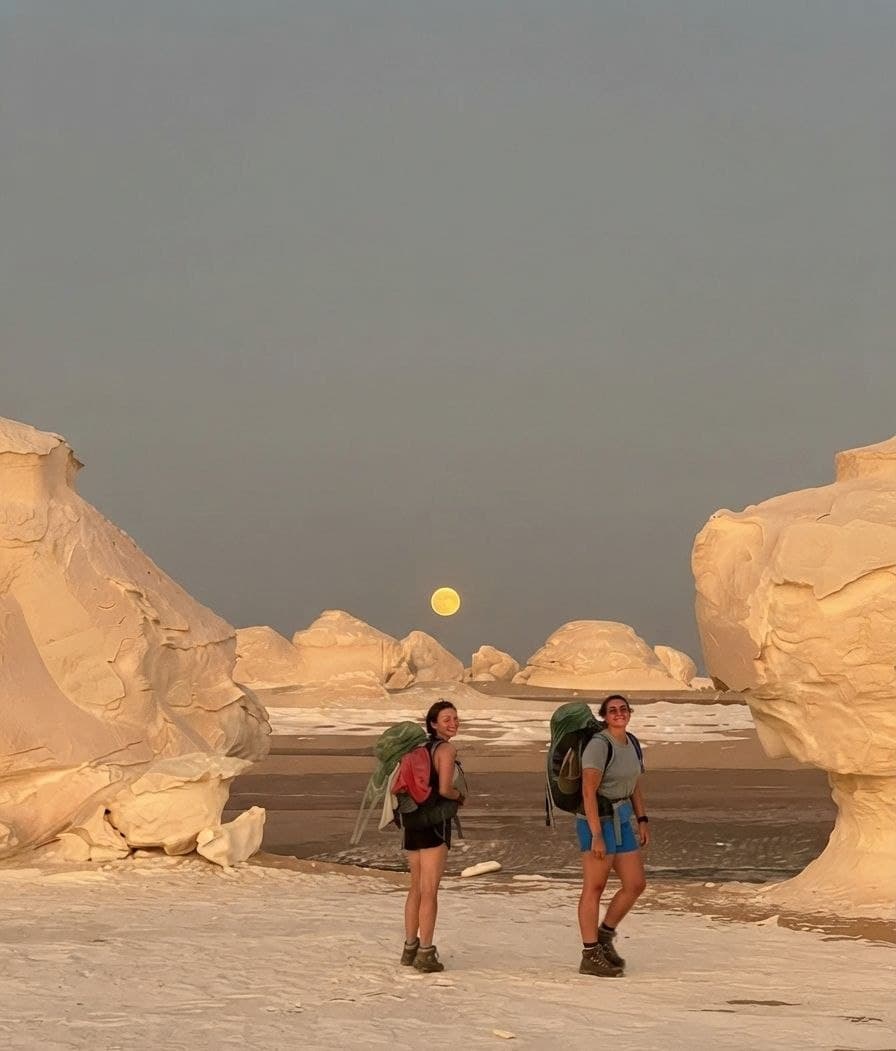
Packing for Extreme Conditions: The Ultimate Egyptian Desert Safari Gear Guide
If this is your first trip to the desert, you might find yourself puzzled when facing your suitcase. The desert climate is remarkably deceptive — it swings brutally between scorching heat under the direct midday sun and bone-chilling cold the moment the sun dips below the horizon. Smart, well-planned packing can make the difference between a comfortable and enjoyable safari experience and a night spent shivering or a day suffering from sunstroke. As local Bedouin guides who traverse the Western Desert year-round and across all seasons, we've compiled this comprehensive and definitive safari gear guide to ensure you bring everything you need — and leave behind what you don't.
The Art of Layering: The Secret to Staying Comfortable
The golden rule of desert clothing is 'layers'. Never rely on a single heavy jacket or a single lightweight shirt. During the day, garments made from natural breathable fabrics — such as light-coloured cotton and linen — are essential for reflecting sunlight, keeping your body cool, and allowing sweat to evaporate. However, once the sun sets, temperatures drop dramatically. This is where layering comes in: start with a thermal base layer that retains body heat, add a fleece jacket for insulation, and finish with a windbreaker outer shell — the desert wind at night is the primary cause of that bone-chilling cold.
Protecting Your Extremities: Comfortable Footwear and Essential Headgear
Leave the heavy mountain hiking boots at home — unless you're planning serious rock-climbing expeditions. For the Western Desert, comfortable closed-toe athletic shoes with good grip are the best choice for walking on soft sand and the gravelly terrain of the Black Desert, and they prevent annoying sand from getting between your toes. For your head, a wide-brimmed hat that protects your face and neck is a good option, but the professional choice we recommend is the traditional Bedouin shawl (keffiyeh). You can buy one at the oasis — it's excellent because it protects your head and neck from sunburn, and can be wrapped around your mouth and nose during dusty wind storms.
If you're planning a longer trekking or hiking trip that calls for this gear, check out our multi-day trekking and camping journeys.
Survival Tools and Personal Comfort in the Open
Since you'll be far from electrical outlets and shops for several days, personal logistical preparation is important. A high-capacity power bank (20,000 mAh, for example) is critical for keeping your camera and phone (for photography) charged. Sunscreen with strong protection (SPF 50+) and polarised sunglasses are essential to combat the glare from the sun and the white sand, which can damage your eyes. The desert air is extremely dry, so lip balm and a thick moisturising cream will protect your face and hands from cracking. Finally, baby wipes or camping wipes and hand sanitiser are invaluable for maintaining personal hygiene when running water is limited.
The Depth of Bedouin Culture and Hospitality
No desert journey is complete without immersing yourself in the local culture. The Bedouin are the indigenous people of these vast territories, possessing an innate generational knowledge of every rock, every star, and every plant in the desert. Your trip with our guides is not merely a showcase of natural scenery — it is an opportunity to learn from true experts in the arts of survival and coexistence with nature's harshest conditions. You'll learn how they navigate by the stars, how they read animal tracks on the soft sand, and how they use desert plants in traditional medicine.
In the evening, gathered around the campfire, the finest expressions of Bedouin hospitality come to life. The famous Bedouin tea slowly brewed over glowing embers is served as your guides share their inherited stories and legends. These moments of genuine human connection are what bring our guests back time and again — they don't feel like mere tourists, but like honoured guests in a vast home whose only ceiling is the sky.
Why Private Tours Are the Best Choice for Exploring the Desert
When planning a Western Desert safari, travellers face a key choice: joining a shared group tour or booking a private one. At Bedouin Trails, we specialise exclusively in private tours for several fundamental reasons that directly affect the quality of your experience:
First: Complete Privacy and Tranquillity
The desert is a place of silence and reflection. On group tours, you're placed in a vehicle and camp with strangers. A private tour means the entire camp is dedicated solely to you and your group. You can choose to listen to the desert's absolute silence, or enjoy quiet conversations with your family and friends without any outside disturbance.
Second: Flexibility of Pace and Schedule
Group tours run on a rigid timetable. On a private tour, you control the pace. Your personal Bedouin guide is there to fulfil your wishes — you can spend more time at Crystal Mountain, skip a site that doesn't interest you, or request a spontaneous stop mid-route simply to enjoy a view of the dunes.
Third: Personal Attention and Quality of Service
When the team focuses on a single vehicle and a single group, the level of service rises dramatically. Your guide shares stories tailored to your interests. Meals are prepared with greater care, and any special dietary requirements are met with precision. This bespoke experience transforms the journey from a standard tour into an exclusive, supremely comfortable exploration.
Weather and Best Times to Visit the Western Desert
Egypt's Western Desert has an extremely arid continental climate, meaning there is a large temperature variation between day and night, as well as between the different seasons. Understanding this climate is the key to planning a successful, comfortable safari.
- Autumn (October–November): One of the best times to visit the White and Black Deserts. Daytime temperatures are moderate (25–30°C) and nights are pleasantly cool (10–15°C), perfect for sitting around the campfire.
- Winter (December–February): Sunny pleasant days (18–22°C) but very cold nights that can approach 0°C. Ideal for those who can't tolerate heat, but requires heavy winter clothing and cold-weather sleeping bags (which we provide at Bedouin Trails).
- Spring (March–May): Similar to autumn in daytime mildness, but may see the hot, sand-laden Khamsin winds. Clear spring days are magical, with rare desert plants blooming.
- Summer (June–September): Daytime temperatures exceed 40°C. Activities are limited to early morning and pre-sunset. Summer nights are moderate and ideal for stargazing without heavy clothing.
The Complete Packing Guide: What to Bring on Your Safari
Preparing for a desert trip is completely different from packing for a beach holiday or a city break. The desert is an extreme environment that requires smart gear and clothing based on the layering system.
Appropriate Clothing
- Daytime: Natural breathable fabrics (cotton and linen). Long-sleeved shirts in light colours to reflect sunlight. Loose, lightweight trousers are far better than jeans.
- Evenings and night: Thermal base layer, fleece jacket, windbreaker outer shell. In winter: beanie, gloves, and thick wool socks.
Footwear and Head Protection
- Comfortable closed-toe athletic shoes or light hiking boots.
- Wide-brimmed hat or the traditional Bedouin keffiyeh from the Bahariya Oasis.
- High-quality polarised sunglasses.
Essential Gear and Personal Comfort
- Power bank with at least 10,000 mAh capacity.
- Sunscreen (SPF 50+), lip balm, and moisturiser.
- Biodegradable wet wipes and hand sanitiser.
- Headlamp for moving freely around camp at night.
What Bedouin Trails Provides
To keep your luggage light, we supply all heavy camping equipment: sturdy Bedouin tents, thick comfortable sleeping mattresses, high-quality sleeping bags rated for low temperatures, and extra clean blankets. We also provide all food, cooking equipment, and purified mineral water throughout the trip.
Our Commitment to Sustainable Tourism and Leave No Trace
The Western Desert — especially the White Desert National Park — is an extremely fragile environment. The chalk formations that took millions of years to form can be destroyed in seconds by irresponsible behaviour. At Bedouin Trails, we recognise that we are guardians of this land, and we apply strict sustainable ecotourism principles.
- Leave No Trace: We ensure everything we bring into the desert comes back with us. All waste is collected in designated bags and transported to safe disposal sites.
- Respect for Wildlife: The desert is home to rare creatures such as the fennec fox. We prohibit feeding wild animals and teach our guests to observe them safely from a distance.
- Responsible Driving: Sticking to designated driving routes to protect rare desert vegetation and prevent soil erosion. By choosing us, you contribute to preserving this natural heritage for future generations.
At Bedouin Trails, we are committed to delivering an exceptional, safe safari experience worthy of your aspirations. The Western Desert is a magical world waiting to be discovered authentically and respected as a natural treasure. Book your private tour today, and let us take you on a journey that will change the way you see nature and give you memories that last a lifetime.
FAQ
Do I need to bring my own tent or sleeping bag?
Not at all. At Bedouin Trails, we take care of all heavy camping equipment. We provide sturdy tents, very thick and comfortable sleeping mattresses, high-quality cleaned sleeping bags, and extra blankets. Your luggage should only contain your clothes and personal items.
Are wheeled trolley bags suitable for a desert trip?
Backpacks or flexible duffel bags are far better. Hard-shell wheeled suitcases are difficult to drag through sand and take up rigid space in the 4x4's boot. We recommend bringing a small daypack for things you need inside the vehicle during drives.
Do I need to bring drinking water or snacks?
We provide generous amounts of bottled mineral water throughout the trip, plus all main meals, tea, coffee, and fruit. If you have a favourite snack (a particular chocolate or type of nuts, for example), feel free to bring it — but you will never go hungry with us.
What colours should I avoid wearing in the desert?
Avoid black or very dark colours during the day — they absorb the sun's heat and make you sweat heavily. Light colours like beige, white, and pale blue are the best choices. At night, you can wear whatever you prefer.