Stargazing in Ägypten's Westliche Wüste
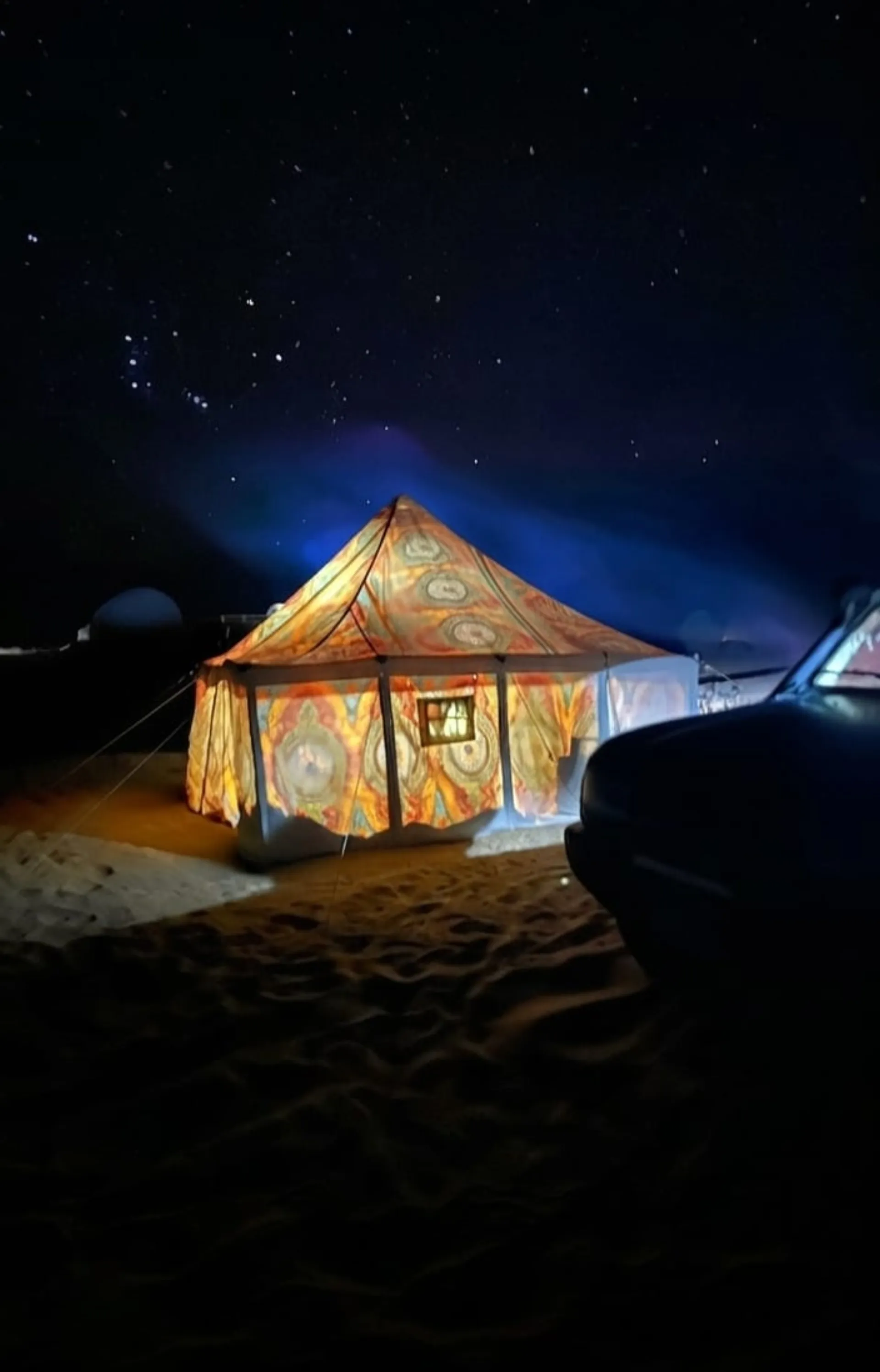
Ägypten's Westliche Wüste is one of the last remaining places on Earth with truly pristine dark skies. With zero light pollution, minimal atmospheric moisture, and clear desert air, the night sky here reveals itself in a way that most people have never experienced — thousands of visible stars, the Milky Way stretching from horizon to horizon, and shooting stars so frequent they become ordinary.
Why the Westliche Wüste Is Perfect for Stargazing
- Zero light pollution: The nearest settlement is hours away. There are no artificial lights visible in any direction.
- Dry atmosphere: The Saharan air contains almost no moisture, resulting in exceptional atmospheric clarity.
- Clear skies: Cloud cover is rare — the Westliche Wüste has over 350 clear nights per year.
- Low latitude: Ägypten's position at 28°N allows you to see constellations from both northern and southern hemispheres.
- Flat horizon: The flat desert landscape provides an unobstructed view of the sky from horizon to horizon — nearly 360 degrees of sky.
On a clear moonless night in the Weiße Wüste, you can see approximately 5,000 stars with the naked eye — compared to less than 200 in most cities. The Milky Way is so bright it casts a visible shadow on the white chalk formations.
What You Can See
The Milky Way
The Milky Way is visible year-round from the Westliche Wüste, but it is most spectacular from March through October when the galactic core rises prominently above the horizon. During peak visibility months, the Milky Way appears as a bright, detailed band of light stretching across the entire sky.
Planets
Depending on the season, you can see Mars, Jupiter, Saturn, and Venus with the naked eye. Jupiter and Saturn are particularly impressive through binoculars, with Saturn's rings sometimes discernible in steady conditions.
Shooting Stars and Meteor Showers
Sporadic shooting stars are visible almost every night. Major meteor showers (Perseids in August, Geminids in December) provide spectacular displays of 50–120+ meteors per hour in the dark desert sky.
Constellations
The desert sky reveals constellations in stunning detail. Orion, Scorpius, Cassiopeia, the Big Dipper, and dozens more are clearly visible. Your Bedouin guide can point out constellations and share traditional desert navigation stories.
Best Time for Stargazing
- New moon periods: The darkest skies occur during new moon or when the moon sets early. Check the lunar calendar when planning your trip.
- Winter months (November–February): Longest nights and clearest skies. Orion and winter constellations dominate.
- Milky Way season (March–October): Best for Milky Way photography when the galactic core is visible.
- Meteor showers: Perseids (August 11–13), Geminids (December 13–14), and Quadrantids (January 3–4) are the most spectacular.
Astrophotography Tips
- Camera: Any camera with manual mode and long exposure capability. Full-frame DSLRs or mirrorless cameras produce the best results.
- Lens: Wide-angle lens (14–24mm) with the widest aperture available (f/2.8 or wider ideal).
- Tripod: Essential. A sturdy tripod is non-negotiable for astrophotography.
- Settings: ISO 1600–6400, aperture wide open, 15–25 second exposure (use the 500 rule to avoid star trails).
- Batteries: Cold desert nights drain batteries fast. Bring at least 2–3 spares and keep them warm in your pocket.
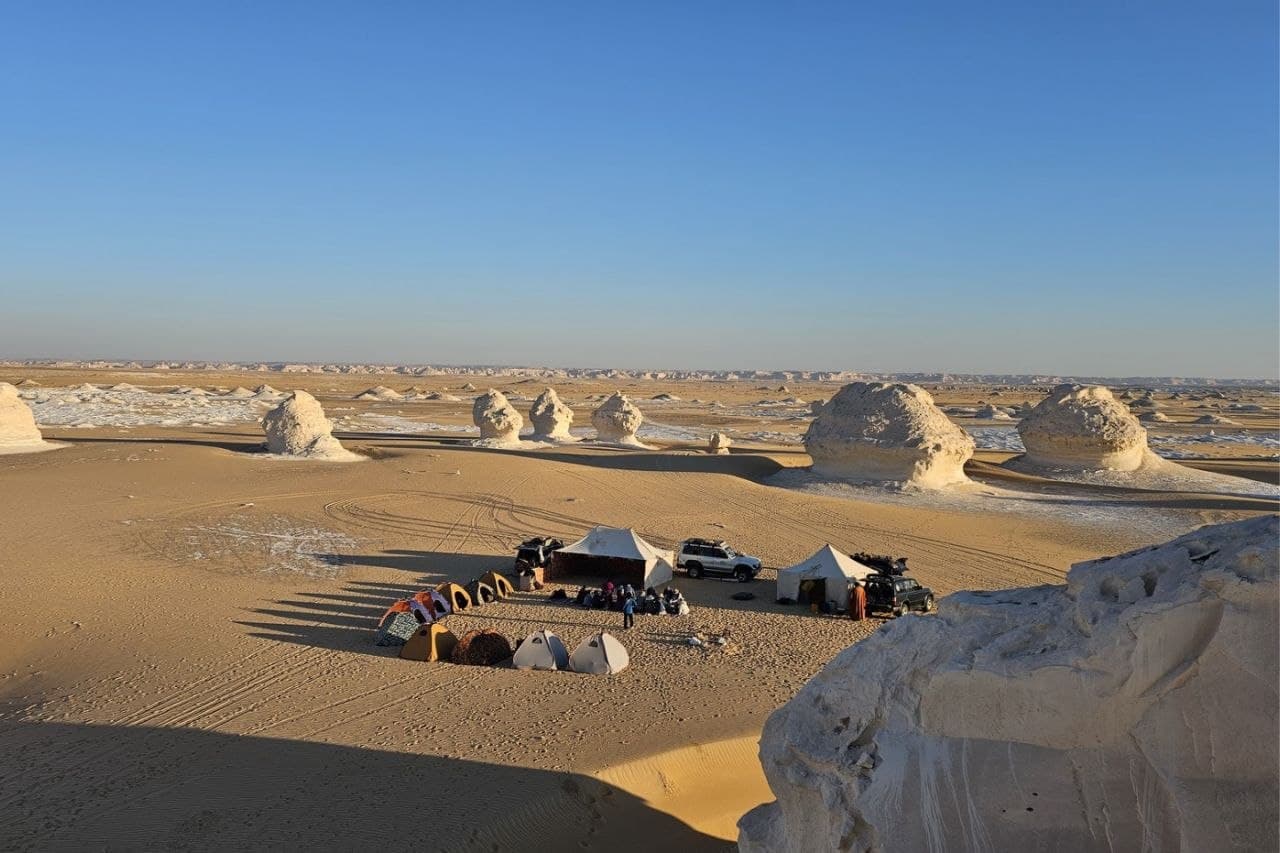
- Composition: The Weiße Wüste formations make incredible foreground subjects for Milky Way photos — the chalk-white shapes glow beautifully in moonlight or with light painting.
Stargazing and Desert Camping
All Bedouin Trails overnight tours include stargazing as part of the experience. After dinner, your Bedouin guide will share knowledge of the night sky, and you fall asleep under a canopy of stars. There are no tents to block your view — you sleep in the open air with nothing between you and the cosmos.
Verwandte Reiseführer
- Beste Reisezeit für die Weiße Wüste
- Camping-Reiseführer Weiße Wüste
- Sicherheitsratgeber für die Wüste
- Reiseführer Westliche Wüste Ägypten
Ready to sleep under the most spectacular sky you've ever seen?
Book Your Desert Camping Tour