
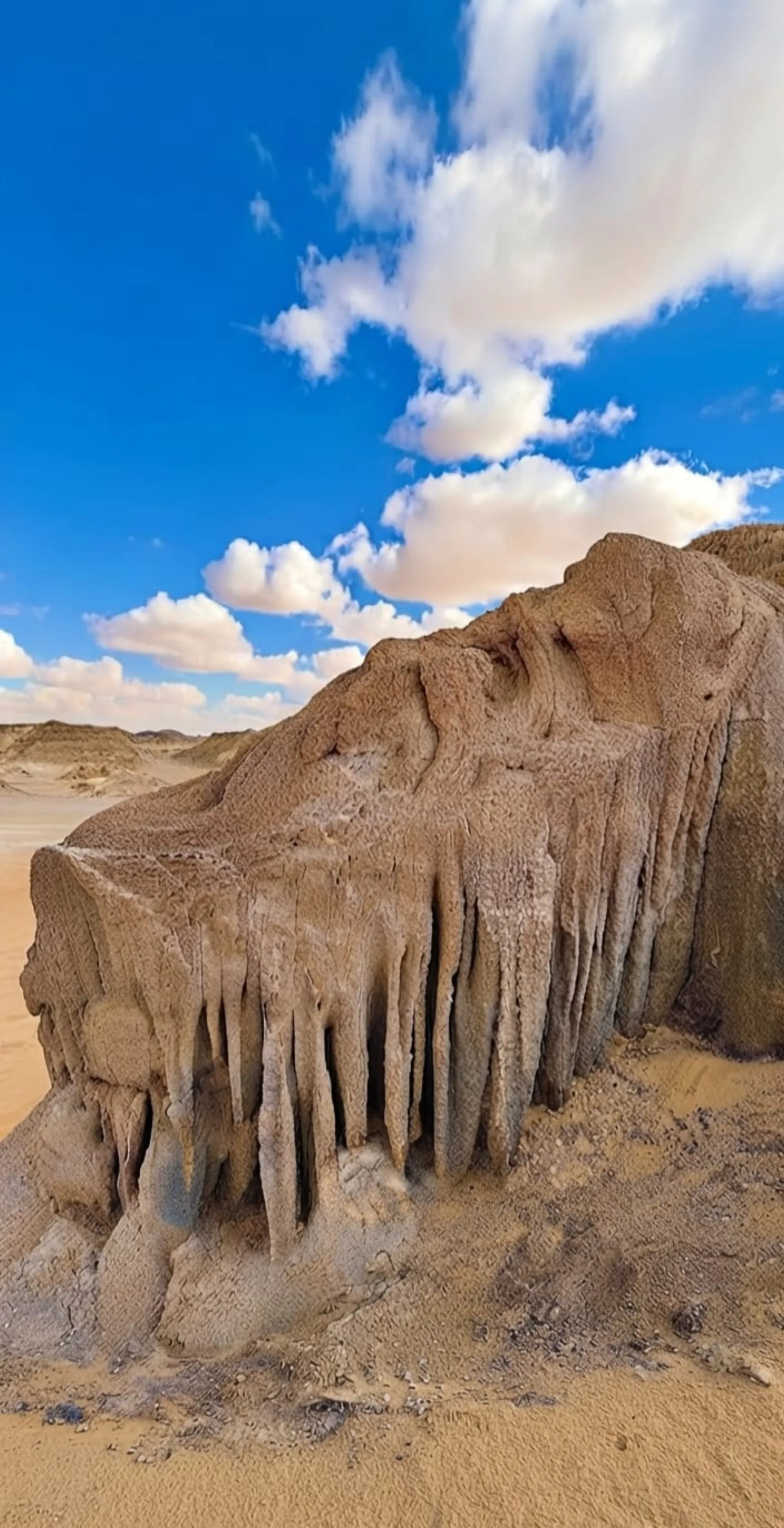
Kristallberg: Ägypten's Sparkling Desert Landmark
Kristallberg is one of the most unique natural landmarks in Ägypten's Westliche Wüste. Located on the desert road between the Schwarze Wüste and Weiße Wüste, this small ridge of quartz crystals sparkles brilliantly in the sunlight, creating a dazzling spectacle in the middle of the barren Saharan landscape.
What Is Kristallberg?
Despite its name, Kristallberg is not actually a mountain — it's a small ridge or outcrop of calcite and quartz crystals that rises from the desert floor. The crystals formed millions of years ago through geological processes, and erosion has exposed them to the surface, creating a formation that glitters like diamonds when sunlight hits it.
The ridge is roughly 30 metres long and several metres high, but what it lacks in size it makes up for in visual impact. The crystals range from clear and translucent to milky white, and some sections contain barite and other mineral formations.
Where Is Kristallberg?
Kristallberg is located approximately 30 km south of the Schwarze Wüste and 50 km north of the Weiße Wüste, along the main desert track from Bahariya-Oase. It sits at an elevation slightly above the surrounding desert floor, making it visible from a distance. GPS coordinates: approximately 27.65°N, 28.3°E.
Visiting Kristallberg
Kristallberg is almost always visited as a stop on Weiße Wüste tours. Most tours stop here for 20–30 minutes for photography and exploration. The site is freely accessible — there are no fences or entry fees for Kristallberg itself.
Typical Visit Schedule
- Stop at Kristallberg en route from Schwarze Wüste to Weiße Wüste
- Walk around the ridge and admire the crystal formations up close
- Take photos — the crystals sparkle best in direct sunlight
- Continue to the Weiße Wüste (approximately 45 minutes further south)
Photography Tip: Visit Kristallberg when the sun is at an angle (morning or late afternoon) for the most dramatic sparkle. Midday light creates less contrast. Get close-up shots of individual crystals for the most impressive detail.
Beste Reisezeit für den Kristallberg
Der Kristallberg kann das ganze Jahr über besucht werden, doch die beste Zeit ist von Oktober bis April, wenn die Tagestemperaturen für die Erkundung angenehm sind. Die Kristalle funkeln am dramatischsten im klaren Winterlicht. Vormittagsbesuche zwischen 8 und 10 Uhr oder am späten Nachmittag gegen 15–17 Uhr bieten die besten Fotobedingungen, wenn der niedrige Sonnenstand maximales Funkeln und Kontrast über den Quarzformationen erzeugt.
Geologische Entstehung
Der Kristallberg entstand vor über 30 Millionen Jahren während des späten Eozäns, als diese Region der Westlichen Wüste von einem flachen Meer bedeckt war. Als sich das Meer zurückzog, sickerten mineralreiche Flüssigkeiten durch Kalkstein und lagerten Kalzit- und Quarzkristalle in Hohlräumen und Spalten ab. Über Millionen von Jahren trugen Wind und Sand das weichere umgebende Gestein ab und legten die härteren Kristallformationen frei, die wir heute sehen. Die Stätte ist ein bemerkenswertes Fenster in Ägyptens uralte geologische Geschichte und die Kräfte, die die Sahara geformt haben.
Conservation
Kristallberg has been impacted by visitors taking crystals as souvenirs over the years. Please do not remove any crystals from the site. Leave nothing but footprints and help preserve this natural wonder for future generations. Our guides enforce a strict no-collection policy.
Nearby Attractions
- Schwarze Wüste — 30 km north. Dark volcanic hills covered in dolerite stones.
- Weiße Wüste — 50 km south. Surreal chalk-white rock formations.
- Agabat Valley — A hidden valley within the Weiße Wüste with towering chalk formations.
- Bahariya-Oase — 80 km north. The main gateway town with hot springs and markets.
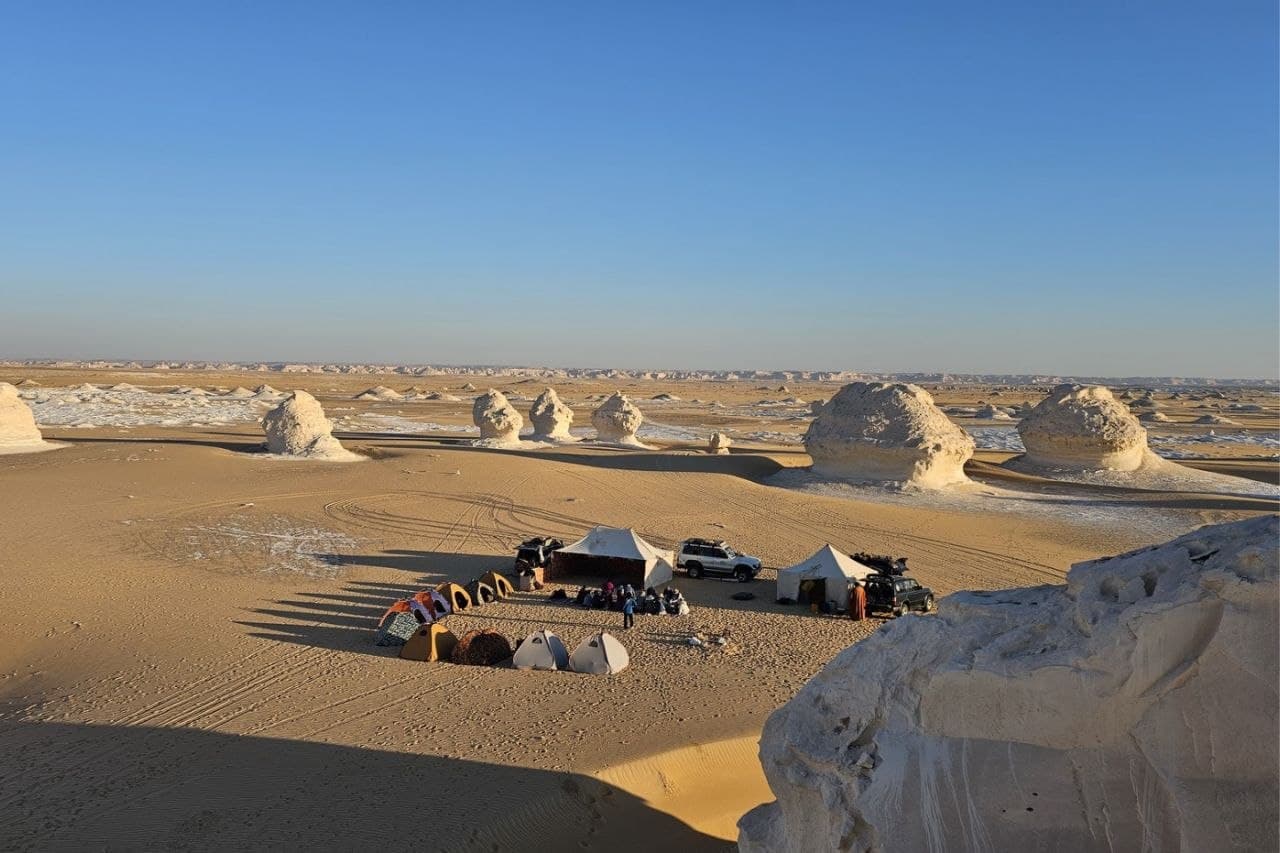
Kristallberg is included in all our Weiße Wüste tours.
Wüstentoursen durchsuchen