Desert Photography Guide: Capturing Egypt's White Desert
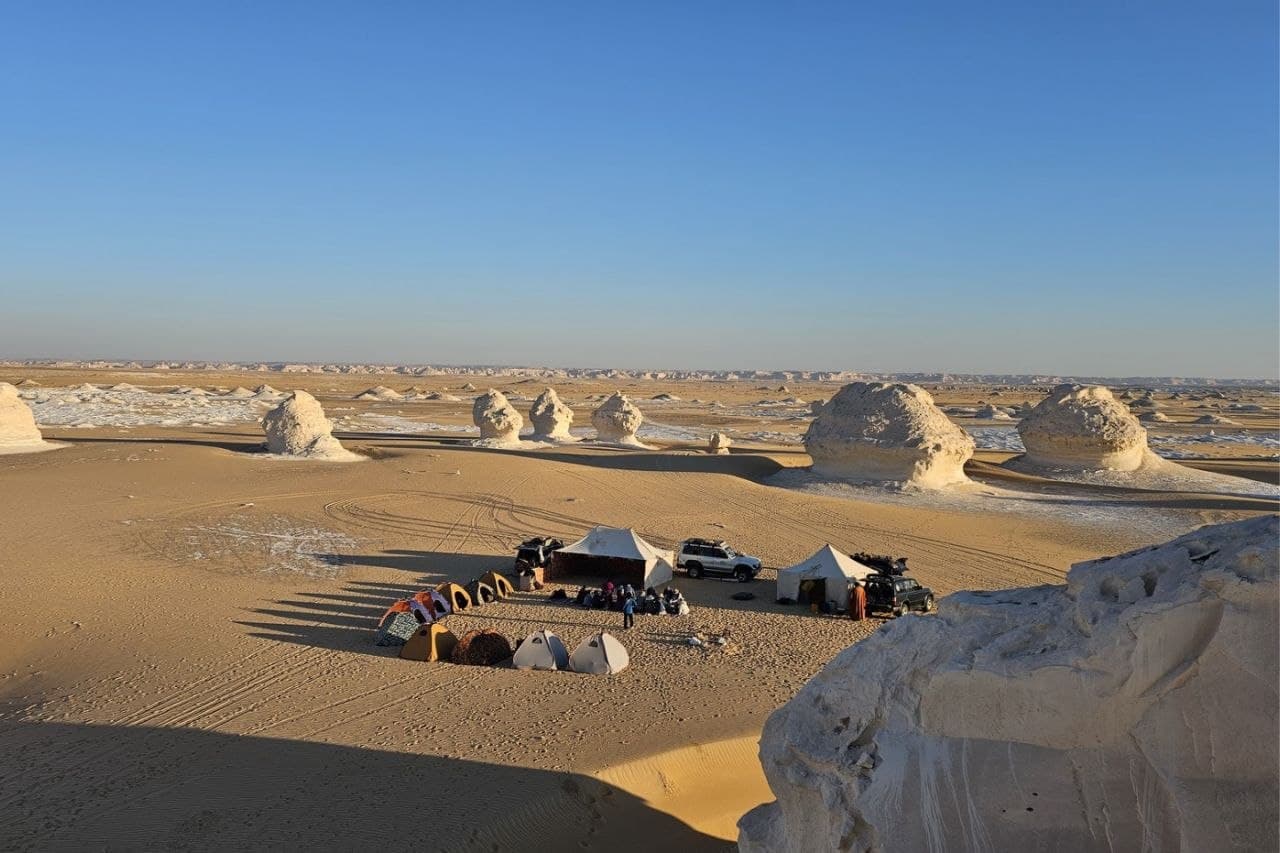
Egypt's White Desert is a photographer's paradise. The surreal chalk formations, the vast open sky, the dramatic light at golden hour, and the Milky Way blazing overhead at night combine to create some of the most extraordinary photographic opportunities in the world. Here's how to make the most of them.
Understanding the Light
Golden hour — the hour after sunrise and before sunset — is when the White Desert truly comes alive photographically. The low-angle light casts long shadows between the formations, picks out texture in the chalk, and bathes everything in warm amber tones. Sunrise is particularly spectacular: the pink and orange light reflected in the white stone is unlike anything else in nature.
Midday light is harsh and flat — not ideal for the formations, but perfect for shots that emphasize the brilliant whiteness of the landscape against a deep blue sky. A polarizing filter can deepen the sky tone further.
Composition Tips
- Use the formations as leading lines or frames — position yourself so a rock formation frames your subject or leads the eye into the distance
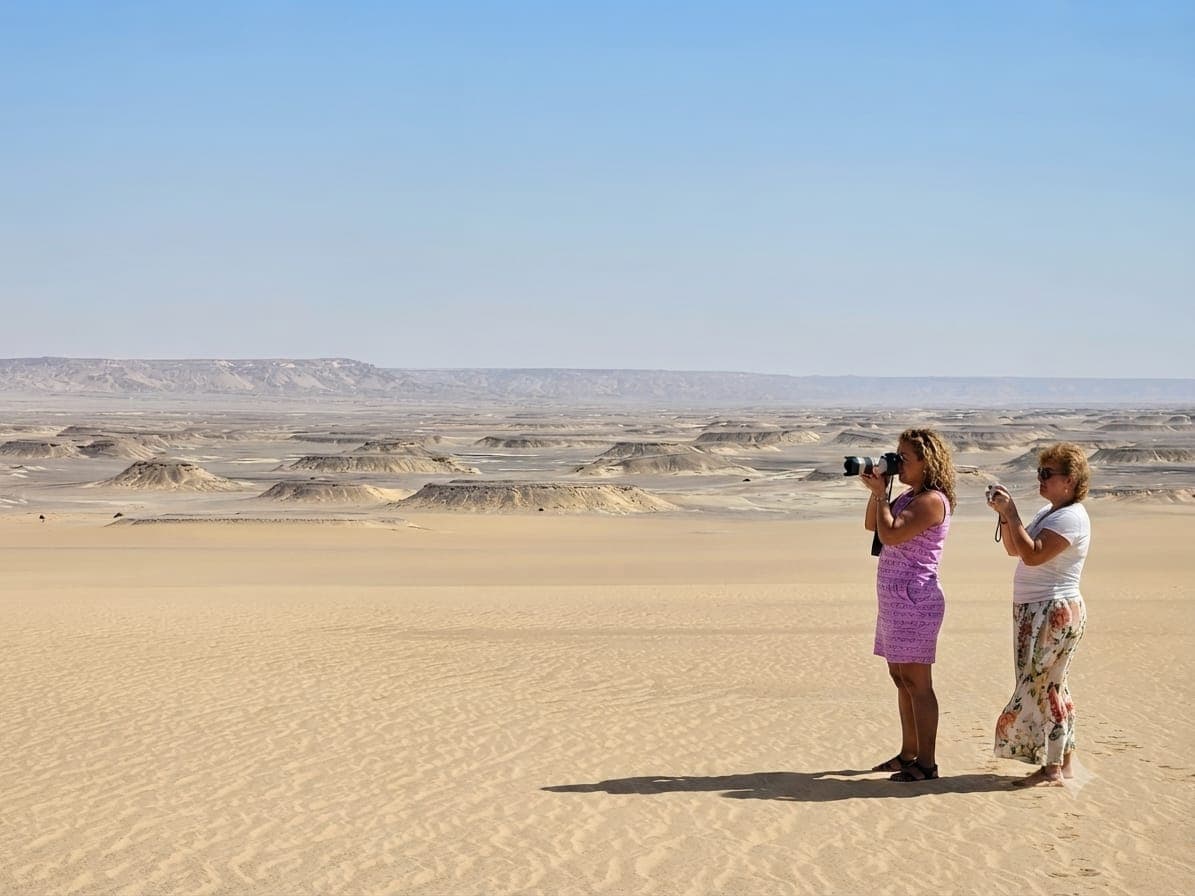
- Include a human element — a person or camel in the frame gives scale to the enormous formations
- Get low — shooting from ground level with the formation rising above you exaggerates its height and drama
- Look for reflections — after rare rain events, shallow pools form between formations and create mirror images
- Shoot wide and tight — alternate between wide-angle shots that capture the full scale of the landscape and tight shots of individual formation textures
Night Photography and Astrophotography
The White Desert is one of Egypt's best locations for astrophotography. With minimal light pollution and clear, dry air, the Milky Way is visible to the naked eye on moonless nights between April and September. For astrophotography:
- Use a fast wide-angle lens (f/2.8 or faster)
- Set ISO between 1600 and 6400 depending on your camera
- Exposure: 15–25 seconds (the 500 rule: divide 500 by your focal length to get maximum exposure before star trails appear)
- Focus manually — auto-focus doesn't work in darkness; focus to infinity, then back off slightly
- Include a formation silhouette in the foreground for compositional depth
Camera Gear for the Desert
Dust is your main enemy in the desert. Fine sand particles can damage camera mechanisms and sensors. Practical steps:
- Keep your camera in a sealed bag when not shooting
- Change lenses quickly and minimally — do it in the shelter of a vehicle if possible
- Bring a lens cloth and blower for frequent cleaning
- Bring spare batteries — cold nights drain batteries faster than expected
- Protect your camera from direct sun during midday to avoid overheating
Best Formations to Photograph
Your guide will take you to the most photogenic spots. Classic subjects include mushroom-shaped formations, the inselberg clusters in the deeper desert, and the panoramic views from elevated dune crests at sunrise. Ask your guide specifically about sunrise positioning — this makes an enormous difference to your shots.
Domande Frequenti
When is the best time to photograph the Milky Way in the White Desert?
The Milky Way's core is visible from April to September, with the best views in June and July when the galactic center is highest in the sky. Choose a night with a new moon for maximum darkness, and check weather forecasts for cloud cover.