Desert Wildlife in Egypt: Animals You Might See in the Western Desert
Many visitors assume Egypt's Western Desert is a lifeless expanse of sand. The reality is far more fascinating. The White Desert National Park and surrounding regions support a remarkable diversity of wildlife that has adapted to survive in one of the world's harshest environments.
Mammals of the Western Desert
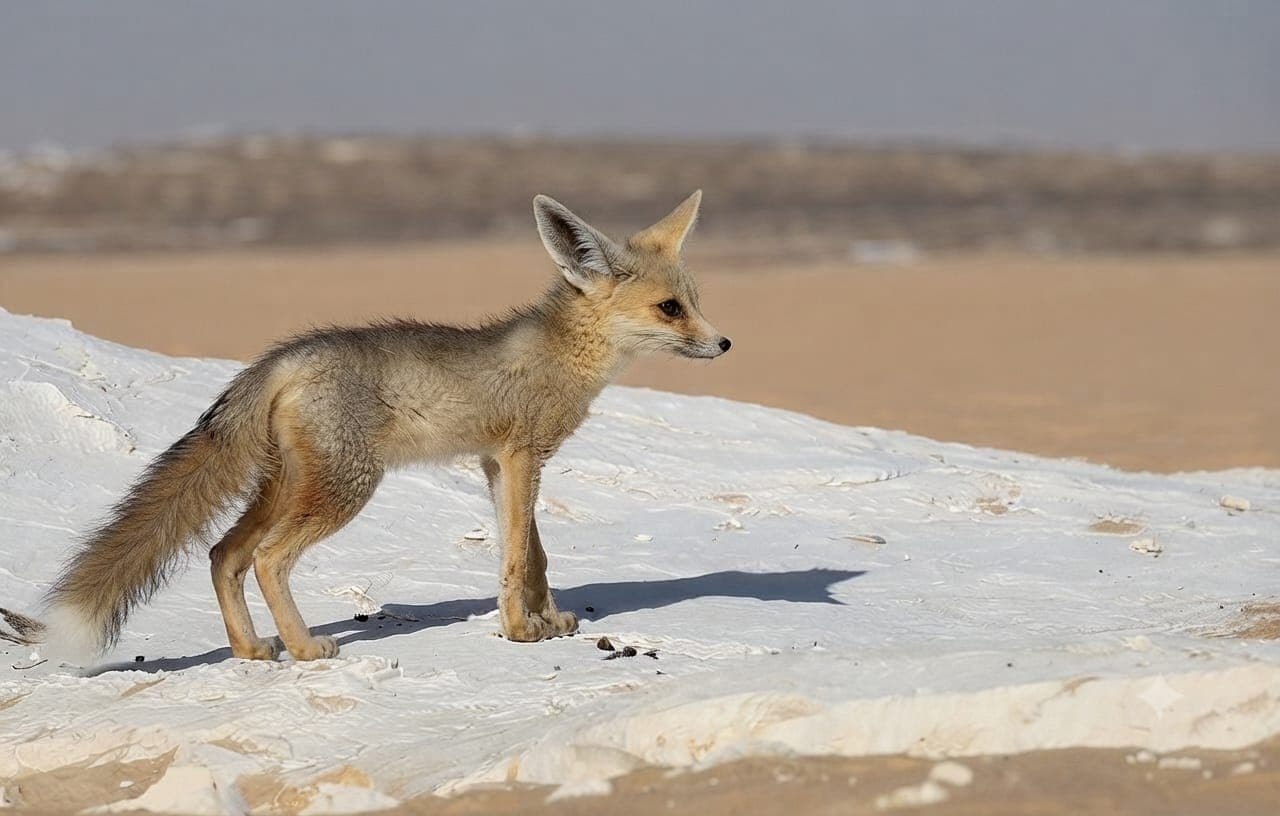
The Egyptian fennec fox is perhaps the most iconic desert mammal — its enormous ears help dissipate heat and detect prey underground. Dawn and dusk are the best times to spot these shy, sand-colored creatures near camp. Look for their distinctive small paw prints in the sand each morning.
The Dorcas gazelle is another resident of the Western Desert, though increasingly rare due to historical hunting pressure. These elegant antelopes can go extended periods without water, obtaining moisture from desert vegetation. Sightings are special and becoming more common as conservation efforts take hold.
Cape hares are common throughout the desert, often spotted at dusk. Their long hind legs make them exceptionally fast — a necessary adaptation in open terrain with few hiding places.
Reptiles
The Egyptian spiny-tailed lizard (uromastyx) is a true desert specialist. Growing up to 70 cm long, these impressive herbivores spend their days basking on sun-warmed rocks. Their spiny tails serve as defense against predators.
Desert monitor lizards are the apex reptilian predators of the ecosystem, capable of reaching 1.5 meters in length. They feed on eggs, insects, and small vertebrates, and are a sign of a healthy desert ecosystem.
Several sand snake species inhabit the desert, most of them harmless and all of them elusive. Your Bedouin guide will know the area's species and can identify any you encounter.
Birds
The Western Desert sits along important bird migration routes between Africa and Europe. Spring and autumn bring warblers, wheatears, and raptors passing through. Year-round residents include:
- Hoopoe — with its distinctive crown of feathers and curved bill
- Desert lark — camouflaged to blend with the sandy terrain
- Brown-necked raven — highly intelligent scavengers
- Cream-colored courser — a fast-running ground bird
- Little owl — often spotted at dusk around rocky outcrops
Invertebrates
Look closely at the sand at night and you may find scorpions — fascinating but best observed from a safe distance. Egypt has several scorpion species; your guide will advise on precautions (primarily: shake out shoes before putting them on). Dung beetles perform a vital ecological role, and their navigational abilities — using the Milky Way as a compass — have made them subjects of scientific study.
Tips for Wildlife Spotting
- Go out just before sunrise and just after sunset — dawn and dusk are peak activity times
- Walk quietly and scan the ground ahead — many desert animals rely on camouflage
- Ask your Bedouin guide — their local knowledge of wildlife is invaluable
- Bring binoculars if you have them
- Leave no trace — never disturb animals or their habitats
FAQ
Are there dangerous animals in Egypt's White Desert?
Scorpions are present in the desert and should be treated with caution. Always shake out shoes and clothing before putting them on, and use a torch at night. Your Bedouin guide will be fully informed about local hazards and how to avoid them. Snake encounters are rare and most desert snakes are non-venomous.